
Live album listener with a regular listening spot
Wants to position two speakers on either side of their seat to listen to a concert album in stereo.


If a stereo image from your usual seat is your priority, choose two speakers that you can position separately. An active set doesn’t need a separate amplifier, while passive speakers are best if you already have a suitable amplifier. Also check that your album source is compatible and that the necessary cables, adaptors or second speaker will work with your setup.
Wants to position two speakers on either side of their seat to listen to a concert album in stereo.
Is looking for compact speakers and simple controls, and wants to check that the app, network connection and inputs work with their music source.
Wants to connect compact passive speakers to their existing system and take the amplifier and cabling into account when choosing.
First decide where two speakers could go, then check the connection for your album source and what equipment you already have.
| Consideration | What should you check? | Who is this most important for? |
|---|---|---|
| Stereo image and positioning | Check that two speakers will fit around your seating area, including the cable route and the space between them. | If I listen from one regular spot, I want to position the speakers on either side without getting in the way of the room layout. Around 40% of consumers say stereo positioning is their top priority. |
| Album source and controls | Compare the outputs on your source with the inputs on the exact model. For streaming, check which app or network connection is required. | If I play albums from a CD player or streaming service, I want to know in advance how to connect and control that source. Around 30% of consumers prioritise source compatibility and ease of use. |
| Amplifier and complete setup | Check whether passive speakers need an amplifier, and compare the equipment and cabling required for the complete setup. | If I already have a suitable amplifier, I want to keep using it rather than choosing other equipment unnecessarily. Around 20% of consumers say making use of an existing amplifier is their top priority. |
| Portability | Decide whether you want to use the speaker away from your usual listening spot, and check whether you need a second one for stereo pairing. | If I want to use my speaker in another spot too, portability matters more to me than a fixed setup. Around 10% of consumers say portability is their top priority. |
You may need two speakers for two separately positioned stereo channels. Edifier describes stereo pairing with two ES60 speakers; Sonos also describes an Era 100 stereo pair as consisting of two speakers.
Before buying, check how many speakers are in the box and how many you need for your preferred setup.
You may need to buy a second speaker. Also allow for suitable stands if you plan to use them.
The KEF LSX II LT has a cable running between the speakers. Sonos says you need a line-in adaptor and a suitable audio cable to connect an external audio source to the Sonos Era 100’s line-in.
Plan the full route from your album source to both speakers, and check which connections and components you’ll need.
Depending on your source and setup, you may need an adaptor, an audio cable or a suitable place for the connection between the speakers.
Passive speakers need a suitable separate amplifier. The Edifier R1280DB, on the other hand, is an active model with amplification built into the speakers.
Compare complete setups that work with your album source, including any amplifier and cabling you still need.
If you don’t already have a suitable amplifier and speaker cables, remember to factor them into your choice.
The R1280DB is an active stereo pair with several listed inputs; the ES60 is a portable model that Edifier says can be paired with a second ES60.
The LSX II LT is a compact active stereo system with streaming and digital connections.
The Era 100 combines Wi-Fi and Bluetooth. Sonos says two compatible speakers can be set up as a stereo pair.
The 3020c is a passive bookshelf speaker for anyone who already has an amplifier or wants to choose one separately.
The options below range from portable Bluetooth speakers to a Wi-Fi and Bluetooth model and a pair of passive bookshelf speakers. Check the connections for each product and whether you need one speaker or a pair.
 No image available
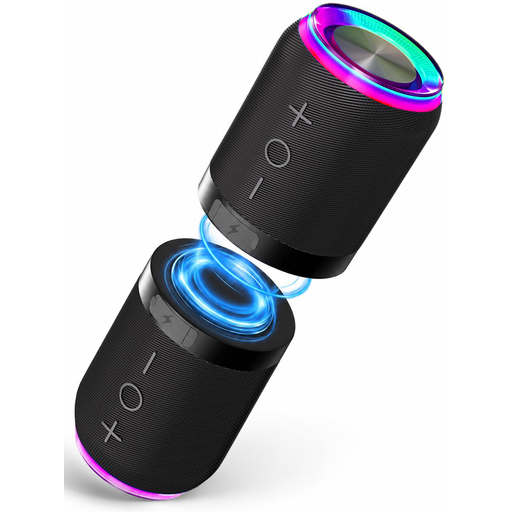
The two detachable speakers are an option if you want to position one on either side of your listening spot.
Set of 2; Bluetooth, AUX and TF card playback are listed. The product name mentions IPX6 and lighting effects.
 No image available
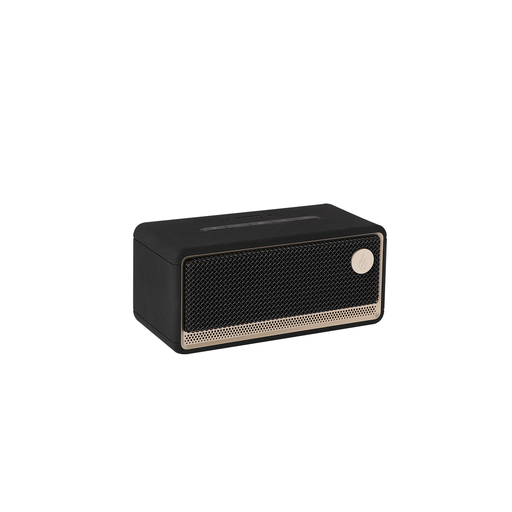
This speaker may suit you if you want to play albums from a wired source or wirelessly. Check that its connections work with your equipment.
The product name lists 60 W, USB, AUX, Bluetooth, Wi-Fi, AirPlay 2, LDAC, multi-room and 12 hours of battery life.
 No image available
This pair may suit you if you already have a suitable amplifier for a fixed stereo setup.
The description lists a 6.5-inch bass/midrange driver and a 28 mm dome tweeter. A separate amplifier is required.
 No image available
This portable model may suit you if you want to use the speaker away from your usual listening spot. You’ll need two ES60 speakers for two separate stereo channels.
Bluetooth and stereo pairing are listed. The product name mentions IP66 and dust and water resistance.
For separate left and right channels around a regular listening spot, choose two speakers that you can position separately. Check whether the product on offer includes one speaker or a pair.
Sonos says you need a Sonos Line-In Adapter and a suitable audio cable to use the line-in. Check the output on your CD player. The line-in is disabled when the Era 100 is being used as a home cinema surround speaker.
Listen from your usual seat and check that you can position both speakers suitably. Start by placing two speakers in front of the listening area, but don’t assume this will guarantee the same result in every room.
For a typical online purchase by a consumer, ACM ConsuWijzer says the statutory cooling-off period ends 14 days after delivery; any exceptions should be considered separately. The statutory guarantee is separate from any commercial guarantee. If a product does not perform as you could reasonably expect under normal use, the seller is responsible for providing an appropriate solution free of charge under the applicable terms.