
Stereo listener
You want to hear instruments through two channels and have space to position speakers to the left and right of your listening spot. Genelec explains that similar reflections for both speakers help create an accurate stereo image.


If you have room for two speakers in your living room, a stereo pair gives you separate left and right channels. Position them as symmetrically as possible in relation to your listening spot. Choose passive speakers if you have a suitable amplifier, active speakers if you can connect your source to their inputs, or two speakers that can be paired if you want to play music via an app. If you only have room for one, a compact speaker may be more practical, but it won’t give you the same left-right arrangement.
You want to hear instruments through two channels and have space to position speakers to the left and right of your listening spot. Genelec explains that similar reflections for both speakers help create an accurate stereo image.
You need to fit your speakers between furniture and walls, and want to know how the positioning will work. Genelec describes how reflections affect stereo reproduction.
Your choice depends on the equipment you already use: an amplifier, a connected player or music via an app. The inputs and accessories you need vary depending on the setup.
First, work out how much room you have for two separate speakers. Then check whether your existing amplifier, player or app is compatible with the setup you choose.
Suitable if: you already have a suitable amplifier or are happy to use one.
Bear in mind: you’ll need two places to position the speakers, and amplifier requirements vary by model.
Suitable if: you want two channels and can connect an existing source to the system’s inputs.
Bear in mind: you’ll need compatible connections and space for both speakers.
Suitable if: you want to play music via an app and can position two devices to the left and right.
Bear in mind: you’ll need two speakers, as well as the required app, network and source compatibility. To connect an external analogue source, the Sonos Era 100 requires a separate line-in adapter.
Suitable if: having just one place to position a speaker, or being able to move it around, matters more than a fixed stereo position.
Bear in mind: you’ll need two pairable speakers for a left-right setup.
| What to consider | What should you check? | Who is this important for? |
|---|---|---|
| Stereo positioning | Check whether you’re buying a pair, whether you can set up the two channels separately, and whether you can position the speakers in a similar way. | I want to position the left and right channels separately so I can hear how the instruments are arranged in space; around 36% of consumers prioritise stereo positioning. |
| Space and positioning | Measure the available spaces and compare the cabinet dimensions. Try to find similar positions on the left and right, at listening height. | I have limited space and want to know whether two speakers will fit without throwing the setup off balance; around 29% of consumers give positioning top priority. |
| Connecting to your source | Note your player’s output, whether you have an amplifier, and whether the system you choose works with the app or connection you want to use. | I want to use my existing player or app without finding out too late that the input isn’t suitable; around 21% of consumers start by checking source compatibility. |
| What else you’ll need | Check how many speakers are included and whether you’ll also need an amplifier, adapter or cable. | I want to know in advance what I’ll need for a complete setup, not just how many speakers are in the box; around 14% of consumers focus mainly on extra components. |
You need two Sonos Era 100 or Edifier ES60 speakers for the left-right pairing described.
Before buying, check how many speakers are in the box and whether the manufacturer says they can be paired for stereo.
You may need a second speaker for the stereo setup you have in mind.
Passive speakers need a separate amplifier, and the relevant amplifier specifications vary by model.
Check the specifications for the exact speaker model and compare them with your amplifier.
As well as speakers, you may need an amplifier and speaker cables.
To connect an external analogue source to a Sonos Era 100, you’ll need a separate Sonos Line-In Adapter.
Compare your source’s output with the input required, and check which adapter and cable are right for your connection.
You may need a separate adapter and audio cable for this connection.
Even if the speakers fit, walls and uneven positioning can affect what you hear.
Measure two possible positions in advance and assess the setup from your usual listening spot.
The Q1 Meta is a passive bookshelf speaker for a stereo system with a separate amplifier.
The Debut 3.0 DB53 is a passive bookshelf speaker designed for use with a separate amplifier.
The R1280DBs is an active stereo system, while the ES60 is a portable Bluetooth speaker that can be paired with a second unit to create a stereo pair.
According to Sonos, Era 100 speakers can be paired in a two-speaker setup.
WiiM explains how to set up two WiiM Sound speakers as a left-right pair via the app.
This selection includes passive bookshelf pairs, active speaker systems, and compact or portable speakers. Check whether you’re buying a pair and what equipment you’ll need for each model.
 No image available
A passive pair for a two-channel setup if you have a suitable separate amplifier.
The stated configuration includes a 6.5-inch bass-midrange driver and a 28 mm tweeter.
 No image available
A passive pair for anyone who wants to position two speakers and has a suitable separate amplifier.
The stated configuration includes a 6.5-inch bass-midrange driver and a 28 mm tweeter.
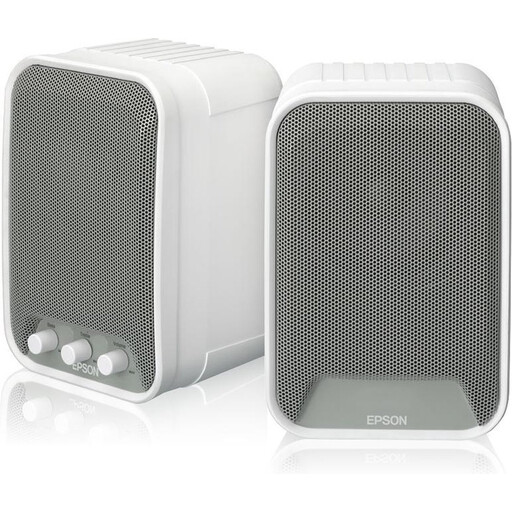 No image available
An active system with two speakers for a two-channel setup without a separate amplifier. Check that your installation is compatible with the stated ELPCB01.
The stated configuration lists 15 W RMS and a built-in amplifier.
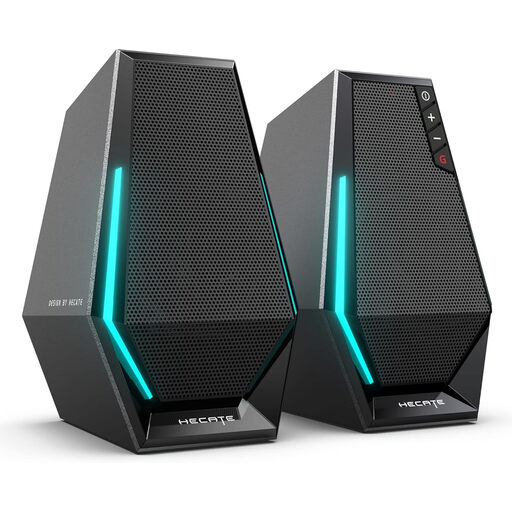 No image available
A compact active stereo system to consider if your source is compatible with the listed connections.
The stated features include 2.0 stereo, Bluetooth 5.3, USB and a 3.5 mm AUX input.
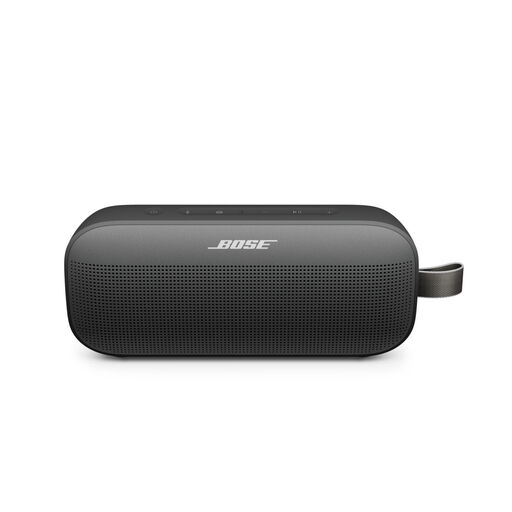 No image available
A portable Bluetooth speaker to consider if being able to move it around matters more than fixed stereo positioning. The stereo mode described requires a second compatible Bose speaker.
The stated features include a built-in rechargeable battery and dimensions of approximately 20,1 × 9,0 × 5,2 cm.
Yes. Passive speakers need a separate amplifier. Check the amplifier specifications for the exact model and compare them with your amplifier; KEF describes the Q1 Meta as passive, and ELAC lists amplifier information for the DB53.
Try positioning both speakers at a similar height and distance from your listening spot. Genelec explains why walls and positioning affect the stereo image you hear; studio monitor guidance does not set a fixed distance requirement for every living room.
Yes, if the player has a suitable audio output and you use a Sonos Line-In Adapter with a compatible audio cable. Sonos states that the line input does not work when the Era 100 is used as a surround speaker, so also check how you plan to use it.
According to the Dutch government, there is no fixed statutory warranty period in the Netherlands. If a product is faulty, you should contact the seller to exercise your right to a product that meets legal requirements. Many distance purchases come with a 14-day cooling-off period; check whether this applies to your purchase.
The Dutch government states that electronic devices in the EU must meet European safety requirements and carry a CE marking. Check the product information and use a suitable power supply; if you’re buying from outside the EU, the seller is also relevant. This alone does not confirm that a specific offer complies with the requirements.