What to consider when choosing
First, decide whether it’s acceptable for the workshop audio to play through a loudspeaker in a shared space. Then choose a connection that works with the device you’ll use to take part, and test your setup before the workshop.
| Consideration |
What to look for |
Most relevant to |
| Privacy and sound at home |
Audio from a speakerphone can be heard around the room; microphone noise reduction won’t stop housemates from listening in. If needed, choose a headset or a separate room. |
If housemates are nearby, I want to know first whether I can keep the conversation private. Around 34% of consumers put privacy first when making this choice. |
| Reading aloud and responding |
Check the microphone and echo features on the exact model. Jabra and HP Poly list call features for their models; also test how reading aloud and responding sound in your own room. |
If you read texts aloud and respond to feedback, you’ll want participants to be able to follow your voice clearly. For around 33% of consumers, speech clarity is their main concern when buying. |
| Connections and settings |
Jabra describes USB-A and USB-C for the Speak2 40; for the Speak2 55, Jabra lists USB for a computer and Bluetooth for a smartphone or tablet. Check which connection works with your device and select the right microphone and loudspeaker in your meeting app. |
If I mainly want to avoid starting the workshop with the wrong audio settings, I check the connection to my device first. Around 20% of consumers make connectivity their top priority. |
| Moving between locations |
Check whether you can connect via USB in your new location or whether you’ll rely on a battery. Jabra lists up to 12 hours of talk time for the Speak2 55; EMEET lists USB-C and Bluetooth for the M0 Plus. |
If you want to take your speakerphone between quiet spots, suitable connections and a reliable power supply are especially useful. This is the top priority for around 13% of consumers. |
Speakerphones at Joybuy
These Joybuy picks are speakerphones for taking part in an online workshop. Bear in mind that sound from a loudspeaker may be heard by others in a shared space.
 No image available
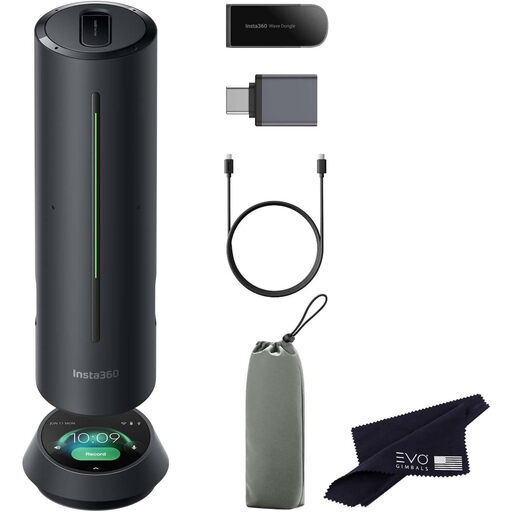
Insta360 Wave AI Conference Speakerphone
A speakerphone with Bluetooth mentioned in the product name; worth comparing if it’s OK for the workshop audio to play through a loudspeaker in the room.
View at Joybuy
 No image available
Jabra Speak 510 MS, USB-A and Bluetooth
The product name lists USB-A and Bluetooth; compare these connections with the device you want to use for the workshop. Sound from the speakerphone will still be heard in a shared space.
View at Joybuy
 No image available
Jabra Speak2 55 MS Teams, Dark Grey
A good fit if you want to take part from different locations and are happy for sound from the loudspeaker to be heard in the room. Jabra lists four microphones, full-duplex audio and up to 12 hours of talk time; according to Jabra, Bluetooth is for a smartphone or tablet, while USB is for a computer.
View at Joybuy
Frequently asked questions
How can I check before the workshop that everyone can hear me?
Select your preferred loudspeaker and microphone in the meeting app, then run an audio test. Zoom Support describes a test where you listen to the loudspeaker and play back a microphone recording; with your own setup, also ask someone how your voice and background noise come across.
Can noise reduction fully compensate for a noisy shared home?
No, don’t assume it can based on a specification. Manufacturers list noise reduction for certain models, but that doesn’t determine how much of your housemates’ conversations will be audible in your room. Test it where you usually sit, and choose another room or a headset if privacy is a priority.
What should I check after connecting it?
Check that the meeting app is using the right microphone and loudspeaker. If your model has a battery, check the charge before a long session too; follow the instructions for connecting the EMEET M0 Plus via USB-C or Bluetooth.
What rights do I have in the Netherlands if I buy online or the product is faulty?
According to ACM ConsuWijzer, when you buy a product online you generally have up to 14 days after delivery to change your mind, subject to applicable exceptions. Your statutory guarantee is separate from any manufacturer’s guarantee; if a product doesn’t do what you could reasonably expect during normal use, contact the seller to find a solution.
Where can I dispose of an old speakerphone?
Milieu Centraal describes collection options for small electrical appliances, including collection bins and the take-back scheme when buying a similar appliance. Check which collection point is suitable, and only remove a battery if it can be done safely.


