
Taking calls alone in a busy workplace
You want colleagues to hear your voice without distracting background noise. Check the microphone features and where you take calls; a manufacturer’s description can’t guarantee the same results in every room.


Choose a speakerphone based on the number of people speaking, how far they are from the microphone and how it connects to your meeting device. A bright window calls for particular attention to your camera and lighting: a speakerphone won’t correct backlighting or an overexposed video image.
You want colleagues to hear your voice without distracting background noise. Check the microphone features and where you take calls; a manufacturer’s description can’t guarantee the same results in every room.
You share one speakerphone. The distance between each speaker and the device, along with the table layout, determines which model will work in practice.
You move between meeting spaces and want clear audio as well as a visible image. Consider portability and connections separately from camera lighting.
| What to consider | What to look for | Who should pay particular attention? |
|---|---|---|
| Speech clarity | Check the microphone features of the exact version and make a test call before your meeting. | If I’m calling from a busy place, I want my voice to come across clearly without distracting background noise. For around 36% of consumers, speech clarity is their main concern when buying. |
| Connection | Check whether you need USB-A or USB-C, the right cable or adapter, and which audio source to select in your meeting app. | I want to use my own computer, phone and meeting app without having to guess which connection will work. Compatibility comes first for around 29% of consumers. |
| Multiple speakers | Measure the distance from the planned central position to the furthest speaker and compare it with the guidance for the exact model. | If colleagues are talking around one table, I want the setup to work for the distance to each speaker. Around 21% of consumers say hearing multiple voices is their main concern. |
| Video image by the window | Check the camera preview from your seat and assess the camera position and lighting separately from the audio. | If the light from the window makes my face hard to see, I want to improve the image first rather than buy audio equipment. A clear video image is the main buying concern for around 14% of consumers. |
A speakerphone doesn’t control your camera’s exposure. If the video image stays the same, buying audio equipment won’t solve the problem you can see.
First, check the camera preview where you’ll be meeting. If needed, adjust your position or lighting, then decide whether you also have an audio problem.
Jabra specifically warns that a standard Bluetooth connection between a computer and the Speak2 55 isn’t certified and may sound different from USB.
Check which connections are supported with your computer and meeting app for the exact version.
Versions can differ in platform designation, connections and included accessories. The product range name alone doesn’t confirm that you’re choosing the right version.
Before ordering, compare the full model name, connections and included accessories.
Extra cover doesn’t replace the rights you already have. The Dutch government points out that buying extra cover is only worthwhile if it offers more protection.
Read the terms of the extra cover and compare them with your statutory rights when buying from the seller.
The Speak2 55 is designed for flexible personal use or smaller groups. Jabra provides separate positioning advice for a group using the Speak 750 around a table.
According to HP, the Sync 20 USB-A combines a wired computer connection with Bluetooth for smartphones.
The EXPAND 20 is a wired speakerphone for personal use or a small meeting group, with USB or 3.5 mm connections.
According to Yealink, the SP92 offers USB, Bluetooth and the option of a dongle connection for flexible working locations.
The OfficeCore M0 Plus is designed for a small group that wants to use USB-C or Bluetooth.
These models are designed for meetings using a speakerphone, from shared table setups to flexible working locations. A speakerphone won’t fix backlighting in your camera image; assess your camera setup and lighting separately.
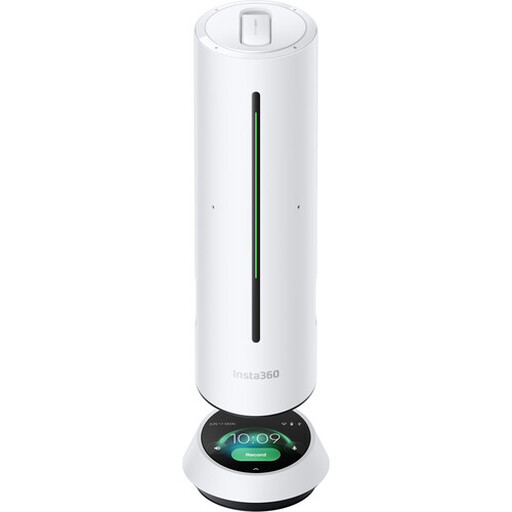 No image available
An option to compare if you’re looking for a Bluetooth speakerphone for a shared meeting setup.
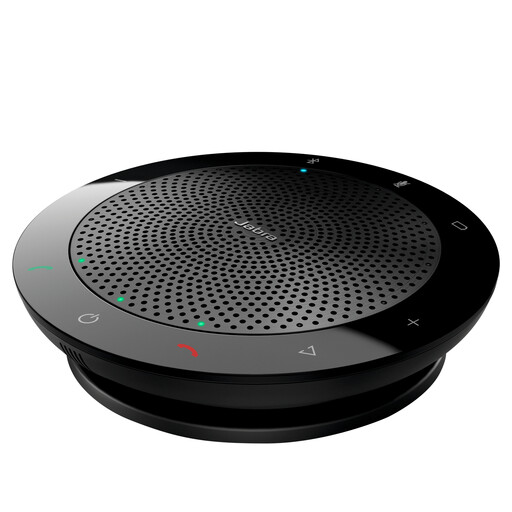 No image available
Worth comparing if you’re looking for a personal speakerphone with USB-A or Bluetooth; check that the MS version works with your meeting app.
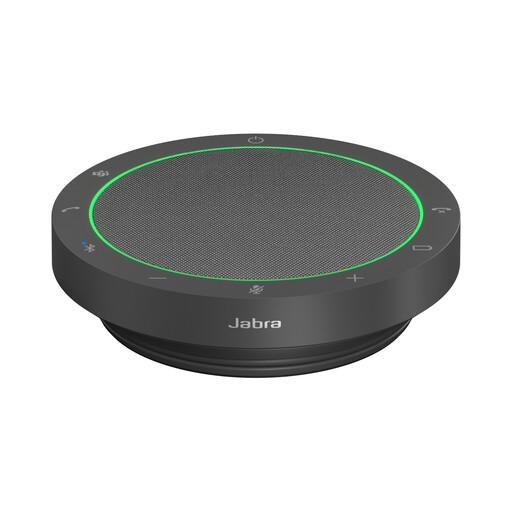 No image available
Worth comparing if you move between meeting spaces and want the Teams version; check which connection your computer supports.
No, not directly: a speakerphone is for audio. First, check the camera preview and adjust your position or lighting if needed. Microsoft describes the video brightness setting as helpful in low light, not as a proven solution for strong backlighting.
Select your preferred audio source in Teams when you join. If you’re using a Jabra Speak2 55 with a computer, Jabra recommends the integrated USB cable; a standard Bluetooth connection to a computer isn’t certified for this model and may sound different.
Follow the positioning advice for your chosen model. For a single Jabra Speak 750, Jabra recommends placing the device in the middle of the table, 0.5 to 2.3 metres from each participant, and says it’s suitable for up to six people.
Equipment covered by the relevant product requirements must carry the appropriate CE marking, according to the Dutch Authority for Digital Infrastructure. This doesn’t confirm that a specific version or offer has been assessed separately, so check the device you’re considering.
According to the Dutch government, online distance purchases generally come with a 14-day cooling-off period, although there are exceptions. If a product is faulty, you have statutory rights against the seller; the Netherlands has no fixed statutory warranty period. Different terms may apply to business purchases.