
Teams with remote participants
They want both the presenter and colleagues speaking from different points around the table to be heard. So compare the stated microphone range with the seating and test the setup in your own room.


Choose a speakerphone based on who needs to be heard during the project update: just the presenter, or colleagues seated around the table too. Compare the stated microphone range and connections with the seating, laptop and meeting software. Extra range or recording features alone won’t guarantee that everyone will be heard clearly in your room.
They want both the presenter and colleagues speaking from different points around the table to be heard. So compare the stated microphone range with the seating and test the setup in your own room.
They want to get started on the project update quickly, so they pay attention to the connection, the selected microphone and speaker, and the controls in the meeting software.
They may need recording or transcription as well as live audio. This also means assessing the privacy requirements for recording conversations.
| What to consider | What to look for | Who is this most important for? |
|---|---|---|
| Making sure multiple speakers can be heard clearly | Compare the seating with the stated microphone range and test from the furthest seat. | If I want colleagues at the other end of the table to be heard too, I compare the seating with the range. Around 36% of consumers give clear audio from multiple speakers their highest priority. |
| Quick connection | Check the laptop port, the exact USB or Bluetooth version, and the meeting software’s audio settings. | When using a shared meeting laptop, I want to know how to connect the speakerphone and set it as the microphone and speaker. Around 29% of consumers prioritise a quick, suitable connection. |
| Flexible placement | Compare the stated room suitability and connections with the room and any changes to the layout. | When the table layout or meeting venue changes, I want a setup that works for the new arrangement. Around 21% of consumers give flexible use of the room their highest priority. |
| Recording and transcription | Decide whether a record is needed and assess the legal basis, information for those involved, and your organisation’s policies in advance. | If the project update needs to be available afterwards, I look at recording or transcription and the terms for using them. Around 14% of consumers prioritise keeping a record of updates. |
A specification applies to a particular model; the table layout and acoustics also affect how the setup performs in practice.
Test a call from every seat that will be used during the project update.
Allow time to reposition the speakerphone if remote participants can’t be heard clearly.
DXOMARK’s fourth-place ranking is for the Sync 20; HP’s room and range specifications apply to the Sync 40+.
Compare specifications and test results using the full model name and version.
Recording and transcription can capture project discussions. The Dutch Data Protection Authority says that a legal basis is needed to collect and use personal data. People involved must also be informed when employees’ conversations are recorded.
Decide in advance whether you need to record and how your organisation will manage the processing and inform those involved. Otherwise, choose based on your live audio needs.
Recording may mean extra organisational work around policies and data management.
The Speak2 range is worth considering for portable meeting audio.
EPOS describes the EXPAND 40 as a speakerphone with three beamforming microphones.
HP describes the Sync 40+ as suitable for flexible and small meeting rooms, with USB and Bluetooth connectivity.
Yealink positions the CP900 as a portable speakerphone for meetings of up to six people.
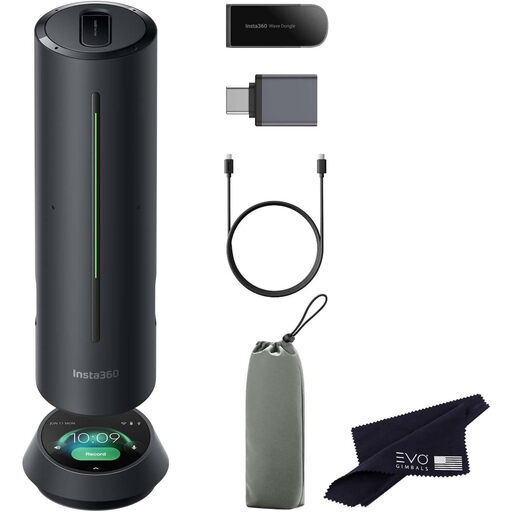
Insta360 describes the Wave as a speakerphone with meeting audio, recording and transcription features.
This selection includes speakerphones for live project discussions and a model with recording and transcription features.
 No image available
A good fit for project discussions where you need recording or transcription as well as live audio. According to Insta360, the Wave offers recording, transcription and different recording patterns.
Before recording, assess the applicable legal basis and what information you need to provide to those involved. The Dutch Data Protection Authority explains these privacy obligations.
 No image available
A speakerphone for conference calls. The product name lists USB-A (USB 2.0) and Bluetooth. Check that the connection suits your meeting laptop and planned setup.
 No image available
This version of the speakerphone is labelled MS Teams. Before buying, check that it suits the meeting software and connection you’ll use for the project update.
No. Compare the stated range with the seating and test from the furthest seat too. HP lists a range of up to 2.5 m for the Poly Sync 40+. That’s a model specification, not a guarantee of how it will sound in your meeting room.
Once connected, select the speakerphone as both the microphone and speaker in your operating system and meeting software. The AnkerWork PowerConf S500 manual covers these audio settings separately.
Not necessarily. ACM ConsuWijzer distinguishes between contracts based on how they’re used. If a contract is used mainly or exclusively for business, consumer protection generally doesn’t apply to a business owner. Check who is making the purchase and which business warranty and service terms apply. ACM ConsuWijzer also provides information about statutory guarantees for consumers.
No. The device’s recording feature doesn’t in itself provide permission or another legal basis under the GDPR. The Dutch Data Protection Authority says that a legal basis is needed to collect and use personal data, and employees must be informed if their conversations are recorded. The appropriate legal basis for a particular meeting depends on its purpose and participants.