
Interviewee facing a remote panel
You’re alone, speaking to several people online, and want to make sure questions and answers are easy to hear. Choose a setup that suits your speaking distance, and test the microphone and speaker beforehand.


If you’re alone in a quiet, private room with remote interviewers, choose a speakerphone with a connection that suits your device, then test the audio from where you’ll be sitting. If other people will be sitting around the table with you, compare their distance with the stated microphone range for the exact model. If you can’t take the call somewhere private, a headset may be more suitable: a speakerphone plays the other participants’ replies aloud in the room.
You’re alone, speaking to several people online, and want to make sure questions and answers are easy to hear. Choose a setup that suits your speaking distance, and test the microphone and speaker beforehand.
Several people in your room will be joining the conversation. Their seating positions and the stated microphone range are important when choosing, as is portability.
You use different laptops or work in different locations, and want to check in advance how to connect and which audio source is active. Compare the ports, wireless options and included adapters for the exact model.
Your main considerations are who else is in the room, how your device connects and whether you can take the call somewhere private.
| What to consider | What should you check? | Who is this most relevant to? |
|---|---|---|
| Clear audio | Compare the stated microphone range for the exact model with your seating position, and test the audio from there. | If I want to follow questions and answers clearly from where I normally sit, clear audio comes first. An estimated 36% of consumers have this as their main priority. |
| Connection and testing | Check which port or wireless connection your device supports, then test both the microphone and speaker in your meeting app. | If I want to make sure my laptop is using the right microphone and speaker before the call, it’s important to have a connection I can check. An estimated 29% of consumers put this first. |
| Private space | Consider whether other people could hear the call through the speaker. Don’t rely on a noise-processing claim alone to protect your privacy. | If I share my space or it’s noisy, I first want to know whether playing audio aloud is suitable. An estimated 21% of consumers prioritise privacy or reducing background noise. |
| Several people speaking around the table | Count the people in your room and compare the furthest seat with the stated range for the exact model. | If people at my table will also be speaking, I want to make sure the setup suits the distance between them and the speakerphone. An estimated 14% of consumers prioritise coverage for several speakers. |
The stated range varies by model. The distance, positioning and acoustics in your room may differ from the manufacturer’s test conditions.
Compare the furthest speaking position with the specification for the exact model, and test from there before the call.
Features, connections and included accessories can vary between versions. Jabra describes specific Teams features for the MS version; with Poly, the included Bluetooth adapter may differ between versions.
Check the full model version, connection and box contents, not just the series name.
If you need a different version or an additional adapter, you may have to buy it separately.
Replies will play aloud through the speaker. A claim about noise processing won’t stop people in the same room from hearing the conversation.
Choose a private location if possible. If that isn’t an option and you’re the only person there, consider a headset.
The Speak2 range includes the Speak2 40, 55 and 75. Compare the connection and whether you need a Teams or UC version.
The Sync range includes versions for different types of workspace and meeting room.
The EXPAND 20 is an option to compare if you’re choosing between USB and 3.5 mm. The EXPAND 40 range includes versions where Bluetooth or USB-C may be relevant.
The PowerConf S330 is a wired USB option to compare for calls from a laptop.
The CP700 is a compact USB and Bluetooth speakerphone to consider for a small group.
These Joybuy product picks focus on speakerphones for calls with remote participants and setups where several people are speaking around the table. Check that each model’s connection suits your device and room.
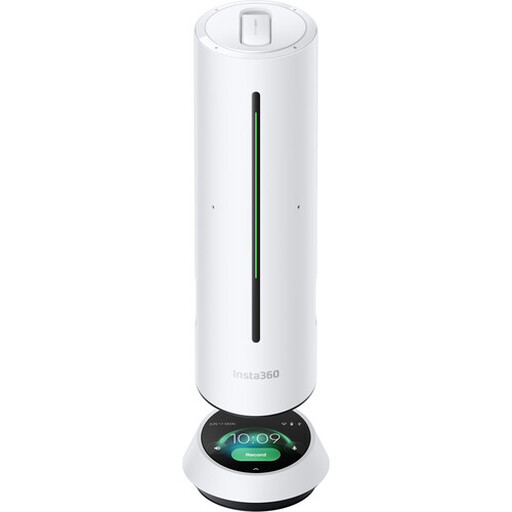 Image unavailable
The product name describes a Bluetooth conference speakerphone, making it an option to consider if you want a wireless connection.
Bluetooth is listed; check in advance that your device supports it, and test the audio from where you’ll be sitting.
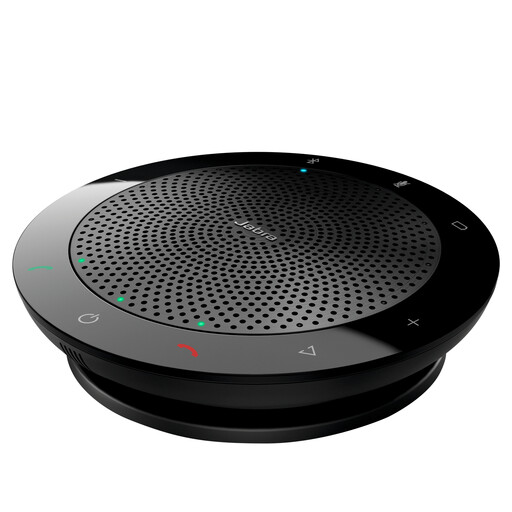 Image unavailable
This speakerphone is worth comparing if you want to speak to remote participants from your laptop.
The product name lists USB-A (USB 2.0) and Bluetooth 3.0. Check which connection you want to use for the call.
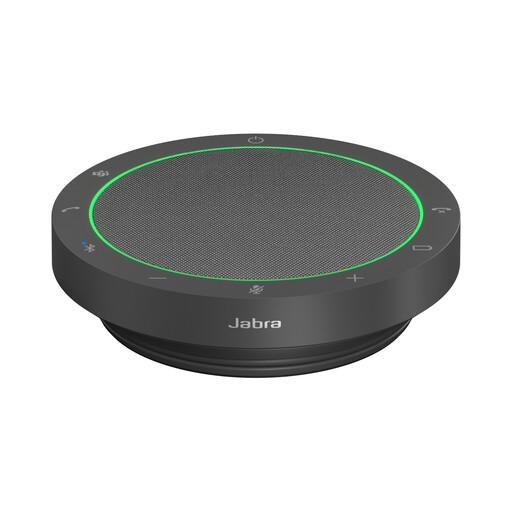 Image unavailable
This Teams version is an option for calls with remote participants. Check that it’s compatible with your meeting app.
Jabra distinguishes between MS and UC versions; according to Jabra, the MS version has specific Teams features.
Select the microphone and speaker you intend to use in your meeting app, then test both from the place where you’ll actually be sitting. Zoom offers a microphone and speaker test; Microsoft explains how to check your audio settings in Teams before and during a meeting.
Where possible, use one designated audio source for the room, and check that other devices aren’t also joining the same meeting with their microphones and speakers on. Microsoft explains that several active devices in one location can create a feedback loop.
For many consumer purchases made at a distance, the Dutch government says you have a 14-day cooling-off period, although there are exceptions. Before you buy, check which terms apply to your purchase and whether you’re buying as a consumer.
Don’t assume that buying a speakerphone gives you permission to record the interview. The Dutch Data Protection Authority points out that personal data is collected during recruitment and that processing it requires a valid legal basis under the GDPR; consent is one possible basis. The role of the person making the recording and how they intend to use it must be considered separately.