For quick exchanges between teacher and learner, look for a speakerphone with full duplex, and check that its microphone setup suits the distance across your sit-stand desk. A wired USB model is a good fit for a fixed laptop setup. USB and Bluetooth may be more convenient if you also use a phone or tablet, but check which connection is intended for your device on each model. Manufacturer specifications alone don’t tell you how clearly conversations will come through in your teaching space.
Who is a speakerphone suitable for?
Teachers who need quick exchanges
For exercises where teacher and learner respond to each other straight away or sometimes talk over one another, full duplex is a useful specification to check on the exact model. Jabra and EPOS describe this feature for specific models, but that doesn’t guarantee clear speech in every teaching space.
Teachers who move around while standing
If you change position or move around at a sit-stand desk, compare the distance between each speaker and the speakerphone with the placement guidance for your chosen model. Jabra provides this guidance for the Speak2 55.
Teachers who use different teaching devices
If you switch between a laptop, phone or tablet, check that the connection you need is supported by each device. Connections vary by model and version.
What should you look for when choosing?
| What to consider |
What should you check? |
Who is this most relevant for? |
| Natural turn-taking |
Check full duplex and any echo cancellation on the exact model; test overlapping speech on a trial call. |
If teacher and learner respond to each other quickly, I want both sides of the conversation to be transmitted at the same time. Around 36% of consumers put natural turn-taking first. |
| Speaking distance at the desk |
Measure the distance from the intended position to each speaker, including when the desk is raised. For the Speak2 55, Jabra recommends placing it centrally, no more than 2.3 m and no closer than 0.5 m from each participant. |
When I change position or move around while standing, I want to know whether the microphone setup suits that distance. Around 29% of consumers are particularly concerned about speech clarity when working standing up. |
| Connecting to teaching devices |
Compare your laptop’s port with the cable, and check which Bluetooth connection is supported by each phone or tablet. Also consider pairing and charging when using the speakerphone wirelessly. |
If I switch between my laptop and other teaching devices, I don’t want to discover after buying that the connection isn’t suitable. Around 21% of consumers prioritise device compatibility. |
| Background noise and shared use |
Test the exact model in your teaching space and check which features it offers; don’t assume a microphone feature guarantees privacy. If you’re using it for teaching, agree how any recordings will be handled too. |
In a shared space, I want to avoid transmitting unwanted background noise or conversations. Around 14% of consumers put background noise or shared use first. |
Common buying mistakes
-
Assuming Bluetooth guarantees wireless laptop use
For the Jabra Speak2 55, Jabra distinguishes between Bluetooth for a phone or tablet and the recommended USB connection for a computer. According to Jabra, a standard Bluetooth connection to a computer isn’t certified and may deliver different audio quality.
Check the connection for your teaching device and the exact version; don’t base your choice on the Bluetooth logo alone.
-
Assuming the number of microphones guarantees a certain range
The stated number of microphones doesn’t, by itself, tell you whether a teacher at the edge of a raised desk will be heard clearly. Distance and positioning matter too.
Measure the distance to the speakers and compare it with the guidance for the exact model. If possible, try the speakerphone in your actual teaching setup.
-
Confusing the cooling-off period with the legal guarantee
The cooling-off period and the legal guarantee cover different things. ACM ConsuWijzer explains that online purchases generally come with a statutory cooling-off period of up to 14 days after delivery, although exceptions apply. The legal guarantee concerns what you can reasonably expect from the product; the seller is responsible for this.
Check the terms that apply to your purchase and who the seller is, especially if you’re buying on behalf of an organisation.
Brands to consider
Jabra
The Speak2 40 is a wired option for a fixed USB setup; the Speak2 55 may suit you if you also want Bluetooth for a phone or tablet.
- Jabra lists full duplex and four microphones for both models mentioned.
- For computers, Jabra recommends USB for the Speak2 55. The manufacturer’s specifications aren’t an independent assessment of a teaching setup.
EPOS
According to EPOS, the EXPAND 20 offers USB or 3.5 mm connections, while the EXPAND 40 has Bluetooth or USB-C.
- EPOS lists duplex and echo cancellation for the EXPAND 20, and three beamforming microphones for the EXPAND 40.
- The models differ in their connections and microphone setup; these specifications don’t prove which speakerphone will be clearer in a particular teaching space.
HP Poly
According to HP, the Sync 20 range is designed as a portable speakerphone to compare with the devices you use for your lessons.
- This range may be worth considering if you’re looking for a compact model for different setups.
- Check the connection and whether the specific model is a Teams version.
AnkerWork
According to AnkerWork, the PowerConf S3 A3302 is designed to connect to a computer via USB-C and to a phone via Bluetooth.
- AnkerWork lists six microphones and a stated talk time of up to 24 hours.
- The battery life is a manufacturer’s claim, not a measurement in your teaching setup; also check the connection and product information for the exact version.
Speakerphones at Joybuy
This selection includes speakerphones for conversation practice, with a Bluetooth option and Jabra models for personal setups or use with a laptop. Always check the connection and guidance for the exact version against your device and teaching space.
 No image available
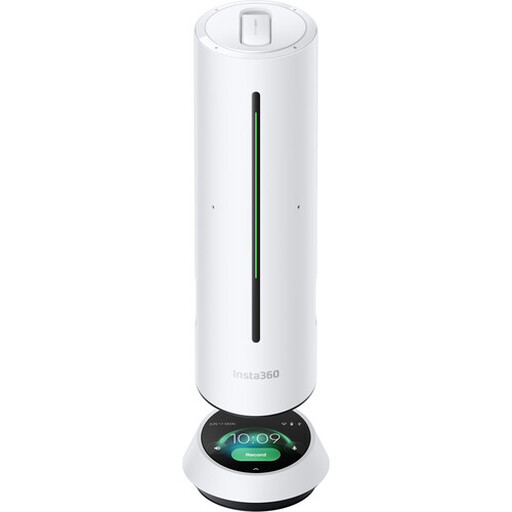
Insta360 Wave AI Conference Speakerphone, Bluetooth, White
An option to compare if Bluetooth suits your teaching setup.
Bluetooth; colour: white.
Joybuy
 No image available
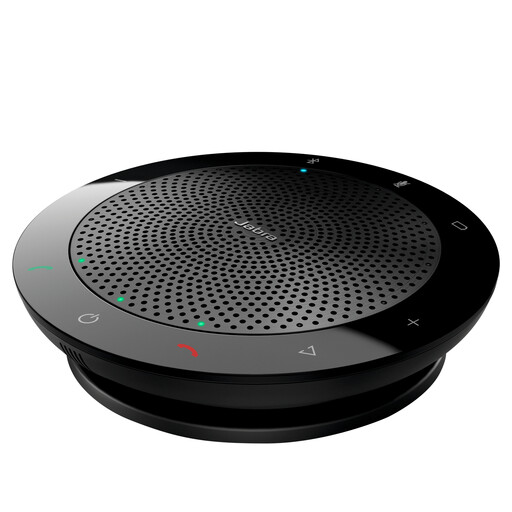
Jabra SPEAK 510 MS, USB-A, Bluetooth, Black
Suitable for a personal setup where you want to compare USB-A and Bluetooth with your teaching devices.
Connections according to the product name: USB-A (USB 2.0) and Bluetooth; colour: black.
Joybuy
 No image available
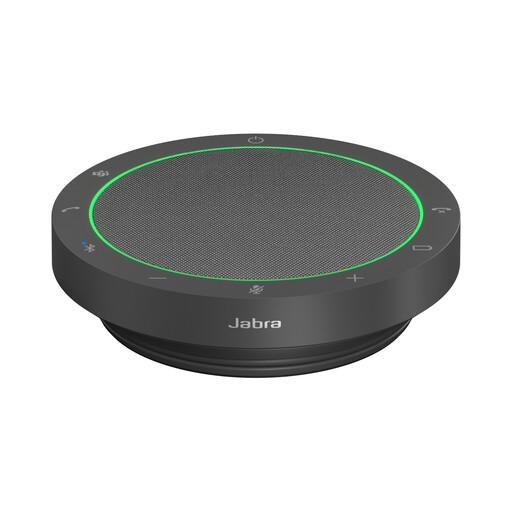
Jabra Speak2 55 MS Teams, Dark Grey
A model to compare if you’re looking for a Speak2 55 in the MS Teams version for your teaching setup.
For the Speak2 55, Jabra recommends USB for computers and specifies Bluetooth for phones and tablets; check the connection on the exact version.
Joybuy
Frequently asked questions
Where should you put the speakerphone when teaching standing up?
Place the speakerphone on a stable surface and measure the distance to each speaker, including when the desk is raised. For the Speak2 55, Jabra recommends placing it centrally, no more than 2.3 m and no closer than 0.5 m from each participant; don’t assume these distances apply to other models.
Can the Jabra Speak2 55 be used wirelessly with any teaching laptop?
Don’t assume so. Jabra specifies Bluetooth for smartphones and tablets, and recommends the USB cable for computers. According to Jabra, a standard Bluetooth connection to a computer isn’t certified and may deliver different audio quality. Once connected, select the correct recording and playback device in your computer and teaching app.
How should you check a speakerphone before a lesson?
Test the microphone and speaker with a trial call at the height and distance you use when teaching. If you have a wireless model, check the battery level too. Jabra states that the Speak2 55 offers up to 12 hours of wireless use; this isn’t a guaranteed lesson duration.
Can an educational institution record online conversation practice?
A speakerphone doesn’t, by itself, give you permission to record conversations. The Dutch Data Protection Authority notes that schools and universities should set out policies covering matters such as recordings, retention periods and the information provided to pupils or students. Whether a particular recording is permitted depends on how the data is processed and the circumstances.
What should you look for in a wireless speakerphone for use in the Netherlands?
Check the product information and CE marking for the exact version. The Dutch Authority for Digital Infrastructure states that only devices with a CE marking may be sold in Europe; you’ll need to check the marking for the specific version separately.


