What should you look for?
Start with your speaker’s charging port and specified charging requirements. Then decide whether you want to charge one or more devices at once, and whether you already have a suitable cable.
| What to consider |
What to look for |
Who is this important for? |
| Connection and charging specifications |
Check the charging port and specified voltage and current for your exact speaker model. Don’t base your choice solely on the charger’s maximum wattage. |
If I want to make sure the cable and speaker are compatible, I check the specifications for my exact model first. Around 33% of consumers put compatibility first. |
| Charging two devices at once |
Check the number and type of ports, and how the power is shared when both ports are in use. |
If I’m sharing a socket in a holiday cottage, I want to know whether I can charge my speaker and another device at the same time. Around 27% of consumers prioritise simultaneous charging. |
| Cable included in the box |
Check whether a cable is included and whether both connectors fit. Also consider the cable length if the distance to the socket matters. |
If I don’t already have a suitable charging cable, I want a set I can use straight away. Around 20% of consumers prioritise a charger that comes with a suitable cable. |
| Product and compliance information |
Check the product identification, instructions for use and information about applicable compliance requirements. Don’t use a damaged charger. |
If I’m taking a wall charger with me, I want to be able to check the product information and instructions for use. Around 20% of consumers make verifiable safety information their top priority. |
USB wall chargers at Joybuy
This selection includes USB wall chargers for speakers, with options for USB-C, multiple ports or an included cable. Before choosing, check that the connection and charging specifications are right for your speaker.
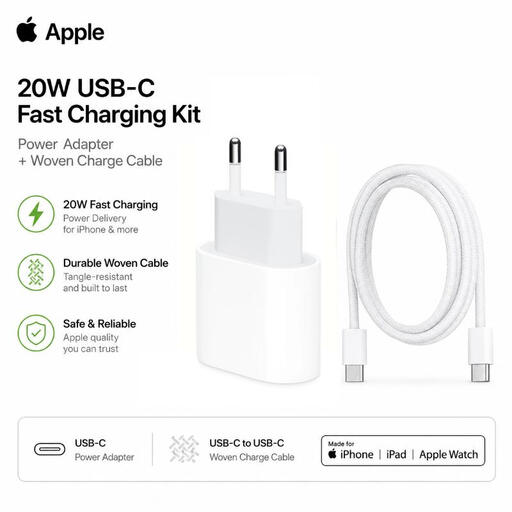 Image unavailable
Apple 20 W USB-C wall charger with braided charging cable
A set for anyone looking for a USB-C wall charger and a matching USB-C-to-USB-C cable; the cable won’t fit a speaker with a different charging port.
20 W adapter with USB Power Delivery; includes a 1 m braided cable.
View at Joybuy
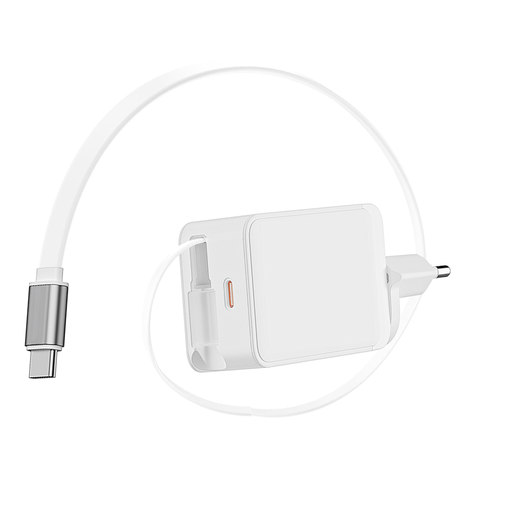 Image unavailable
65 W wall charger with two USB-C ports and retractable cable
An option if you need a USB-C cable for your speaker and want to take a retractable cable with you. Check that the output is suitable for your speaker’s charging specifications.
65 W; two USB-C ports and a 70 cm retractable USB-C cable.
View at Joybuy
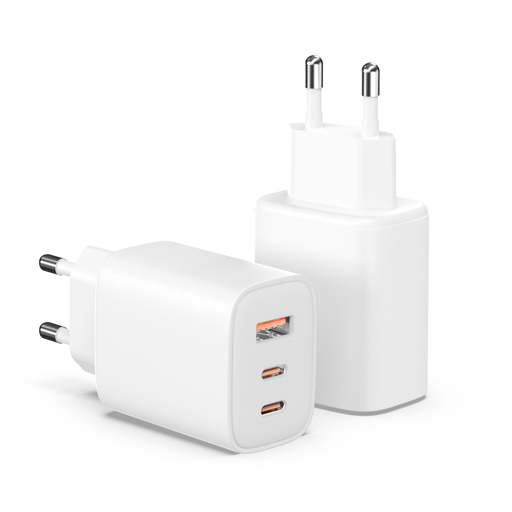 Image unavailable
65 W wall charger with two USB-C ports and one USB-A port
The different port types are useful if you’re bringing cables for several devices. Check which connection is right for your speaker.
65 W; two USB-C ports and one USB-A port. The product description states that it can charge three devices at once.
View at Joybuy
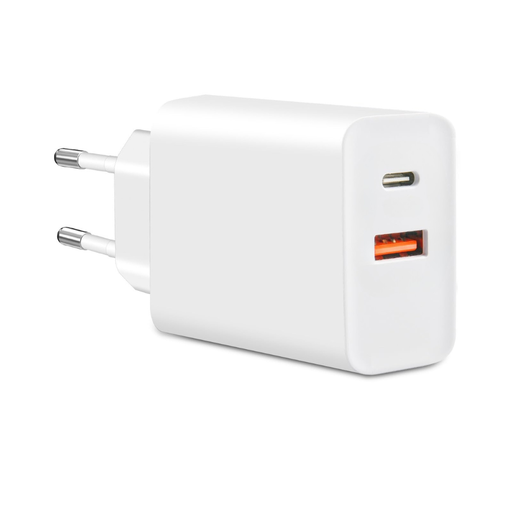 Image unavailable
30 W wall charger with USB-A and USB-C ports
An option if the connector at the charger end of your speaker cable is USB-A or USB-C. Use the charger indoors only, in a dry place.
30 W; USB-A and USB-C ports. The description states a combined maximum output of 30 W when charging devices at the same time.
View at Joybuy
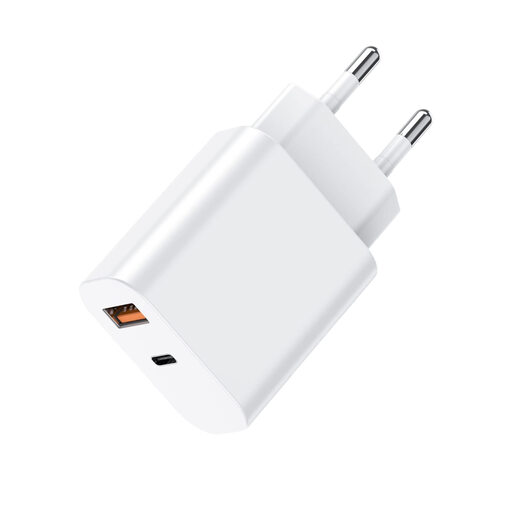 Image unavailable
20 W wall charger with USB-A and USB-C ports
The combination of USB-A and USB-C gives you two types of port to choose from. Check which type of connector your speaker cable has at the charger end. For indoor use only, in a dry place.
20 W; USB-A and USB-C ports.
View at Joybuy
Frequently asked questions
Do all portable speakers have USB-C?
No. Since 28 December 2024, EU rules have applied to portable speakers placed on the EU market where they fall within the scope of those rules. They don’t change the connection on a speaker you already own. Check your model: Sony lists USB-C for the SRS-XB100, while JBL lists micro-USB for the older Clip 2.
Will my speaker charge faster with a higher-wattage charger?
Not necessarily. Compare your speaker’s charging specifications with the output listed for the port you’re using. For example, the JBL Charge 5 Wi-Fi manual gives a charging time of 6 hours at 5 V/3 A; this doesn’t automatically apply to other speaker models.
What should I do if my charger is damaged?
Stop using a damaged charger. IKEA says to dispose of the SJÖSS 20 W if it is damaged and states that it is for indoor use only. Follow the instructions for your own model too.
What can I do if a charger breaks too soon during normal use?
In the Netherlands, if a product doesn’t meet the reasonable expectations you’re entitled to have when using it normally, the seller must provide a remedy free of charge, subject to the applicable conditions. ACM ConsuWijzer lists repair, replacement or a refund as possible solutions. A manufacturer’s warranty doesn’t replace your statutory rights.
Is CE marking relevant for a USB wall charger in the Netherlands?
Yes, when the applicable European product rules require it. Ondernemersplein lists CE marking and an EU declaration of conformity among the obligations for manufacturers of electrical equipment covered by those rules. A CE mark on its own isn’t an independent test result for a specific product.


