
Workshop cook with hot lentils
You want to cool cooked lentils quickly after cooking and store them in the fridge. A thermometer helps you check whether the storage area is cold enough.


You don’t automatically need a spare fridge: use your existing one if the sealed containers fit and a thermometer confirms the storage temperature is 4 °C. The Netherlands Nutrition Centre advises refrigerating cooked leftovers within 2 hours. Cool the lentils quickly first, and only choose a freezer compartment if you want to freeze portions.
You want to cool cooked lentils quickly after cooking and store them in the fridge. A thermometer helps you check whether the storage area is cold enough.
You need to find enough usable fridge space and a suitable layout for the portions and other ingredients.
You want to freeze portions of lentils after the workshop, so you’re comparing fridge and freezer capacity separately.
First, check whether your existing fridge can accommodate the portions. If you need extra space, choose between a fridge-only model and one with a freezer compartment based on how you’ll use it and the space available.
A good fit if: the sealed containers fit inside and you can check the temperature where you store them.
Trade-off: you won’t need a second appliance, but space may be limited during the workshop.
A good fit if: you mainly need extra space for sealed containers of chilled lentils.
Trade-off: you won’t be able to freeze portions in this appliance.
A good fit if: you want to freeze portions as well as chill them.
Trade-off: the freezer compartment takes up space that could otherwise be used for chilled portions.
A good fit if: an under-counter model doesn’t offer enough space for several portions and other chilled ingredients.
Trade-off: you’ll need more room; Milieu Centraal warns that an oversized fridge may use electricity unnecessarily.
| Consideration | What to look for | Who is this important for? |
|---|---|---|
| Safe chilling | Check the temperature with a fridge thermometer. The Netherlands Nutrition Centre advises a temperature of 4 °C and refrigerating cooked leftovers within 2 hours. | If I want to store hot lentils safely after the workshop, I need to be able to check the temperature where they’re stored; around 36% of consumers rank temperature-controllable chilling as their top buying priority. |
| Space for portions | Count and measure your containers, then compare the fridge capacity and shelf layout of each model. | If I need to store several portion containers alongside other ingredients, I want to know whether they’ll actually fit on the shelves; around 29% of consumers prioritise usable space for portions. |
| Freezing portions | Compare fridge and freezer capacity separately, and check whether the freezer space is right for the portions you want to store. | If I want to freeze portions of lentils after the workshop, the available freezer space will affect my choice; around 21% of consumers rank freezing as their top buying priority. |
| Energy consumption | Compare the stated annual energy consumption of models with suitable fridge capacity and consider whether your existing fridge will do. Milieu Centraal points out that an oversized fridge may use electricity unnecessarily. | If I’m going to leave an extra appliance running regularly, I want to take its stated energy consumption into account; around 14% of consumers prioritise energy consumption. |
Cooling food and keeping it chilled are two separate steps. A fridge is no substitute for a quick way to cool the lentils down.
The Netherlands Nutrition Centre advises cooling leftovers quickly, for example by placing the pan in cold water and stirring regularly. Divide the lentils between sealed containers and put them in the fridge or freezer within 2 hours.
In a model with a freezer compartment, some of the total capacity isn’t fridge space. Inventum lists a total capacity of 136 litres for the KV600, including 19 litres of freezer space.
Compare the stated fridge and freezer capacities separately, and check that your containers will fit on the shelves.
A fridge won’t operate in all conditions in an unheated room. The climate class indicates the minimum and maximum ambient temperatures the model is designed for.
Check the expected temperature at the location against the climate class and the model-specific conditions.
The KTR15NWEB is an under-counter model without a freezer compartment, for those who want to use all its capacity as fridge space.
The KV600 is an under-counter model with fridge space and a freezer compartment.
The Rc 1400 Pure is an under-counter model with adjustable cooling.
This selection includes under-counter models and fridge-freezers for extra chilled storage during workshops. Fridge and freezer capacity varies by model.
 No image available
An option if you want to store chilled workshop portions and have freezer space too.
Fridge capacity: 187 l. Freezer capacity: 73 l. Width: 55 cm. Energy rating E.
 No image available
An under-counter model to consider for extra chilled storage for workshop portions if you don’t need a freezer compartment.
The product name lists a width of 54 cm and energy rating E.
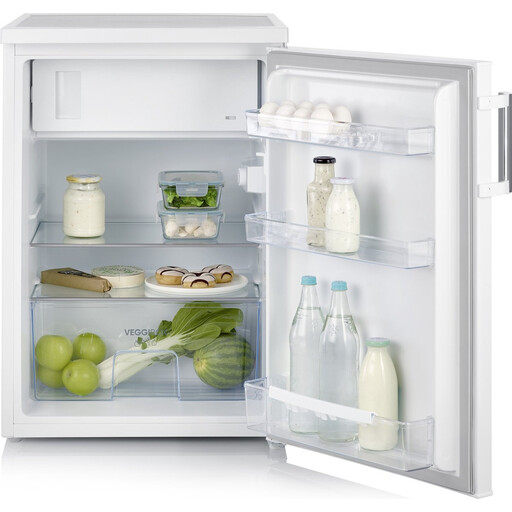 No image available
An under-counter model to consider if you want to store chilled portions and need freezer space too.
Total capacity: 120 l. Energy rating C.
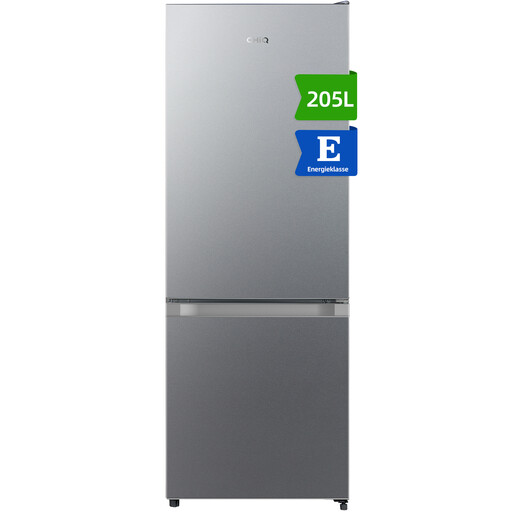 No image available
An option if you need space for chilled workshop portions and want to be able to freeze portions too.
Total capacity: 205 l. Fridge capacity: 153 l. Freezer capacity: 52 l. Low Frost. Energy rating E.
 No image available
A compact option for chilled portions if you don’t need freezer space.
Fridge capacity: 92 l. Width: 47 cm. Seven temperature settings. Energy rating E.
Cool the lentils quickly, divide them between sealed containers and put them in the fridge or freezer within 2 hours. The Netherlands Nutrition Centre advises keeping your fridge at 4 °C. For cooked lentils without salt, it recommends storing them for 2 days in the fridge or 3 months in the freezer.
Place a fridge thermometer in the middle of the bottom shelf and leave it there for half a day or overnight. The Netherlands Nutrition Centre advises a temperature of 4 °C; adjust the fridge if the reading is higher.
That depends on whether the workshop is run as a food business. The NVWA says that businesses preparing, processing or selling food must follow a HACCP food safety plan or an applicable hygiene code. For businesses, the NVWA also specifies that unpackaged perishable food must be stored chilled at 7 °C or below, and that heated food must be cooled to below 7 °C within 5 hours. This is a different context from the consumer advice from the Netherlands Nutrition Centre to store food at 4 °C and refrigerate cooked leftovers within 2 hours.
If you bought it as a consumer, contact the seller to find a solution. According to the Dutch government, there is no fixed statutory guarantee period in the Netherlands; a manufacturer’s warranty does not replace your statutory rights. For a business purchase, the applicable terms and conditions need to be assessed separately.