
Vandaag of morgen in huis

Kwaliteit gegarandeerd

Welkomstaanbiedingen ontgrendelen: GRATIS bezorging | Tot 80% korting | Gratis 30 dagen JoyPlus-proefperiode
Download de app
A spanner set may seem straightforward at first glance: choose a selection of metric sizes, check the material and add the set to your toolbox. However, many disappointing purchases come down to details that only become apparent once you start working. A spanner may not fit properly in a confined space, the set may not include the sizes you use or the ratchet mechanism may be awkward when there is very little room to move.
This buying guide helps mechanics, maintenance technicians, plumbers and DIY enthusiasts compare their options with confidence. It focuses on verifiable specifications such as size range, drive, material, working angle and storage.
A large number of spanners sounds appealing, but it tells you very little without checking the size range. For many maintenance jobs in the Netherlands, metric sizes such as 8, 10, 13, 15, 17 and 19 mm are useful. A set containing many duplicate or less common sizes may therefore be less practical than a smaller set with a sensible range.
Also check whether the sizes are consecutive. A set from 8 to 19 mm with no missing sizes is more convenient for everyday assembly work than a collection with large gaps.
A ratchet spanner set can save time because you do not need to lift the spanner completely after every turn. How useful this is depends on the working angle. According to the product description, a 72-tooth mechanism with a small return angle is designed for restricted working spaces. A standard ring spanner does not offer this ratcheting action, but it may be better suited to situations where controlled, firm tightening is required.
Also consider the difference between a fixed and flexible head. A flex-head ratchet spanner can align more easily with a fixing point, but it has more moving parts that need to be kept clean and undamaged.
Do not rely solely on marketing terms such as “heavy duty”. Look at the stated material and finish. Many models in this selection use chrome vanadium steel, often marked as Cr-V. The product descriptions mention heat treatment, forging and a chrome finish as features intended to support strength and corrosion resistance.
Never use a spanner as a hammer, extension bar or makeshift lever. Even a sturdy spanner can deform when the load exceeds what the tool was designed to handle.
A metric spanner set is specified in millimetres. Check that the set is suitable for your work:
A 12-point ring spanner engages at multiple positions and can be useful when you have limited room to turn the spanner. Always check that the profile fits the nut or bolt correctly. Using the wrong size increases the risk of damaging the corners.
A straight spanner is not always practical around pipes, engine components or obstacles. A ring spanner set with a 15-degree offset gives your fingers extra clearance. An S-shaped or 75-degree offset spanner can reach fixing points that sit deeper or higher up.
For confined spaces, a short handle, flexible ratchet head or small return angle can also be important. Do not look only at the number of teeth; consider the overall shape of the spanner as well.
For brake lines and other pipe connections, a standard open-ended spanner is not always the most suitable option. A brake-line spanner set or flare nut spanner surrounds more of the nut while allowing the pipe to remain threaded through the opening. According to the DURATECH product description, the 3-piece set has an open ring profile, a 15-degree angle and sizes 10x12, 13x14 and 15x17 mm.
Use a torque wrench when the specified tightening torque is important. For digital models, check the measurement units, range, set warning and storage instructions. A torque wrench does not replace a standard spanner set: for loosening, positioning and general assembly work, you will often need additional hand tools.
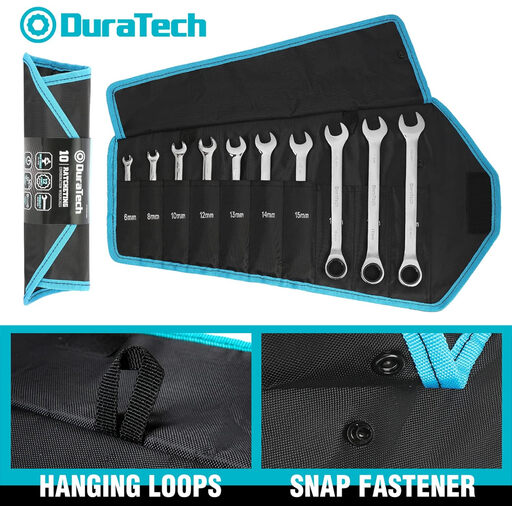
Why it suits this profile: The set offers a compact range for general maintenance, DIY projects and getting started with automotive work.
The 6 to 18 mm sizes and markings on both sides make it easier to pick the right spanner.
10 metric sizes, 72-tooth ratchet mechanism, 12-point ring end and a storage pouch.
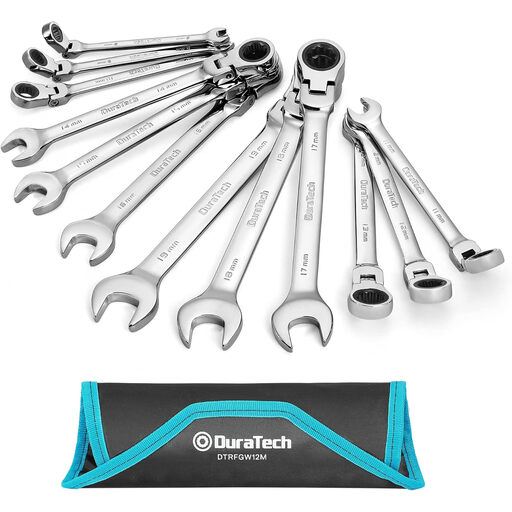
Why it suits this profile: For mechanics and maintenance technicians who often work in confined spaces and need a continuous range from 8 to 19 mm.
The flexible head is designed for hard-to-reach fixing points; according to the description, the 72 teeth require a 5-degree working arc.
12 metric sizes, flexible head up to 180 degrees, Cr-V steel and a roll-up pouch.
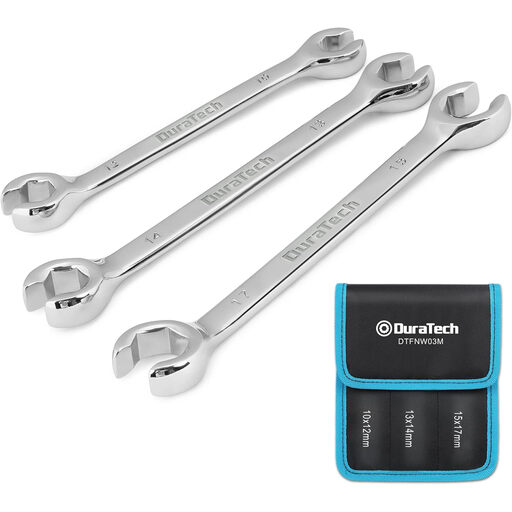
Why it suits this profile: This set is designed for brake lines, automotive maintenance and pipe connections where a standard ring spanner cannot fit around the pipe.
The flare profile partially surrounds the brake-line nut, while the 15-degree offset is designed to provide extra reach around obstacles.
3 spanners with six sizes in total: 10x12, 13x14 and 15x17 mm, with storage pouch.
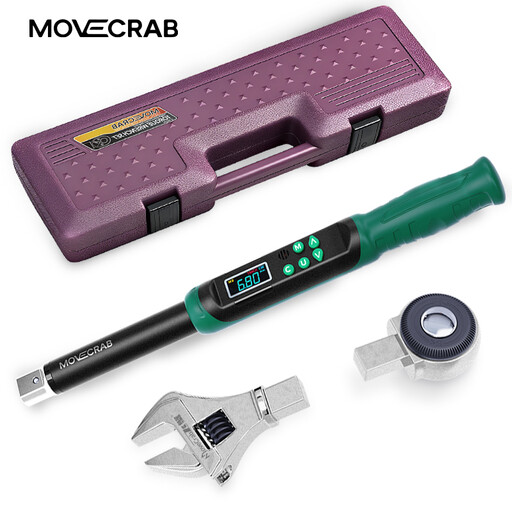
Why it suits this profile: Suitable for users who need to follow a specified tightening torque during automotive or machine maintenance.
The digital display, four units and adjustable warnings make the selected value visible while you work.
Range of 6.8–135 Nm according to the product description, ratchet and adjustable open head, plus memory for stored values.
We have put together a complete, up-to-date list of products that fully meet these strict selection criteria and the applicable European safety regulations.
A spanner set will generally last longer when you use it correctly and store it in a dry place. Keep the following points in mind:
For general automotive maintenance, a metric set of approximately 8–19 mm is often practical. For brake lines, you will also need a brake-line spanner set. For controlled tightening of critical connections, a torque wrench may be a useful addition.
A ratchet spanner set is particularly useful when you want to work quickly or have limited room to move. Check the size, ratchet mechanism and instructions for use. For very tight connections, first check whether the tool is designed for the task; do not use a length of pipe as an extension if the manufacturer advises against it.
A spanner set with a storage pouch or case keeps the sizes together and makes missing tools easier to spot. Choose a pouch with clearly marked compartments. A sturdy case is practical for use in a work van, while a roll-up pouch usually takes up less space when carried in a tool bag.
