
Soya cappuccino drinker
You want the soya drink and appliance to work well together with your coffee. A mention of plant-based milk is not the same as a comparative frothing test.


For shared use, start with a frother whose parts can be thoroughly cleaned after each use. Then compare the maximum frothing capacity, not just the heating capacity. A compact automatic model suits small portions, while a removable jug can be practical when several colleagues use the appliance. A handheld model is best if you can heat the drink separately or want cold foam. A manufacturer’s mention of soya does not guarantee the same frothing results with every soya drink.
You want the soya drink and appliance to work well together with your coffee. A mention of plant-based milk is not the same as a comparative frothing test.
You want colleagues to be able to clean the jug and whisk after use, including when soya and cow’s milk are used in turn.
You want to know how much drink the frother can handle per cycle, so you don’t confuse heating capacity with foam capacity.
Suitable if: you usually make one small portion at a time and want an automatic programme.
Trade-off: frothing capacity may be lower than heating capacity; for the Inventum MK350B, 240 ml is specified for heating only, and the jug is fixed.
Suitable if: several colleagues use the appliance one after another and you want to be able to clean the jug separately.
Trade-off: check the portion size you need and the cleaning instructions for each part; the stated total capacity is not necessarily the frothing capacity.
Suitable if: you want cold foam or already have a suitable way to heat the drink separately.
Trade-off: according to Subminimal, the NanoFoamer V2 and Lithium do not heat the drink themselves.
First, consider how easy it is to clean between colleagues. Then look at the amount of foam per cycle, followed by the space available and how the drink will be heated.
| What to consider | What should you check? | Who should pay particular attention? |
|---|---|---|
| Soya drink and foam | Check whether the manufacturer mentions soya or a suitable plant-based drink. If possible, try the soya drink used at your office. | If I mainly make soya cappuccinos, I want to know whether my drink works with the appliance; around 29% of consumers put soya frothing first. |
| Cleaning between uses | Check the instructions for each part and agree on who will clean the jug and whisk after use. If someone has an allergy, don’t rely on the dishwasher-safe label alone. | If colleagues use different drinks, I want to know how we’ll deal with residue after each use; around 36% of consumers put cleaning first. |
| Foam per cycle | Compare the separately stated frothing and heating capacities, and check the minimum fill level for small portions. Inventum specifies 75–115 ml for frothing and 240 ml for heating; WMF specifies a foam capacity of 150–350 ml. | If several colleagues are making coffee one after another, I want to know how much foam one cycle produces; around 21% of consumers prioritise the portion size per cycle. |
| Space and operation | Check the available space, whether you’ll need a separate way to heat the drink, and how to clean the exact model. A handheld frother does not heat the drink. | If I’m looking for a simple solution for a small coffee area, I want to take into account what’s already there; around 14% of consumers put ease of purchase and space first. |
The Inventum MK350B is specified for 115 ml when frothing and 240 ml for heating only. These two maximum capacities can differ on other models too.
Compare the fill line and stated frothing capacity for the exact model.
A smaller amount of foam may mean you need more cycles during a shared coffee break.
A dishwasher-safe jug doesn’t automatically mean the base, lid and all other parts are suitable for the dishwasher too. According to the manufacturer, the Inventum MK350B must be cleaned by hand straight after use.
Check the manual for separate cleaning instructions for the jug, whisk, lid and electrical base.
Subminimal states that the NanoFoamer V2 and Lithium do not heat the drink.
Choose these models for cold foam, or if you can heat the soya drink separately using another suitable method.
Soya and milk are both allergens. If different drinks are used in a shared appliance, ingredients and residue need to be taken into account.
Make ingredients clear and, where someone has a specific allergy, agree in advance on suitable cleaning or separation procedures. The NVWA describes an information requirement for businesses offering food to consumers; this does not establish which requirements apply to every private office coffee area.
The Spuma 700 Plus SM 3587 is worth considering if you’re looking for a dedicated soya programme and a removable jug.
The Lono 0413170011 is worth considering if you need several portions and a container that can be cleaned separately.
The MK350B is a compact automatic option for small portions.
The Aeroccino 4 is an automatic option with several preparation settings.
The NanoFoamer V2 and Lithium are handheld models for anyone who can heat the drink separately or wants cold foam.
These Joybuy products are suited to frothing at the office, from a handheld frother to espresso machines with a milk-frothing function. For each model, check what you’ll need to do to heat and froth the soya drink.
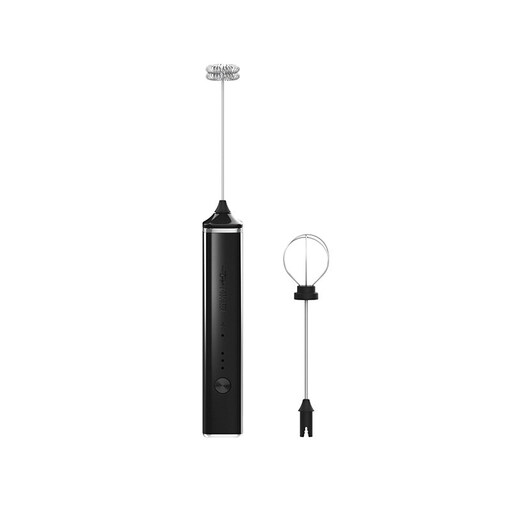 No image available
A handheld model to consider if you want to decide for yourself how to heat the drink.
The product name specifies hot and cold foam and a stainless-steel whisk.
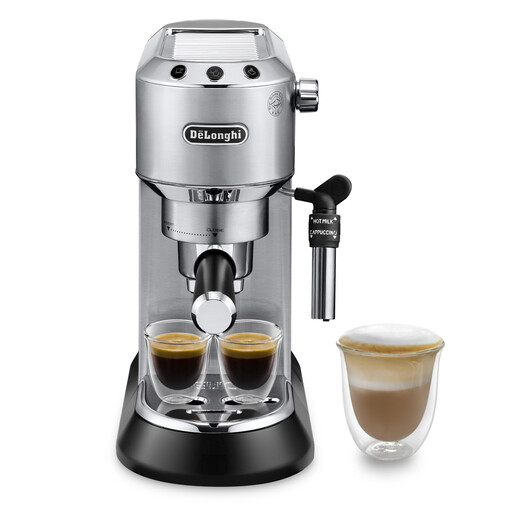 No image available
An espresso machine to consider if you want to combine making coffee and frothing milk in one appliance.
The product information specifies a manual steam wand for milk foam and a pressure of 15 bar. The foam is made by hand.
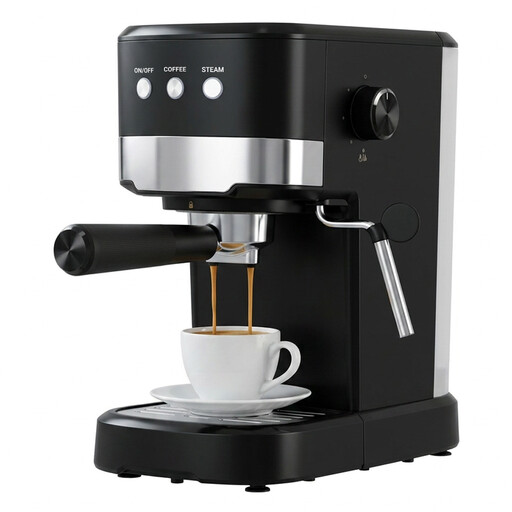 No image available
An option to consider if you’re looking for an espresso machine with a milk-frothing function too.
The product name specifies 15 bar, a steam function for milk and a 1.2 l water tank. The machine uses steam to froth milk.
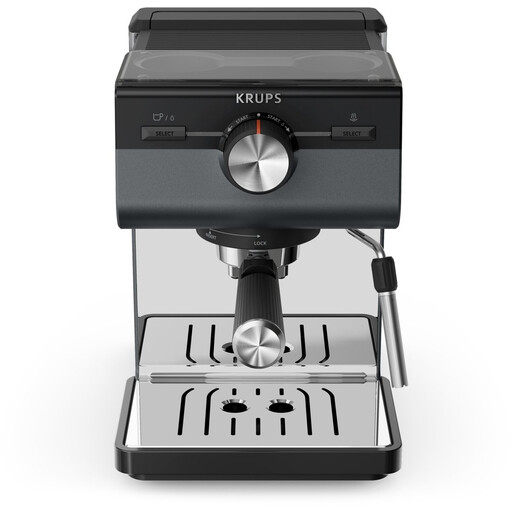 No image available
An espresso machine to consider if you also need a manual milk-frothing function.
The product information specifies a built-in steam wand for making milk foam by hand.
 No image available
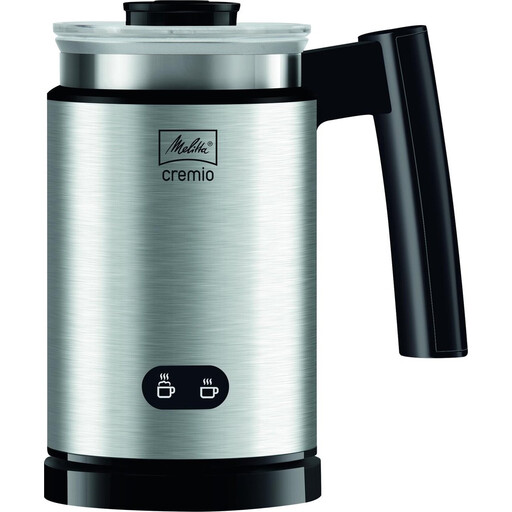
An automatic milk frother to consider if you’re looking for a product whose information mentions soya.
The product information specifies a removable lid with mixer that is dishwasher-safe. Melitta recommends using a drink with at least 3 g of protein per 100 ml for the most stable foam.
No, don’t expect the same results with every soya drink. An interview about research into plant-based milk foam, commissioned by Alpro, identifies the proteins in the drink as one factor. For the MK350B, Inventum recommends soya or oat milk specially developed for frothing; Alpro positions Barista Soya as a drink for coffee. These claims are not independent tests of every combination.
Follow the fill lines and cleaning instructions for the exact model. For the Inventum MK350B, Inventum says to clean the jug straight after use with water and a little washing-up liquid, dry it gently and not rinse the appliance under the tap. If the model has a removable jug, check which parts are dishwasher-safe.
Follow the label on the drink you use. As a specific storage example, the Voedingscentrum recommends keeping opened organic plain soya drink in the fridge for three days and returning it to the fridge promptly after use at 4 °C. This advice does not automatically apply to every barista drink.
For a consumer purchase, the seller is responsible for the statutory warranty if the product is faulty. According to ACM ConsuWijzer, consumer protection does not automatically apply when a contract is used mainly for business purposes. Check who is making the purchase, the contract terms and any service that has been promised.
Soya and milk are both allergens, but information requirements depend on the situation. The NVWA describes a legal requirement to provide information when a business offers food to consumers, for example in hospitality and catering. This does not automatically mean the same requirement applies to every private office coffee area; in catering, the responsible provider must assess which rules apply.