
Vandaag of morgen in huis

Kwaliteit gegarandeerd

Welkomstaanbiedingen ontgrendelen: GRATIS bezorging | Tot 80% korting | Gratis 30 dagen JoyPlus-proefperiode
Download de app
A carton of soya drink might seem simple to choose, but the differences between products are significant. The sugar content, the amount of soya, the packaging and the added nutrients all determine whether a variety is suitable for your breakfast, coffee, smoothie or quick snack.
This also applies if you are looking for soya milk, a plant-based milk without lactose, or a product from the Asian kitchen. The term “plant-based” alone doesn’t tell you enough about the nutritional value or flavour. With these practical checks, you can avoid a bad buy.
Packaging uses different descriptions. A product may contain no added sucrose, but it could still have maltose, maltodextrin, fruit juice or other carbohydrate sources. Always check the nutritional information table and look closely at “of which sugars” per 100 ml.
According to the product information, Alpro Unsweetened Soy Drink lists 0 grams of carbohydrates and 0 grams of sugars per 100 ml. The standard Alpro Soya Drink Original lists 2.5 grams of sugars per 100 ml. That difference matters if you drink several glasses a day.
A carton labelled “with calcium” doesn’t tell you how much calcium it actually contains. Check the table on the back. Alpro Unsweetened Soy Drink, for example, lists 120 mg of calcium per 100 ml, along with vitamins B2, B12 and D2 according to the stated product data.
With other products, calcium may appear in the ingredients list, but a full nutritional table might not be available online. In that case, it’s wise to check the packaging before using the product as a regular part of your diet.
Many varieties from Hong Kong, Korea, Singapore and other Asian markets are intended as ready-to-drink beverages. They often have a pronounced soya flavour and contain sugar. This makes them suitable as a chilled snack, but not always as a replacement for milk in savoury recipes or coffee.
An Asian soya milk may also come in a smaller size, such as 190, 200, 250 or 320 ml. A litre carton is often more practical for daily use, while smaller packs are handy for on the go.
For a neutral everyday drink, you’ll usually choose a natural variety. If you prefer a sweeter taste, vanilla, banana, pandan or red fruit are possible options. Do check the difference in sugar content. Alpro Soya Drink Banana lists 6 grams of sugars per 100 ml according to the product information; the vanilla variety lists 6.8 grams per 100 ml.
An unsweetened soya drink works better in porridge, pancakes, smoothies and savoury sauces when you want to control the flavour yourself. For drinking straight, an original or flavoured variety may be more enjoyable.
Compare protein per 100 ml rather than relying on phrases like “rich in plant-based protein”. The Alpro Original and Unsweetened varieties list 3 and 3.3 grams of protein per 100 ml respectively. Vitasoy Original lists 2 grams per 100 ml.
The soya content can also give you an idea of the drink’s character. Yeo’s Black Soy Drink lists 8% soya extract according to the product description. Joyoung Original Ground Pure Soy Milk lists 8.5% soya beans. These figures aren’t directly comparable one-to-one, because manufacturers may use different terms and measuring methods.
An UHT drink can be stored outside the fridge before opening, following the instructions on the packaging. Once opened, the carton must be kept refrigerated and used within the stated period. Always check the best-before date and the information on the actual label.
A 1-litre soya drink is practical for home use, but it’s only good value if you finish the carton in time. Small packs of 190 to 320 ml reduce waste and are ideal for lunch, the office or a school bag.
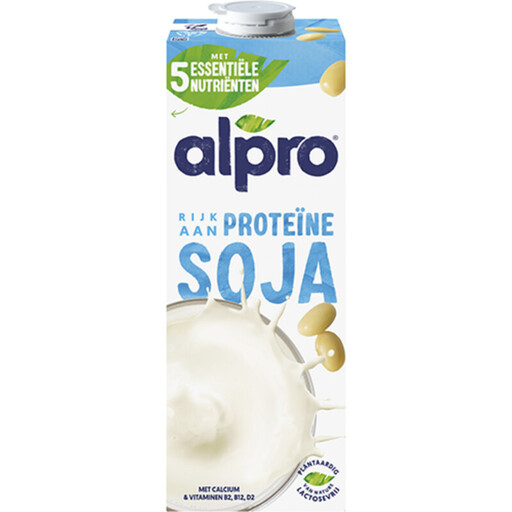
Why this fits the profile: A versatile litre carton for breakfast cereals, smoothies or use in coffee. According to the product information, it contains 3 grams of protein and 2.5 grams of sugars per 100 ml.
The nutritional table makes sugar, protein and fat per 100 ml clear, so you don’t have to rely on the front of the pack alone.
1 litre, UHT packaging, 3 grams of protein per 100 ml and, according to the product information, a source of calcium and vitamins.
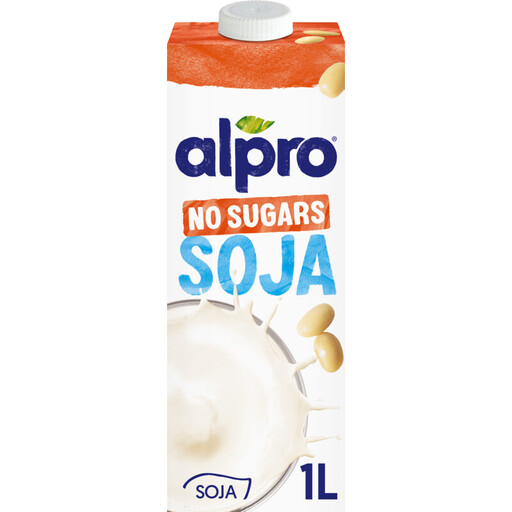
Why this fits the profile: Ideal when you want to add sweetness yourself or need a neutral base for overnight oats, sauces and smoothies.
The product information lists 0 grams of sugars per 100 ml. Always check the actual label on delivery.
3.3 grams of protein and 120 mg of calcium per 100 ml according to the stated nutritional information; suitable for vegan and lactose-free dietary choices according to the product description.
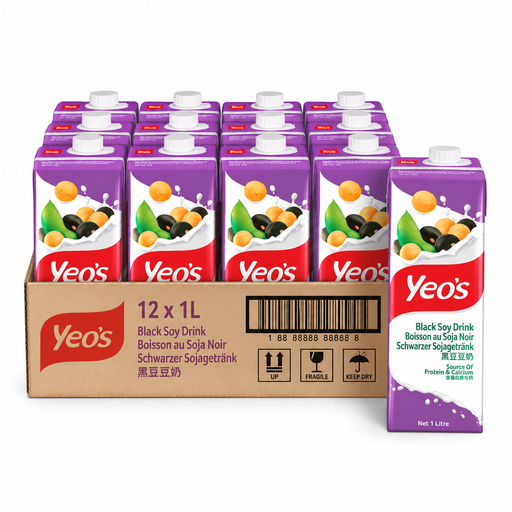
Why this fits the profile: A bulk pack for households that regularly drink Asian soya drinks and want to stock up.
The contents are clearly specified as 12 cartons of 1 litre. This makes it easier to plan your stock and shelf life than with individual small packs.
According to the product information, the drink contains 2 grams of protein, 5 grams of sugars and 67 mg of calcium per 100 ml; made with soya and black soya extract.
We’ve put together a full, up-to-date list of products that fully meet these strict selection criteria and comply with current European safety regulations.
In everyday language, the terms are often used interchangeably. In shops, “soya drink” is usually used for a plant-based alternative to milk. The composition varies by brand, so pay attention to soya content, protein, sugar, calcium and allergens.
A product based on soya naturally contains no lactose. However, you should still check the ingredients and allergen information. Some blended powders or grain drinks may contain milk powder. Also check the actual packaging if you follow a strict vegan diet.
Keep an opened carton in the fridge and use it within the period stated on the packaging. Shake the drink before use if recommended. Store unopened UHT cartons according to the instructions in a cool, dry place, away from direct sunlight.
