
Vandaag of morgen in huis

Kwaliteit gegarandeerd

Welkomstaanbiedingen ontgrendelen: GRATIS bezorging | Tot 80% korting | Gratis 30 dagen JoyPlus-proefperiode
Download de app
A pack of soy milk powder seems simple enough: mix the powder with water and you’re done. Yet products vary greatly in taste, ingredients, nutritional values and preparation method. If you only look at the front of the packaging, you could end up with a drink that’s too sweet, difficult to dissolve, or not suited to your daily use.
These three pitfalls are common:
The percentage of soya beans is often listed in the quantitative ingredient declaration. Across the range, values vary from around 38% to 100%. For a classic product like YON HO Soya Milk Powder Original Flavour, 58% soya beans is stated. The ingredients also include maltose syrup and dextrin.
If you’re looking for the simplest possible composition, consider soya powder with 100% soya beans. Joyoung Pure Soy Milk Powder lists soya beans as an ingredient and no added sugar in the product description. Always check the current label when purchasing, as product information and packaging can change.
Soya is a mandatory allergen to declare. Some varieties also contain cereals with gluten, such as barley and oats. This applies, for example, to the variant with barley green juice. Read the allergen information carefully if you need to avoid soya or gluten.
A taste description like “mildly sweet” or “naturally sweet” doesn’t tell you how much sugar you’re consuming. Compare the nutritional information table per 100 grams and pay attention to the order of ingredients.
Examples from the product information:
If you want to control the flavour yourself, choose an unsweetened soy milk powder and add fruit, cinnamon or cocoa as you wish. Bear in mind that a flavoured variety such as strawberry, matcha or red date contains extra ingredients and often more carbohydrates.
For home use, a bag of 300 to 350 grams can be practical. For the office, travel or a sports bag, individual sachets are more convenient. A portion of 20 to 25 grams saves you having to weigh each time, but packaging with individual sachets can work out more expensive per gram.
For making soy milk with hot water, the general method is:
The exact quantities vary. YON HO Unsweetened, for example, recommends around 25 grams of powder with 200 ml of water at 70–80 °C. Soyspring Drink Powder uses one sachet with 150–200 ml of hot water. Always follow the instructions on the packaging.
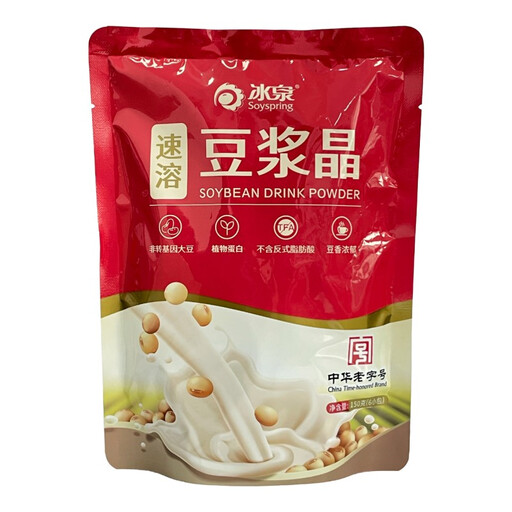
Why this suits the profile: The pack contains 6 sachets of 25 grams. This makes portioning easy for a first introduction to instant soy milk.
The portions reduce waste and the preparation instructions are straightforward: one sachet with 150–200 ml of hot water. Do note the added sugar in the ingredients list.
150 g pack, 48% soya according to the product information, and suitable for hot or cold preparation.
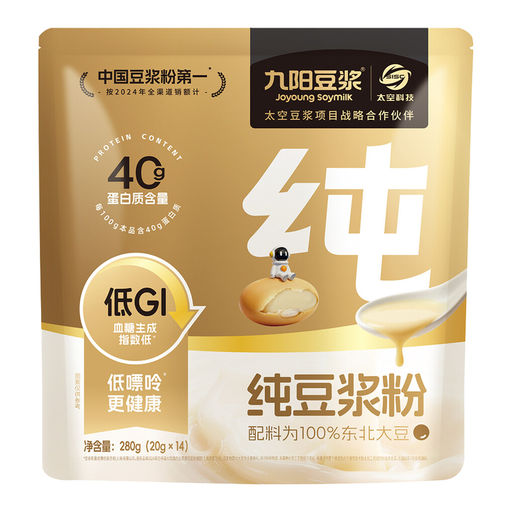
Why this suits the profile: The product description states 100% soya beans and 40 grams of protein per 100 grams. This appeals to those who prioritise a short ingredients list.
According to the product information, no syrup, sugar or flavourings are listed as separate ingredients. Check the label before purchase and be aware of the pure soya taste.
100% soya beans according to the description, 40 g protein per 100 g, and suitable for drinks, smoothies or recipes.
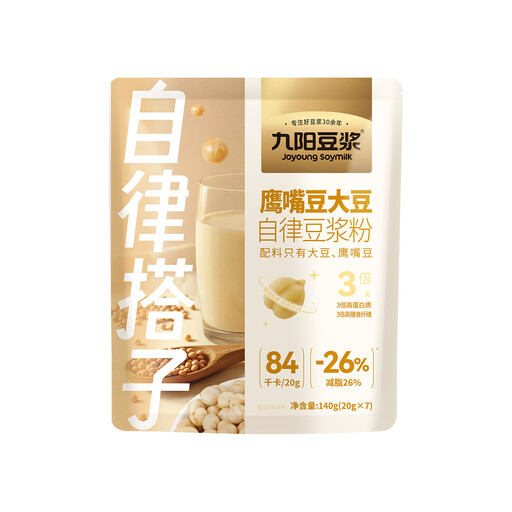
Why this suits the profile: The sticks combine soya beans with chickpeas and are individually portioned. This is practical for breakfast, the office or after exercise.
The individual portions make dosing predictable. As the product states 80% soya and 20% chickpeas, it’s not pure soy milk: check this if you’re looking for a single-ingredient composition.
36 g protein per 100 g according to the product information, and 7 individual sachets of 20 g.
We’ve put together a full, up-to-date list of products that fully meet these strict selection criteria and comply with current European safety regulations.
Use the amount stated on the packaging, usually 20 to 30 grams per 150 to 250 ml of water. First mix with a little warm water to form a smooth paste. Then add the rest while stirring continuously. This reduces the chance of lumps. Some products, such as cold-brew soy milk powder, are also suitable for cold water.
Store the powder in a cool, dry place and keep it tightly sealed. Moisture will cause the powder to clump together. Some packaging advises using the product within about a month of opening; others simply state “consume as soon as possible”. Always check the packaging and use the stated best-before date.
No. “Unsweetened” or “without added sugar” means that no extra sucrose has been added, but the product may still contain natural sugars or ingredients such as maltose syrup. So look at both the ingredients list and the nutritional information under “of which sugars”.
