
Vandaag of morgen in huis

Kwaliteit gegarandeerd

Welkomstaanbiedingen ontgrendelen: GRATIS bezorging | Tot 80% korting | Gratis 30 dagen JoyPlus-proefperiode
Download de app
Soy milk powder is a handy option for breakfast, the office, travel or a quick plant-based drink that doesn't need refrigeration. With hot water, you can make a warm cup of instant soy milk in no time. However, not all varieties are the same. The differences lie mainly in the amount of soy, added sugars, protein content and the way it's packaged.
If you only look at an attractive package or the words "natural" and "nutritious", you could end up buying a product that isn't ideal for everyday use. Below, you'll find the points to check before you buy soy milk powder online.
Packaging often features terms like "no added sugar" or "original flavour". That doesn't automatically mean the powder contains no sugars. Maltose syrup, fructose or other sweetening ingredients may still be present.
Always check:
A product made with only soybeans may naturally contain a limited amount of sugar. With a variety containing maltose syrup, that's usually a different story. Unsweetened soy milk powder is therefore a choice you make based on the ingredients list, not just the front of the packaging.
A high protein content sounds appealing, but a cup often contains just 20 to 30 grams of powder. A product with 40 grams of protein per 100 grams provides around 8 grams of protein when you use 20 grams of powder, before you add water.
So pay attention to both values:
A soy milk powder with a high protein content can be useful for athletes or people who want to include more plant-based protein in their diet. It's still important to factor in the portion size and the rest of your food intake.
"Instant" doesn't mean the same thing for every product. Some types dissolve particularly well in hot water, while others can also be prepared with cold or lukewarm water. Some sediment may also form, especially with powders made from pure beans or added grains.
Check before you buy:
For on-the-go, sticks or sachets are practical. For daily use at home, a larger bag can be more cost-effective, provided you store the powder in a dry, well-sealed container.
The percentage of soy gives a useful point of comparison, but it doesn't tell you everything about taste or texture. The range includes products with 48%, 50%, 54%, 58% or 100% soy, for example. The remaining ingredients can include maltose syrup, sugar, maltodextrin, oil, calcium carbonate, grains or flavourings.
If you want a simple composition, choose a product where soybeans are clearly listed at the top of the ingredients list. Also check for allergens: soy must be declared as an allergen. Products containing oats, barley or other grains are not suitable for everyone who needs to avoid these ingredients.
A classic Chinese soy drink is often slightly sweet. The same applies to many instant soy milk and soy drink powders. Fruit and flavour varieties, such as red date, strawberry or rose, may contain extra sweetening ingredients.
Choose based on your use:
A sachet of 20 to 25 grams is handy for a single cup. Many products require around 120 to 200 millilitres of water. A larger pack of 300 to 600 grams is better suited for daily use at home.
Also pay attention to storage. Store opened soy milk powder in a cool, dry place, seal the packaging well and keep it away from moisture. It's best to drink the prepared drink straight away. Always follow the instructions on the packaging, as the temperature and ratio vary from product to product.
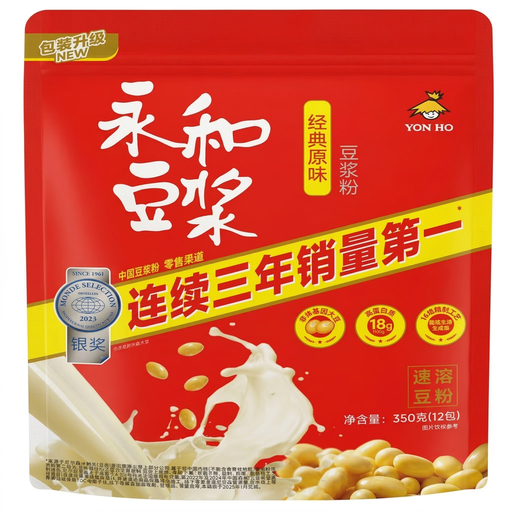
Why this fits the profile: The 350-gram pack is suitable for getting to know instant soy milk at home or in the office. You can prepare a cup using around 25 to 30 grams of powder and 200 to 250 ml of water.
The ingredients and nutritional values are clearly stated. However, be aware of the presence of maltose syrup and the sugar value of 32 grams per 100 grams.
350-gram content, original flavour and preparation with hot or cold water.

Why this fits the profile: According to the product information, this product contains 100% soybeans and no added sugar. It suits those who value a short ingredients list and a clear soy flavour.
According to the stated ingredients list, the composition contains no sugar, maltose syrup or flavourings. The nutritional information states 40 grams of protein per 100 grams.
100% soybeans, no added sugar and 5.2 grams of dietary fibre per 100 grams.
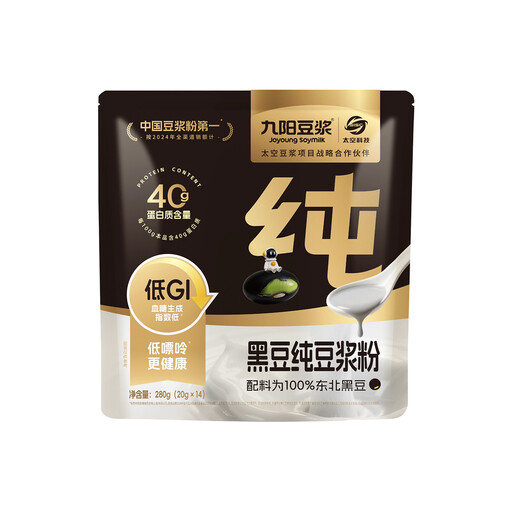
Why this fits the profile: The 14 individual sachets are practical for breakfast, commuting, the office or after exercise. Per 100 grams, 40 grams of protein is stated.
The portions are pre-measured and, according to the description, the product contains only black soybeans. No sugar, flavourings or preservatives are listed.
20 grams per sachet, 14 portions, 100% black soybeans and 40 grams of protein per 100 grams.
We've put together a full, up-to-date list of products that fully meet these strict selection criteria and comply with current European safety regulations.
For a familiar Chinese soy milk, you could also look at YONHO Original Flavour 300 grams. According to the product information, this product contains soybeans, maltodextrin, sugar, calcium carbonate and salt. The protein content is 25 grams per 100 grams.
Prefer a flavoured variety? The YONHO Red Date Flavor contains 58% soybeans and 0.1% red date concentrate. Bear in mind the maltose syrup and sugar in the ingredients list. For cold use, Soyspring Cold Brew Soy Milk Powder is designed: one stick is mixed with 120 to 180 ml of cold water or water at room temperature.
A product with oats, such as Yon Ho Oat & Soybean Powder, can offer a different texture and flavour. According to the product information, this contains 54% soybeans and oat components. Because oats and barley fall under grains containing gluten, it's important to read the allergen information.
First, put the powder in the cup and add a small amount of warm water. Stir this into a smooth paste, then gradually add the rest of the water. Use the temperature and ratio on the packaging. For some products, the recommended temperature is around 70 to 80 °C.
This varies per pack. Store the powder in a dry, well-sealed container and check the manufacturer's instructions. Some products recommend use within one month or thirty days after opening. It's best to drink prepared soy milk straight away.
That depends on the price per pack, the recommended serving size and the amount of water per cup. So don't just compare the price of a bag; calculate the cost per prepared serving. Individual sachets are often convenient, while a larger pack can be practical for daily use.
