
Breakfast lovers who like to choose their own sweetness
Want to choose fruit, nut butter or another sweet topping without the bread already containing raisins? Compare the ingredients and sugars per 100 g for the bread base.


Choose soft rye bread if you want a compact slice for your sweet topping, or rye sourdough crispbread if you prefer a dry, crunchy base. Then check each product’s ingredients to see whether it contains wholemeal rye and sourdough, whether the bread itself contains sweet ingredients, and which allergens are listed. Sourdough does not make rye products gluten-free.
Want to choose fruit, nut butter or another sweet topping without the bread already containing raisins? Compare the ingredients and sugars per 100 g for the bread base.
If you’re looking for a dry, crisp base for your topping, compare rye sourdough crispbread with soft rye bread. They’re different types of product, even if both contain rye and sourdough.
If gluten, other allergens or the type of salt used matters to your choice, read the ingredients and allergen information on the specific pack.
First decide whether you want soft rye bread or crispbread. Then compare the ingredients and nutritional information for the product type that suits your breakfast.
| What to look for | What to check when buying | Who it matters to |
|---|---|---|
| Rye and sourdough | Look for wholemeal rye and sourdough in the ingredients list; don’t judge the ingredients by the bread’s dark colour. | If you’re specifically looking for rye sourdough, you’ll want to see those ingredients on the pack. Around 36% of consumers prioritise these ingredients. |
| Sugars, fibre and salt | Compare the nutritional information per 100 g and check whether raisins or other sweet ingredients have been added. | If you’re adding your own sweet topping, you’ll want to know how much sweetness the bread already provides and compare the other nutritional values too. This nutritional profile matters most to around 29% of consumers. |
| Soft or crunchy | Check whether the product is rye bread or crispbread, and read the storage instructions. | You’ll want to know whether your breakfast will have a soft slice or a dry, crunchy base. Texture is the main consideration for around 21% of consumers. |
| Allergens and type of salt | Read the allergen information and check which type of salt is listed in the ingredients. | If you need to avoid certain ingredients or want to know which type of salt is used, check the label rather than relying on the product name. Around 14% of consumers make this their top priority. |
Rye contains gluten. The rye sourdough products reviewed also list gluten-containing cereals; the way they’re made doesn’t make them gluten-free.
If you need a strictly gluten-free product, don’t choose ordinary rye bread or rye crispbread. Check that a suitable alternative is labelled gluten-free.
The rye products reviewed have different ingredients: alongside rye and sourdough, they may contain wheat, yeast or raisins, for example. So a similar appearance doesn’t mean they have the same ingredients.
Read the ingredients list for the product you want to buy, especially if you’re specifically looking for wholemeal rye or sourdough.
The Brood van Soma Rozijnen Noten Bruin Rogge-Tarwebrood reviewed contains raisins and hazelnuts. Jumbo lists 8.4 g of sugars per 100 g for this bread; that figure alone doesn’t tell you how sweet the topping you add will be.
If you want the topping to provide most of the sweetness, compare a bread without sweet additions with a variety that already contains them.
The Brood van Soma Limburgs Volkoren Roggebrood reviewed lists iodised salt, but that doesn’t mean all rye bread contains it. The Netherlands Food and Consumer Product Safety Authority states that iodine compounds may be present in bread, bread substitutes and other bakery products only through baker’s salt, with a maximum of 65 mg of iodine per kg of salt.
Check the ingredients list of the specific product to find out which type of salt it contains.
The dark sourdough rye bread reviewed is a soft bread base for anyone who wants to add their own sweet topping.
The Sourdough Rye variety reviewed is crispbread made with wholemeal rye, not soft rye bread.
The varieties reviewed range from wholemeal rye bread to rye and wheat bread with raisins and nuts.
The Sourdough Crispbread variety reviewed offers a crunchy rye base.
These products show two options for a sweet breakfast: crunchy rye sourdough crispbread and rye bread whose ingredients you can check to make sure they suit your topping. Don’t assume the rye bread contains sourdough without checking the pack.
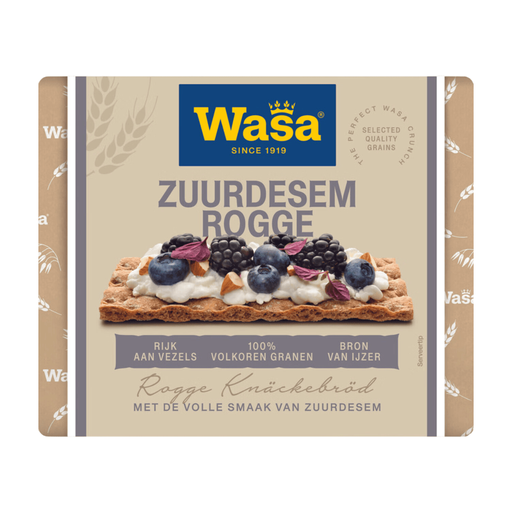 Image unavailable
For anyone who wants a dry, crunchy base for a sweet topping instead of a soft slice of rye bread.
For Wasa Sourdough Rye, 235 g, Jumbo lists wholemeal rye, rye sourdough, 19 g of fibre and 1.2 g of salt per 100 g. The product contains gluten-containing cereals.
 Image unavailable
For anyone considering rye bread as a base for their choice of sweet topping. If sourdough is essential to your choice, check the current ingredients.
The product name states that the pack contains 9 pieces. Check the pack for the ingredients, allergens and nutritional information for this variety.
No, ordinary sourdough rye bread isn’t gluten-free: rye contains gluten. The way it’s made doesn’t change that. If you need a strictly gluten-free product, check that an alternative without rye is labelled gluten-free.
Check whether the bread itself contains sweet ingredients and compare the sugars per 100 g. Albert Heijn lists no added sugars for Hollandia Dark Sourdough Rye Bread; Jumbo lists raisins and 8.4 g of sugars per 100 g for the Brood van Soma Rozijnen Noten Bruin Rogge-Tarwebrood reviewed. Your topping will also affect how sweet your breakfast tastes overall.
No, don’t assume that all rye bread contains the same type of salt. The Netherlands Food and Consumer Product Safety Authority states that iodine compounds may be present in bread, bread substitutes and other bakery products only through baker’s salt, with a maximum of 65 mg of iodine per kg of salt. This doesn’t mean all rye bread has to contain iodised salt. Read the ingredients list of the product you choose.
The Netherlands Nutrition Centre recommends storing opened dark rye bread in the fridge for two weeks or in the freezer for one to three months. Also follow the storage instructions on the packaging of your product.