What should you look for when choosing?
First decide when you’ll be serving the rolls and how many people you’re catering for. Then check whether the product name, ingredients and preparation method match what you mean by a sourdough roll.
| What to consider | What to check | Who it matters to |
|---|
| Serving time |
Number of rolls per pack and the preparation instructions. For its 125 g brown multigrain sourdough roll, PLUS recommends baking in an oven at 220 °C for 8–10 minutes. |
If I want to serve rolls to several guests at once, baking them needs to fit my oven capacity and schedule. Around 40% of consumers prioritise serving time. |
| Sourdough and preparation |
The ingredients list and any information about the preparation method; the product name alone doesn’t give you the full picture. |
Before choosing a roll for the evening, I want to know what ‘made with sourdough’ means for that particular product. Around 30% of consumers put this check first. |
| Type of grain |
The full product name, ingredients and nutritional information per 100 g. Wholemeal, multigrain and spelt don’t mean the same thing. |
I want to make a conscious choice between white, wholemeal, multigrain and spelt, rather than judging by the colour of the roll. Around 20% of consumers prioritise the type of grain. |
| Ingredients and allergens |
The current allergen information; ask the retailer about iodised salt if it’s essential to your choice. |
If certain ingredients or allergens matter to me, I want to be able to check the specific roll. For around 10% of consumers, this is the first requirement when buying. |
Rolls at Joybuy
This pack of four sourdough rolls could suit a Sinterklaas Eve gathering with several people. Check the preparation instructions before relying on being able to bake them just before eating.
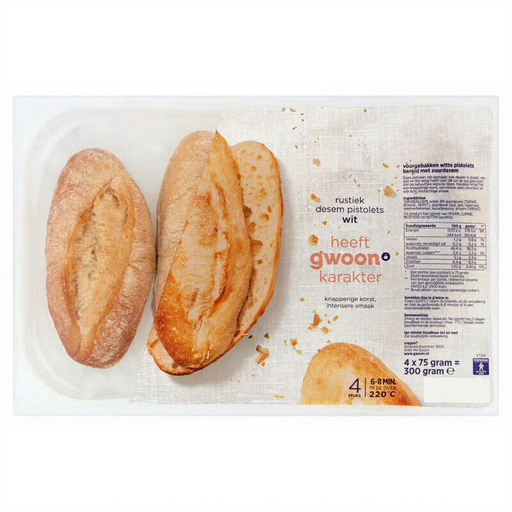 Image unavailable
g'woon rustic white rolls, 4 pieces
A pack of four for anyone looking for sourdough rolls to serve to several people.
According to the product description on Joybuy, the rolls are made with wheat flour and sourdough. Check the current packaging for allergen information, and confirm the preparation method before adding them to your oven schedule.
View at Joybuy
Frequently asked questions
Does ‘made with sourdough’ mean a roll was made by an artisan baker?
No. On its own, the term doesn’t describe an artisan method or a particular fermentation time. Read the ingredients and, if necessary, ask about the preparation method for the specific product.
How do I choose rolls for several guests?
Start with the number of rolls you need and when you want to serve them. Jumbo lists white and multigrain sourdough rolls in packs of four; if you choose a bake-at-home option, check that the preparation fits your oven schedule.
Is a spelt sourdough roll gluten-free?
No, spelt contains gluten. Check the current packaging for other allergens in the specific roll, too.
Is iodised baker’s salt a legal requirement in the Netherlands?
No. According to NBC / brood.net, its use is not a legal requirement. Overheid.nl published an agreement on iodised salt in bakery products in 2008; if the type of salt affects your purchase, ask about it in the specific roll.


