
If you’re looking for rolls with fibre
If you buy rolls for several breakfasts or lunches, you can compare the wholemeal label and the fibre content per 100 g. A Kaiser roll and a sourdough roll don’t have to be the same type of bread.


When doing your weekly shop, don’t choose based on the word ‘sourdough’ alone. Check whether the roll is wholemeal, how much fibre it contains per 100 g and how it should be stored. If the Kaiser shape matters more to you than wholemeal ingredients, a white bake-at-home Kaiser roll containing a sourdough ingredient could fit the bill. If wholemeal and sourdough are both priorities, rolls without the Kaiser shape are also worth considering. Check each product to see whether it contains iodised salt.
If you buy rolls for several breakfasts or lunches, you can compare the wholemeal label and the fibre content per 100 g. A Kaiser roll and a sourdough roll don’t have to be the same type of bread.
The product name alone won’t tell you whether a roll has been raised using sourdough only. The ingredient lists for the Jumbo and PLUS sourdough rolls described here include both sourdough and yeast.
For a big weekly shop, the number of rolls, how they’re prepared and the storage advice all matter. If you plan to use a pack over several days, check the instructions for storing it after opening.
First decide whether you mainly want Kaiser rolls or whether wholemeal sourdough rolls would also suit you. Then compare the ingredients and storage advice for the products you’re considering.
| What to look for | What to check | Who is it for? |
|---|---|---|
| Wholemeal and fibre | Check the wholemeal label and compare the fibre content per 100 g. | If rolls are on the menu on several days, I want to know how much fibre the different options contain. Around 31% of consumers prioritise wholemeal and fibre. |
| Sourdough and ingredients | Look for sourdough in the ingredients list and check whether yeast is also included. | If you’re choosing sourdough specifically, you’ll want to see what’s in the roll rather than rely on the name alone. This is the main priority for around 25% of consumers. |
| Preparation and storage | Check the preparation method and instructions for storing the rolls after opening or freezing them at home. | I want to be able to enjoy the rolls on different days without making assumptions based on unsuitable storage advice. Around 25% of consumers prioritise this kind of week-long convenience. |
| Pack size to suit your needs | Compare the number of rolls and total weight with the occasions you plan to eat them. | If I’m buying for several people or occasions, I want a pack that suits how it will be used. Around 19% of consumers give pack size top priority. |
A white roll can contain a sourdough ingredient without being wholemeal. The word ‘sourdough’ on its own tells you nothing about the fibre content.
Check the wholemeal label and compare the fibre content per 100 g if these factors will affect your choice.
The ingredient lists for the Jumbo and PLUS sourdough rolls described here include both sourdough and yeast.
Read the full ingredients list if you want to distinguish between a roll containing a sourdough ingredient and one raised using sourdough alone.
According to the Voedingscentrum, using baker’s salt when baking bread isn’t compulsory. The terms ‘sourdough’ and ‘wholemeal’ don’t tell you whether it has been used.
If it matters to your choice, check the packaging to see whether iodised salt or baker’s salt is listed as an ingredient.
A product you can bake at home isn’t automatically suitable for freezing at home. Instructions for storing it after opening also vary between packs.
Choose a number of rolls that suits when you’ll eat them, and follow the storage and freezing instructions for the product you’ve chosen.
Jumbo’s bread range includes Kaiser rolls, as well as separate white and multigrain sourdough rolls.
Albert Heijn sells white bake-at-home Kaiser rolls and a separate wholemeal Kaiser roll.
PLUS sells Dutch Bakery Bio wholemeal sourdough rolls, among other products. They’re a bake-at-home option if you want to combine sourdough and wholemeal.
De Afbakker is an ALDI brand of bake-at-home rolls, including white Kaiser rolls.
Dirk sells 1 de Beste bake-at-home Kaiser rolls for preparation in an oven or air fryer.
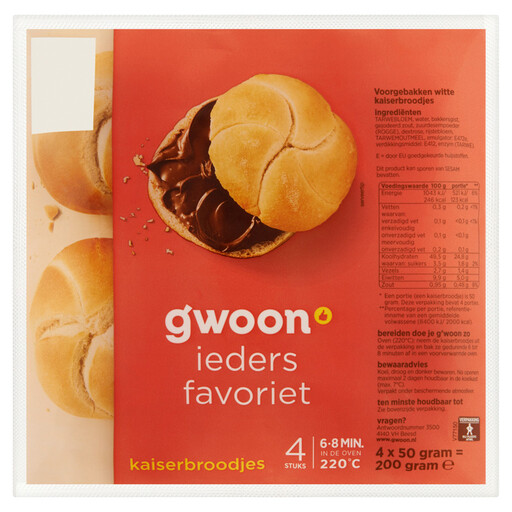
If you’re specifically looking for Kaiser rolls for your weekly shop, there’s a pack of four below. Compare the pack with your preferences for ingredients and storage.
 No image available
A pack to consider if you’re specifically looking for Kaiser rolls for your weekly shop. The product name states that it contains 4 rolls, with a total weight of 200 g.
Before planning to eat the rolls over several days, check the packaging for the ingredients, fibre per 100 g, and preparation and storage instructions.
No. The ingredient lists for the Jumbo and PLUS sourdough rolls described here include both sourdough and yeast. If the way the roll is raised matters to your choice, check the ingredients of the one you want to buy.
No. Sourdough and wholemeal describe different qualities. Check the wholemeal label and compare the fibre content per 100 g if you want to assess rolls on these points.
Follow the instructions on the packaging for the product you’ve chosen. Albert Heijn says its white bake-at-home Kaiser rolls aren’t suitable for freezing at home; for its Dutch Bakery Bio wholemeal sourdough rolls, PLUS advises storing them in the fridge after opening and eating them within two days.
No, you can’t tell from the type of bread. According to the Voedingscentrum, using baker’s salt when baking isn’t compulsory. If you want to take this into account when choosing, check the ingredients list for iodised salt or baker’s salt.