
Home bakers who want to use sourdough
You want to know that the breakfast cake really contains starter or sourdough discard. Baking it yourself lets you control the recipe, but it takes preparation.


Choose homemade breakfast cake if you want to be sure it contains sourdough for the Sinterklaas procession and have time to bake. For quick serving, pre-sliced, packaged breakfast cake is a practical choice, but only treat it as a sourdough option if the ingredients or recipe confirm this.
You want to know that the breakfast cake really contains starter or sourdough discard. Baking it yourself lets you control the recipe, but it takes preparation.
You’re looking for breakfast cake you can serve without baking it yourself, for example in pre-sliced portions or individual servings. If sourdough matters, check for it separately.
You compare the ingredients, nutritional information and allergens for the specific product. Words such as wholemeal, zero or gluten-free don’t tell you what other ingredients the cake contains.
First decide whether sourdough is essential or whether serving it quickly matters more. Then check the ingredients on the recipe or packaging for anything that’s important to your guests.
Choose this if: you want to serve breakfast cake and check for yourself that the recipe contains starter or sourdough discard.
Bear in mind: baking takes time and, if you don’t already have a starter, you’ll need to prepare one; Jumbo says making a starter can take 3 to 6 days.
Choose this if: you want to serve slices or portions without baking them yourself beforehand.
Bear in mind: regular breakfast cake isn’t automatically a sourdough cake; check the packaging to be sure.
| What to consider | What should you check? | Who is this important to? |
|---|---|---|
| Confirmed sourdough | Look for sourdough or starter in the ingredients or recipe; rye alone doesn’t confirm that sourdough was used. | If I want to serve breakfast cake made with sourdough specifically, I want to know it’s actually in the recipe. This certainty is the top priority for around 40% of consumers. |
| Quick to serve | Compare the number of slices or individual portions and check that the packaging suits the number of guests. | When I don’t have much time to prepare, I want to be able to portion out the cake straight away. Around 30% of consumers prioritise convenience when serving. |
| Ingredients and allergens | Read the ingredients, allergen information and nutritional information for the specific product, per 100 g and per serving if needed. | If certain ingredients matter to my guests, I don’t want to rely on the product name. The ingredients are the most important factor for around 20% of consumers. |
| Salt used | If you’re baking it yourself, check which salt you use, or ask about the salt in unwrapped cake from a bakery. | If the type of salt used matters to my choice, I don’t want to guess from the name of the bakery product. This check is the top priority for around 10% of consumers. |
Breakfast cake can contain rye flour and still be made with other raising agents. Peijnenburg lists rye flour and raising agents in its plain variety, but no sourdough.
Check the ingredients or ask a baker which recipe they use before choosing the cake as a sourdough option.
The gluten-free Peijnenburg breakfast cake listed by PLUS also contains lupin and milk. Gluten-free also tells you nothing about whether it contains sourdough.
Check the allergen information for the chosen product for every guest with a relevant allergy.
According to the Voedingscentrum, bakers aren’t required to use baker’s salt. So you can’t tell which salt was used just from the words ‘sourdough’ or ‘bakery product’.
Ask about the salt used in unwrapped breakfast cake, and choose which salt to use if you’re baking it yourself.
A claim on the front of the pack doesn’t give you the full picture of the ingredients, sugars, fibre or allergens in that product.
Compare the latest nutritional information per 100 g or per serving, and read the ingredients list.
A point of comparison for regular packaged breakfast cake alongside a homemade sourdough version.
A supermarket option for comparing packaged breakfast cake in different formats; Jumbo also publishes information about making a sourdough starter.
An ALDI own-brand option for comparing pre-sliced, packaged breakfast cake.
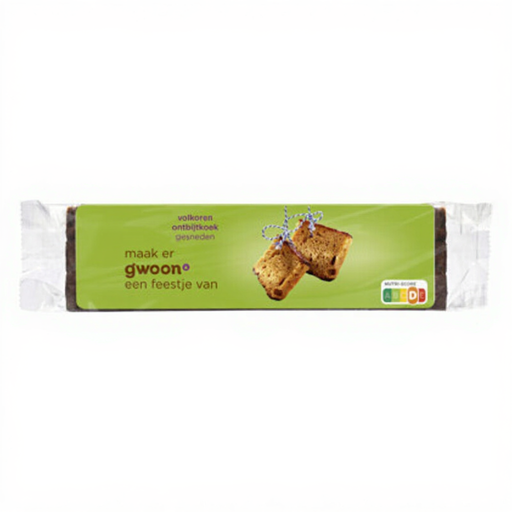
This packaged breakfast cake suits you if you want to serve slices without baking them yourself. If you specifically want breakfast cake made with sourdough, check the ingredients of the product you choose before buying.
 No image available
An option if you want to serve pre-sliced portions at the procession without baking them yourself.
If sourdough is essential to you, check the ingredients: the wholemeal label doesn’t confirm which raising agent was used.
Check whether sourdough or starter is explicitly listed in the ingredients or recipe. Rye alone isn’t enough: according to its own product information, Peijnenburg’s plain variety lists rye flour and raising agents, but no sourdough.
Start earlier if you need to make a sourdough starter: Jumbo says this takes 3 to 6 days. If you already have a starter or sourdough discard, you’ll still need to allow time to bake according to your chosen recipe.
Sourdough doesn’t mean gluten-free. Only choose a product that is explicitly labelled gluten-free, and check the other allergens too; the gluten-free Peijnenburg variety listed by PLUS contains lupin and milk.
No, don’t assume there’s a general requirement to use it: according to the Voedingscentrum, bakers aren’t required to use baker’s salt. If the type of salt matters to your choice, ask which salt was used in unwrapped cake.
Ask whether the recipe contains sourdough or starter, and which allergens are in the cake. The Netherlands Food and Consumer Product Safety Authority says allergen information for unwrapped food must be provided to consumers in a way other than on a packaging label; ask before buying it for your guests.