Choose wholemeal sourdough bread that you can toast yourself if you want to make larger topped toasts. Packaged sourdough toast takes less preparation for small bites; plain toast and rice toast are other ready-to-serve options, but they are not necessarily sourdough products. Check the ingredients and allergen information for each product: the word ‘sourdough’ alone tells you nothing about whether it is wholemeal, contains iodised salt or is gluten-free.
Who are the different toast options for?
Barbecue hosts who like generous toppings
Want to make larger bites with a spread or grilled ingredients? Sourdough bread you can slice lets you choose the size and toast the pieces just before adding the toppings. Small, packaged toasts offer less room for toppings.
Hosts preparing a sharing platter
Want to buy toasts in advance so you don’t have to slice or toast them when it’s time to serve? Ready-made toasts are ideal for small bites; keep them dry and add the toppings just before serving.
Shoppers comparing labels
If you’re checking for wholemeal ingredients, allergens, salt or iodised salt, compare the exact products you’re considering. These characteristics aren’t guaranteed just because a product is labelled ‘sourdough’.
What should you look for when choosing?
Wholemeal sourdough bread to toast yourself
Choose this for: larger toasts when you want to decide the size yourself.
Bear in mind: you’ll need to slice and toast it just before serving.
Packaged sourdough toast
Choose this for: small, ready-to-serve toasts with no need to toast them yourself.
Bear in mind: ingredients vary by product; the Jos Poell Zuurdesem Toast described by Albert Heijn contains wheat and rye.
Other ready-made toast
Choose this for: small nibbles where sourdough isn’t essential.
Bear in mind: plain toast, Melba toast and rice toast are different products; check the label of the variety you choose.
| What to consider |
What to check when buying |
Who it matters to |
| Size for toppings |
Choose bread you can slice for larger pieces, or ready-made toast for small bites; consider the type of topping too. |
When I’m adding generous toppings, I want to choose the size of my toast so it suits what’s going on top; around 45% of consumers prioritise size. |
| Preparation and serving |
Check the storage instructions and add toppings just before serving. |
For a sharing platter, I want to be able to buy toasts in advance and serve them without having to toast them; around 33% of consumers prioritise preparation. |
| Label and nutritional information |
Read the ingredients and allergen information; compare salt per 100 g if needed and check whether wholemeal ingredients or iodised salt are listed. |
If I need to watch ingredients or allergens, I don’t want to rely on the word ‘sourdough’; label checks matter most to around 22% of consumers. |
Common mistakes when choosing barbecue toast
-
Assuming ‘sourdough’ means wholemeal or iodised salt
Ingredients vary from one product to another. For AH Liefde & Passie Nederlands desem volkoren, Albert Heijn lists wholemeal wheat flour and iodised salt; you can’t assume another sourdough product has the same ingredients.
Read the ingredients and check whether it is labelled wholemeal. For iodised salt, look for an explicit mention on the packaging or ask the baker if you’re buying unwrapped bread.
-
Adding toppings too early or leaving them out
Moist toppings can make toast soft. At a barbecue, perishable toppings also need to be kept out of the fridge for a safe length of time: the Netherlands Nutrition Centre advises throwing food away if it has been out of the fridge for more than two hours.
Keep the toast dry until just before serving, and take perishable toppings out of the fridge in small quantities.
-
Skipping the allergen information
Sourdough toast, rye crispbread and rice toast don’t have the same ingredients or allergen information. The product type or brand name is no substitute for checking the label.
Check the ingredients and allergen information on the exact pack you’re buying, even if you’ve bought another variety from the same brand before.
-
Assuming sourdough toast is low in salt
The word ‘sourdough’ doesn’t tell you how much salt a toast product contains. You can only find that out from the nutritional information for the specific product.
Compare the stated salt per 100 g for the products you’re considering, and think about the portion you plan to serve too.
Brands and product ranges to consider
Albert Heijn / AH Liefde & Passie
A bread option you can slice into larger toasts and toast yourself.
- For AH Liefde & Passie Nederlands desem volkoren, Albert Heijn lists wholemeal wheat flour, 9.6% wholemeal wheat sourdough and iodised salt.
- These ingredients apply to this specific loaf, not to every sourdough product from Albert Heijn.
Jos Poell
Packaged sourdough toast for small nibbles.
- Albert Heijn describes Jos Poell Zuurdesem Toast as toast made with sourdough.
- The product information lists wheat and rye, and possible traces of other allergens; check the current packaging and availability.
Wasa
A crunchy alternative to serve alongside toast, but in a different product category.
- For Wasa Zuurdesem Rogge, Albert Heijn lists 100% wholegrain rye and 19 g of fibre per 100 g.
- This is crispbread, not toast; check the allergen information if it’s relevant to your choice.
Van der Meulen / Melba Toast
Small toast products for a sharing platter, including a rice toast that has been reviewed.
- Jumbo describes Van der Meulen Rice Toast Original as a gluten-free rice toast.
- Rice toast isn’t sourdough toast. The ‘gluten-free’ label says nothing about other allergens, so check the exact variety.
Jumbo
Ready-made toasts in a range of varieties.
- Jumbo recommends storing its Knapperige Toast in a cool, dry, dark place.
- Ingredients and allergens vary by variety; the information for Knapperige Toast doesn’t apply to the entire toast range.
Joybuy products for small nibbles
This Melba toast and rice toast are ready-made options for small bites on a sharing platter. If you’re specifically looking for sourdough toast or want to toast larger pieces of bread yourself, you’ll need a different type of product.
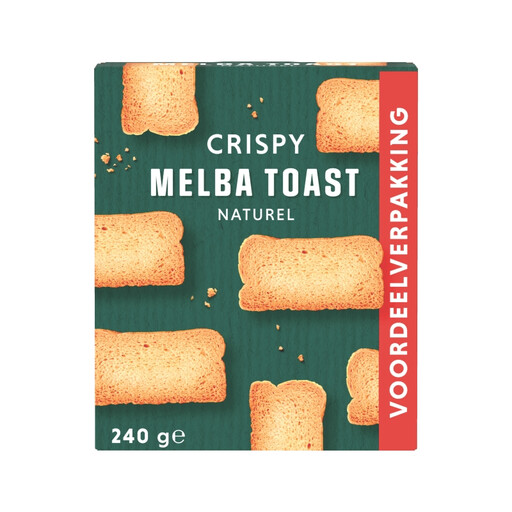 No image available
Crispy Melba Toast 240 g
A ready-made option for small topped bites on a sharing platter.
Pack size: 240 g. Check the current allergen information on the packaging before buying, especially if wheat, barley, soya or sesame are relevant to your choice.
View at Joybuy
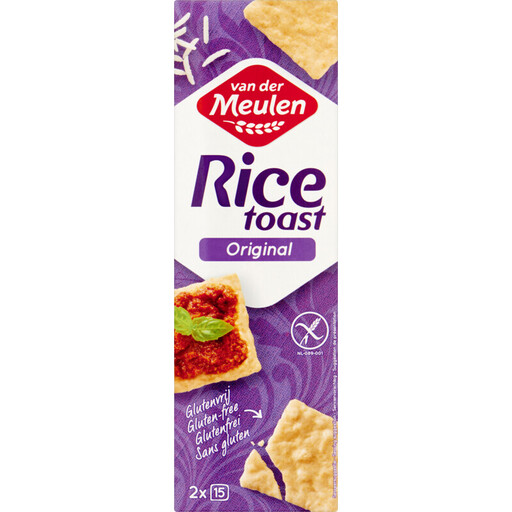 No image available
Van Der Meulen Rice Toast Natural 65 g
Rice toast for small nibbles when sourdough isn’t essential.
Pack size: 65 g. Check the current allergen information on the packaging, especially for sesame and soya.
View at Joybuy
Frequently asked questions
Does sourdough toast automatically contain iodised baker’s salt?
No. The word ‘sourdough’ doesn’t tell you which type of salt a specific product contains. The Dutch Commodities Act Decree on the Addition of Micronutrients to Food defines baker’s salt as iodised table salt used in bread and other baked goods. Check the ingredients for iodised salt or baker’s salt, or ask the baker if you’re buying unwrapped bread.
How can I keep toast crisp at a barbecue?
Store toast according to the instructions on the packaging and add toppings just before serving, especially if they’re moist. Take perishable toppings out of the fridge in small quantities; the Netherlands Nutrition Centre advises throwing food away if it has been out of the fridge for more than two hours.
Is gluten-free rice toast suitable if I also need to watch out for other allergens?
Not without checking the label: ‘gluten-free’ doesn’t tell you anything about other allergens. Jumbo’s product information for Van der Meulen Rice Toast Original lists possible traces of sesame and soya. So make sure you read the allergen information for the exact variety you’re buying.
When should I choose wholemeal sourdough bread instead of white sourdough toast?
Choose a loaf that is explicitly labelled wholemeal if that’s an essential product feature for you and you want to toast larger pieces yourself. The word ‘sourdough’ doesn’t confirm that a product is wholemeal; also compare the size and ingredients of the products you’re considering.


