
Buyers mindful of allergens
You’re buying bread for several children and need to check its ingredients and allergens against each child’s individual requirements at the childcare setting.


For a nursery lunch, first look for bread explicitly labelled as wholemeal; sourdough alone tells you nothing about the type of flour. Before packing it, check the current label for allergens and make sure your choice meets the childcare setting’s requirements. If you need bread that’s ready to serve, pre-sliced bread is more practical than a loaf that still needs baking.
You’re buying bread for several children and need to check its ingredients and allergens against each child’s individual requirements at the childcare setting.
You want sourdough, but also a lunch staple that fits the Netherlands Nutrition Centre’s advice to choose wholemeal or brown bread in childcare settings.
You want to know whether the bread is already sliced, still needs baking, or can be portioned in advance for storage.
First, check that the bread meets the individual requirements for allergens. Then look for a wholemeal label and consider whether the preparation fits your lunch schedule.
| What to consider | What to check when buying | Who it matters to |
|---|---|---|
| Allergens | Read the current allergen information and any cross-contamination warnings, then check them against the requirements for the children. | When I pack bread for a group, I want to know whether the product I’ve chosen meets each child’s allergen requirements. This is the top priority for around 33% of consumers. |
| Wholemeal and fibre | Look for an explicit wholemeal label and, for specific products, compare the fibre content per 100 g. | I want to choose sourdough without compromising on wholemeal bread as a lunch staple. This is the top priority for around 27% of consumers. |
| Preparation and storage | Check whether the bread is sliced or still needs baking, and read the storage and usage instructions. | When lunch needs to be ready quickly, I want to know in advance how much slicing and baking will be involved. Practical preparation is the main concern for around 20% of consumers. |
| Sourdough preference | Check the product description and ingredients for sourdough, and assess its wholemeal status separately. | I’m specifically looking for sourdough, but don’t want to lose sight of the other lunch requirements. This preference is the deciding factor for around 20% of consumers. |
Sourdough and wholemeal describe different things. The Netherlands Nutrition Centre recommends wholemeal or brown bread in childcare settings because of its fibre content.
First look for a wholemeal label, then compare the nutritional information of the breads you’re considering.
A bread’s name won’t tell you which allergens it contains or what warnings appear on the current label. This is particularly important when there are individual requirements at a childcare setting.
For packaged bread, read the label. For unpackaged bread, ask for allergen information before buying and check that the product meets the requirements.
Bread that still needs baking doesn’t fit the same schedule as sliced bread that’s ready to use.
Choose bread that’s ready to serve if there’s no time to bake and cool it. If you choose bake-at-home bread, plan for these steps in advance.
Thawing, using the oven and cooling the bread all take extra preparation time.
Bread intended for several lunches needs a storage plan. The Netherlands Nutrition Centre’s Storage Guide gives separate advice for storing opened bread in a kitchen cupboard and in the freezer.
If needed, divide the bread into lunch portions in advance, follow the product instructions and don’t use bread that has gone mouldy.
Albert Heijn lists products including AH OerDesem volkoren Allinson, a whole, sliced wholemeal sourdough loaf.
The La Place Rustiek Spelt Volkoren product reviewed from Jumbo’s range was bread to bake at home.
Lidl lists a Rustiek volkoren desembrood, described as ‘wholemeal wheat sourdough bread’.
ALDI includes wholemeal bread in its fresh daily bread range as an option if wholemeal matters more to you than sourdough.
PLUS lists products including Korenlanders Desem Wit, which still needs baking.
Dirk lists both wholemeal bread and sourdough in its bread range.
These options include round loaves and multigrain baguettes for anyone looking for bread for a nursery lunch. Check the wholemeal labelling, allergens and preparation required for each option; the shape of the product alone doesn’t tell you this.
 Image unavailable
An option to consider if you want to plan several wholemeal loaves for different lunch occasions. These are whole loaves, so allow time for thawing, baking, cooling and slicing. Before serving, check the current ingredients and allergens against the childcare setting’s requirements.
 Image unavailable
An option to consider if one wholemeal loaf fits your lunch plans. Allow time for thawing, baking, cooling and slicing. Also check the current allergen information before packing the bread.
 Image unavailable
The individual baguettes may suit a lunch where you want to prepare bread in separate portions. Allow time for thawing and baking. Before choosing them as a lunch staple, check the current packaging for wholemeal status and allergens.
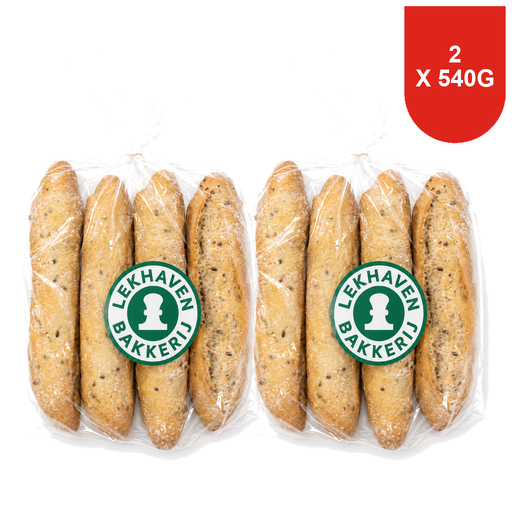 Image unavailable
This option is worth considering if you want to prepare baguettes for several lunches. Confirm the total pack contents before buying, as the title and description give different details. Plan for thawing and baking, and check the current wholemeal and allergen information.
No. Sourdough doesn’t tell you whether the bread is made with wholemeal flour. If you want wholemeal bread for a nursery lunch, look for an explicit wholemeal label on the packaging.
No. Check the allergens for each product and on the current packaging. The AH OerDesem volkoren Allinson product reviewed lists wheat and cereals containing gluten; the PLUS Korenlanders Desem Wit product reviewed lists wheat, rye and cereals containing gluten. Check your chosen option against the childcare setting’s individual requirements.
Before buying, ask for the allergen information for the exact bread you’ve chosen. Then compare it with the requirements the childcare setting has for the children concerned.
Don’t assume it does: check the ingredients for the specific loaf. Albert Heijn lists iodised salt in the AH OerDesem volkoren Allinson product reviewed; that doesn’t tell you anything about the ingredients of other products.
Follow the product’s storage instructions and, if needed, divide the bread into portions before freezing it. The Netherlands Nutrition Centre’s Storage Guide recommends keeping opened bread in a kitchen cupboard for 2–4 days or in the freezer for 1 month. Don’t use bread that has gone mouldy.