
Canteen manager with a busy lunchtime service
Benefits from a batter that can be prepared with few extra steps. A complete mix may be a good fit if the instructions on the pack match the kitchen’s way of working.


Making your own sourdough batter suits a university canteen that wants to make room for its own recipe and can organise the extra ingredients and preparation steps. If easy preparation during the lunchtime rush matters more, a complete pancake mix is the more straightforward option. Whichever you choose, check the yield using your own equipment and confirm the allergens in the pancakes you prepare.
Benefits from a batter that can be prepared with few extra steps. A complete mix may be a good fit if the instructions on the pack match the kitchen’s way of working.
Wants sourdough to be a recognisable part of the menu and can organise the ingredients, recipe and preparation consistently. Meesterlijk van Robèrt’s recipe uses wheat flour, eggs, milk and butter as well as sourdough.
Wants to describe a wholemeal option accurately and, when serving unwrapped food, be able to tell customers about the allergens in the batter and toppings actually used.
For a university canteen lunch, the choice starts with how much preparation the concept can accommodate: your own sourdough recipe, a complete mix or a mix with a different grain profile. Then assess each option using your own griddle and the ingredients you’ll actually serve.
A good fit when: having your own sourdough recipe matters and the kitchen can prepare it consistently.
The trade-off: Meesterlijk van Robèrt’s recipe also uses wheat flour, eggs, milk and butter; it isn’t a ready-made sourdough mix.
A good fit when: keeping the number of extra ingredients to a minimum during preparation is the priority.
The trade-off: Koopmans says its Pancakes Complete mix only needs water; check the instructions for the specific product you choose, as mixes vary.
A good fit when: the lunch menu needs to offer a particular grain profile.
The trade-off: multigrain doesn’t automatically mean wholemeal; use the exact product description and ingredients shown on the pack.
| What to consider | What to check before buying | Who should pay particular attention? |
|---|---|---|
| Quick, consistent preparation | Compare the ingredients you need to add, then test portion size and cooking time using your own equipment. | If I want to make the same batter every time during the lunchtime rush, the steps need to fit our way of working. Around 31% of consumers prioritise this kind of predictable preparation. |
| Your own sourdough recipe | Check that the recipe actually contains sourdough and how much preparation it involves. | For a lunch menu centred on our own sourdough recipe, I’m happy to do more work in the kitchen. Around 31% of consumers prioritise this too. |
| Wholemeal option | Read the exact product description, ingredients and nutritional information; don’t treat multigrain as a synonym for wholemeal. | If I want to offer wholemeal pancakes on the lunch menu, the mix I choose must be accurately described that way. This is the main priority for around 23% of consumers. |
| Allergens and preparation process | Record the allergens in both the batter and toppings, and make sure your procedures align with your food safety plan. | When serving unwrapped food, I want to be able to clearly explain which allergens the pancakes contain before they’re sold. Around 15% of consumers put this information and process control first. |
A sourdough pancake isn’t automatically gluten-free: Meesterlijk van Robèrt’s recipe contains wheat flour.
Check the ingredients in the exact batter you’re using, and include the toppings in your allergen information too.
The presence of several types of grain in a mix doesn’t prove that the pancakes can be described as wholemeal.
Use the description on the menu that matches the packaging and the way the pancakes are actually prepared.
The Netherlands Food and Consumer Product Safety Authority says customers must be able to get allergen information for non-prepacked food as well.
Make the information available before purchase and update it whenever the recipe, a topping or a supplier changes.
The number of pancakes stated per pack is based on the preparation method used for that product. Your portion size and griddle may give a different result.
Before buying for lunch service, make a test batch and record the amount of batter used, the portions and the cooking time.
Koopmans describes several pancake products, including Complete and Original. Preparation instructions vary by product.
Albert Heijn’s range of pancake mixes includes complete, plain, wholemeal and multigrain varieties.
Jumbo’s own-brand pancake mixes come in Plain, Complete and Wholemeal varieties.
These products offer mix options for a university lunch: a complete variety, a mix containing several types of grain and regular pancake mixes. If you specifically want to serve pancakes made to your own sourdough recipe, assess that option separately; none of the product names below indicates a sourdough mix.
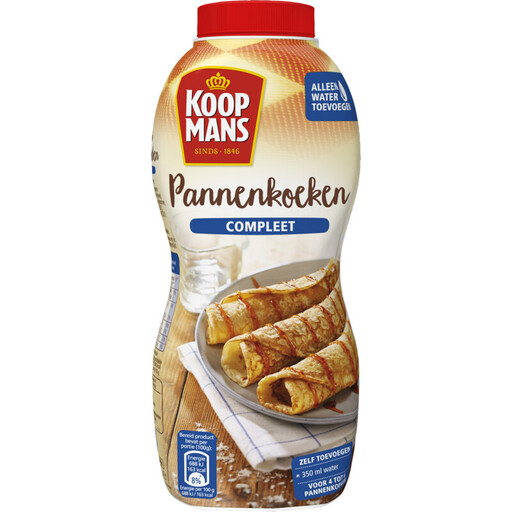 Image unavailable
A complete mix to consider when easy preparation is important. Check the preparation instructions and allergens on this pack, and test the yield for your own portion sizes; don’t use the yield stated for a different Complete product.
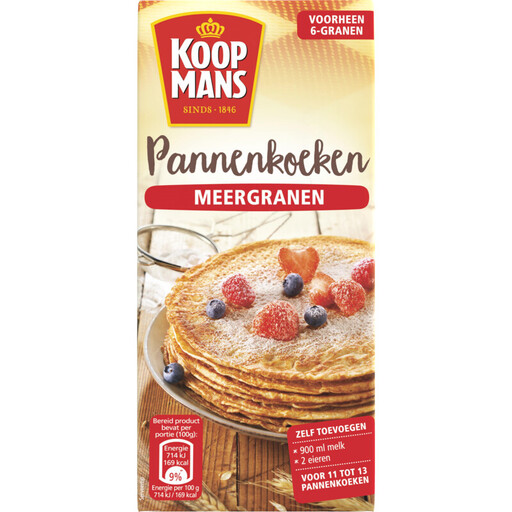 Image unavailable
A mix to compare if the grain profile matters for your lunch menu. Check the ingredients, what needs to be added and the appropriate description for this product on the exact pack; don’t assume it’s wholemeal based on the variety name alone.
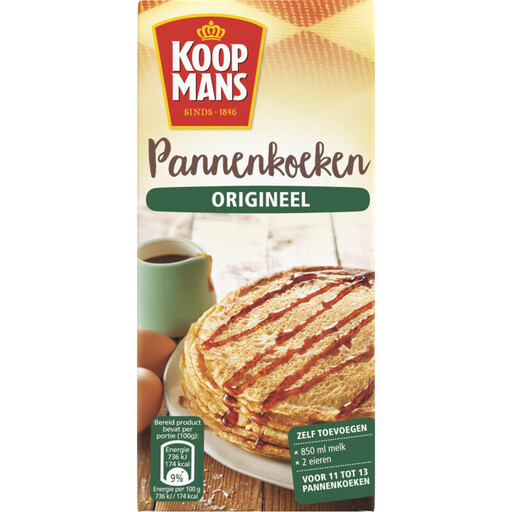 Image unavailable
A regular mix as an alternative to sourdough batter made from scratch. When choosing, consider the ingredients you need to add, and check the allergens for this pack and the yield using your own griddle.
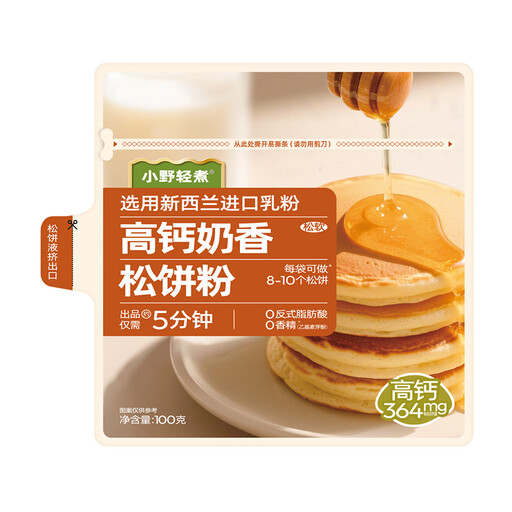 Image unavailable
A regular pancake mix to compare by preparation method. Use a test batch to see whether the pack size and method suit the number of lunch portions you need, and check the latest allergen information before serving unwrapped food.
No. Meesterlijk van Robèrt’s sourdough batter contains wheat flour. Check the exact ingredients and allergens for every preparation; the presence of sourdough alone doesn’t mean a product is gluten-free.
The Pancakes Complete mix described by Koopmans only needs water, so it requires fewer extra ingredients than the sourdough recipe reviewed, which uses flour, eggs, milk and butter. Check the instructions on the pack you’ll actually use and test how many portions it makes in your own kitchen.
The Netherlands Food and Consumer Product Safety Authority says canteens must tell customers about the allergens in non-prepacked pancakes. Make this information available before purchase and ensure it reflects the batter and toppings you use.
The Netherlands Food and Consumer Product Safety Authority says that any organisation preparing or selling food must work to an HACCP food safety plan; an appropriate hygiene code can be used for this. Make sure your procedures reflect your own preparation, storage and presentation methods.