
Workshop leader with several participants
Compare the amount made per batch with the number of tasting portions you want to serve. Philips lists 1.2 litres and four portions for the HR2204/80R1; DOMO and Princess each list a 2-litre jug.


Choose a soup maker based on how much you want to make per batch and whether you prefer a smooth or chunky texture. DOMO and Princess list a 2-litre jug capacity; Philips lists 1.2 litres for the HR2204/80R1 and says it serves four, although that product page is for a refurbished model. Check the fill markings and cleaning instructions for each model: manufacturers’ stated preparation times are not measured times for leek and potato soup.
Compare the amount made per batch with the number of tasting portions you want to serve. Philips lists 1.2 litres and four portions for the HR2204/80R1; DOMO and Princess each list a 2-litre jug.
If participants are comparing smooth and chunky soups, check which soup settings are available on the exact model. Philips, DOMO and Princess describe programmes for different soup textures.
Allow time for cleaning between batches and for preparing the next one. DOMO lists a cleaning function for the DO705BL; also follow the cleaning instructions for the model you choose.
First decide how much soup you need per batch, then choose your preferred texture and finally check that preparation and cleaning fit into your workshop schedule.
| What to consider | What to check before buying | Who is it important for? |
|---|---|---|
| Amount per batch | Compare the quantity you plan to make with the jug capacity and fill markings of the exact model. Philips lists 1.2 litres for the HR2204/80R1; DOMO and Princess list 2 litres for the models mentioned. | If I’m making soup for a group, I want to know whether the usable capacity will cover my tasting portions; around 40% of consumers prioritise the amount made per batch. |
| Smooth or chunky soup | Check which soup settings the exact model has and whether they suit your recipe and demonstration. Philips, DOMO and Princess describe different soup textures. | If texture is part of my lesson, I want to know in advance which variations I can demonstrate; around 30% of consumers prioritise the texture demonstration. |
| Cleaning between batches | Check the cleaning instructions and allow time for any steps not covered by a cleaning programme. DOMO lists a cleaning function and removable blades for the DO705BL. | If I’m planning several batches in a row, I want to know how to clean the appliance between them; around 20% of consumers prioritise the changeover between batches. |
| Time per batch | Compare the stated time for your chosen soup setting, and allow separately for preparation, serving and cleaning. Philips lists 18 minutes, DOMO 20 minutes and Princess says preparation takes under 25 minutes; these are manufacturers’ stated times, not the results of a comparative recipe test. | If my workshop has a tight time slot, I want to know how much time I’ll need beyond the programme itself; around 10% of consumers prioritise cooking time. |
The usable capacity and the portion size you want will determine how many batches you need.
Compare the quantity you want to make with the fill markings and the manual for the exact model.
Philips, DOMO and Princess list preparation times, but these have not been measured under the same conditions for leek and potato soup.
Plan around your preferred soup setting, and allow separately for preparation, serving and cleaning.
The Philips product page for the HR2204/80R1 explicitly states that it is a refurbished model.
Check the full model code and product condition on the specific listing.
Philips lists a 1.2-litre jug and six automatic programmes for the Viva SoupMaker HR2204/80R1.
DOMO lists a 2-litre jug, different soup settings and a cleaning function for the DO705BL.
Princess lists a 2-litre jug and programmes for smooth and chunky soup for the 214002 Family XL.
These products mention soup preparation in their product name or description, but that does not automatically make them suitable for every workshop. Before buying, check the intended use and fill limits for the exact model, as well as the CE marking on the appliance itself.
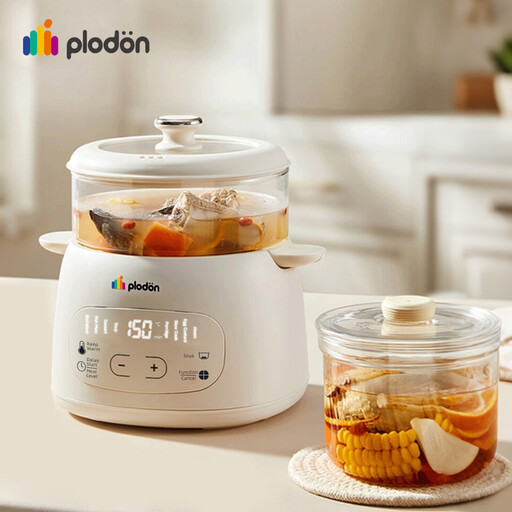 No image available
The product name lists soup as one of its uses; check whether the pot is suitable for the type and quantity of food you plan to prepare for your workshop.
2 litres; 800 W; 8-in-1; 5 adjustable heat settings.
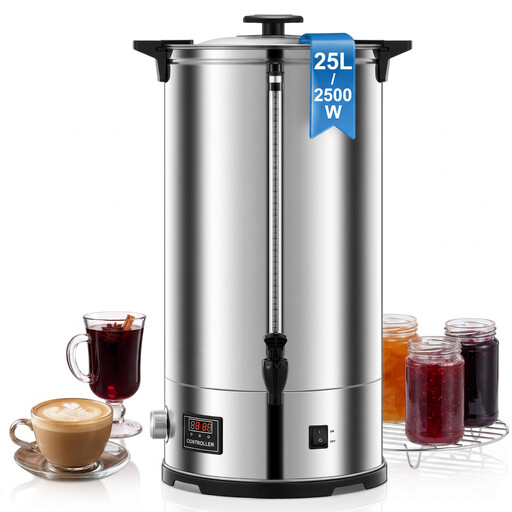 No image available
The product name mentions soup and hot water dispensing; check whether this model is intended for the way you want to prepare or serve leek and potato soup.
25 litres; 2500 W; stainless steel cooking pot; timer and temperature control.
 No image available
According to the product information, this model is intended for household use, so it is not suitable for a commercial workshop. If you plan to use it differently, check that it is suitable for your intended preparation.
2.6 litres; 1000 W; 3 manual heat settings.
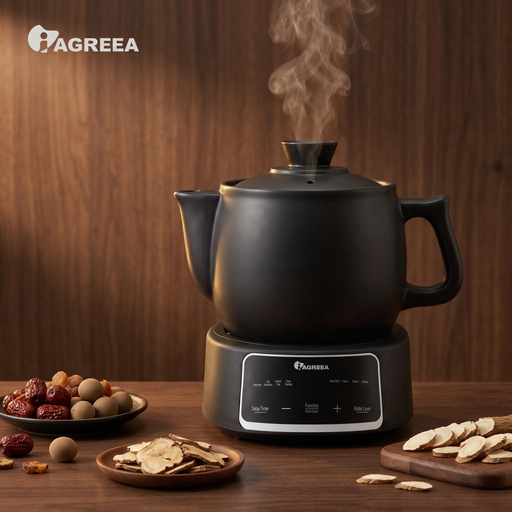 No image available
The product name describes an herbal cooking pot; do not assume it is suitable for leek and potato soup without checking the intended use of the exact model.
3.5 litres; 600 W; 4 pre-set settings.
No. Jug capacity does not automatically tell you how many tasting portions you can serve. Philips pairs 1.2 litres on the HR2204/80R1 with four portions, but your portion size may be different. Calculate using your own portion size and check the fill markings on the model you choose.
Yes. Assume you’ll need to follow the cleaning instructions for the exact model. A listed function does not confirm that other cleaning steps can be skipped; check how to clean the jug, blades and electrical parts, especially when changing ingredients between batches.
If a business prepares, processes or sells food, the NVWA says it must work with an HACCP food safety plan or an applicable hygiene code. Businesses offering food to consumers must also inform them about any allergens present. Whether these requirements apply depends on how the workshop is actually organised; they do not automatically apply to a private workshop.
The NVWA states that CE marking is required for electrical consumer products. Check the marking on the specific model; the model name alone does not confirm that the individual product has been checked.