
Cooking for a large group
Wants to plan the number of batches before buying, based on the number of guests, bowl size and usable jug capacity. The capacities listed are from DOMO, Princess and Philips.


For a community meal, a heated soup maker is a good fit if the quantity you plan to make is within the maximum fill line and you want it to heat and blend automatically. If you need to make considerably more soup in one go, a large saucepan and a suitable hand blender may be more practical. DOMO and Princess list models with stated capacities of 2 to 2.2 litres, while Philips lists a capacity of 1.2 litres for the HR2204/80R1. These capacities don’t guarantee a certain number of guest portions, so plan around your recipe and bowl size, and allow for multiple batches.
Wants to plan the number of batches before buying, based on the number of guests, bowl size and usable jug capacity. The capacities listed are from DOMO, Princess and Philips.
Wants to choose the texture and checks the programmes available on the exact model. DOMO and Princess describe programmes for smooth and chunky soup.
Makes soup in batches before the meal and plans how to chill, store and reheat it in good time. The Netherlands Nutrition Centre advises chilling leftovers within 2 hours and reheating them thoroughly later.
First decide how much soup you need per batch and whether you want it to heat and blend automatically. Then compare the soup textures you prefer and how you’ll manage batches before serving.
A good fit if: you want automatic heating and blending, and the quantity you plan to make is within the maximum fill line.
Bear in mind: a jug with a capacity of around 2 to 2.2 litres won’t necessarily make enough for a whole community meal. DOMO and Princess list these capacities for specific models.
A good fit if: you’re making smaller quantities or separate batches, and a compact jug matters more to you than making lots of soup at once. Philips lists a capacity of 1.2 litres for the HR2204/80R1.
Bear in mind: the smaller capacity may mean more batches for a group meal.
A good fit if: you want to make more soup in one go and are happy to manage the heating and blending yourself.
Bear in mind: check that a blender jug is heat-resistant. According to the Consumentenbond, some blenders heat soup, but not all of them do.
| What to consider | What should you check? | Who is this relevant to? |
|---|---|---|
| Quantity per batch | Compare the maximum fill line with your recipe, the number of guests and your own bowl size. | If I’m cooking for lots of guests, I want to know how many batches to plan. Around 36% of consumers prioritise the quantity made per batch. |
| Soup texture | Check whether the exact model has programmes for smooth and/or chunky soup. | If I want to blend my leek and potato soup until smooth or keep some chunks in it, I check the model’s programmes. Around 29% of consumers give their preferred texture the highest priority. |
| Preparing in advance | Plan the batches, timely chilling and thorough reheating later. | If I’m making soup before the meal, I want to coordinate the batches and storage carefully. Around 21% of consumers prioritise preparing food in advance. |
| Space and steps involved | Compare the exact model’s dimensions and cleaning instructions with the space you have in your kitchen. Also consider whether your saucepan and hand blender will do the job. | If space in my kitchen is limited, I want to know whether the appliance will fit and how many steps are involved in preparing the soup. Around 14% of consumers give space and ease of use the highest priority. |
The stated capacity doesn’t guarantee a particular quantity of leek and potato soup ready to serve. The maximum fill line and your recipe determine how much you can make.
Plan around the number of guests and your own bowl size, and check the maximum fill line before relying on one large batch.
A blender may blend soup without heating it. The Consumentenbond distinguishes between blenders that can blend soup and models that also heat it.
Check separately whether the jug is suitable for hot contents and whether the appliance actually has a heating function.
The Netherlands Nutrition Centre advises chilling leftovers within 2 hours of cooking and reheating them thoroughly later until piping hot.
As well as planning the cooking, decide where you’ll chill earlier batches in good time and how you’ll reheat them later.
DOMO lists a capacity of 2 litres for the DO705BL and 2.2 litres for the DO728BL. The brand also lists a sauté function for the DO728BL.
Princess lists a 2-litre jug capacity and six automatic programmes for the Family XL 214002.
Philips lists a 1.2-litre jug and six standard programmes for the refurbished Viva HR2204/80R1.
These Joybuy product picks are suited to making soup in smaller batches or planning a larger quantity. Check the exact model’s functions, capacity and suitability for your needs.
 No image available
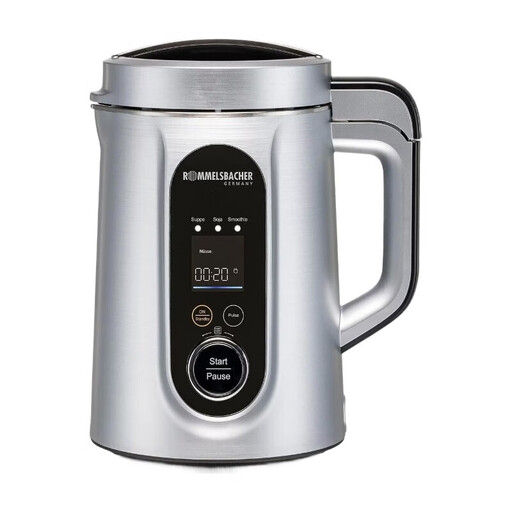
With integrated heating and a capacity of up to 1.3 litres, this could suit anyone planning smaller batches of soup. Work out how many batches you’ll need for the meal.
The product description lists heating and blending, nine automatic programmes, a pulse function and a stainless steel inner pot. According to the description, the appliance is intended for domestic, not commercial, use.
 No image available
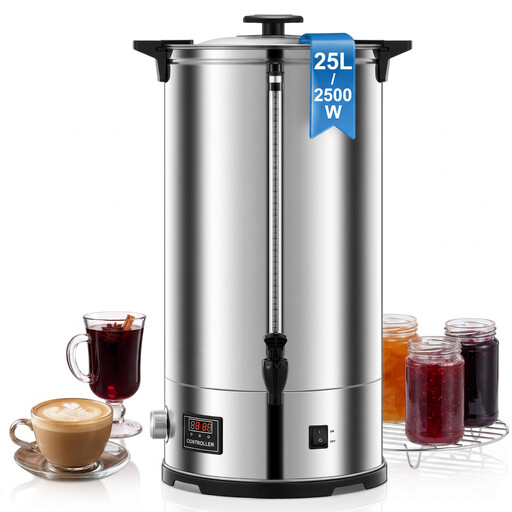
If you’re considering making a larger quantity, this is only an option if the exact model is suitable for the type and quantity of soup you want to prepare.
The product title lists a 25L hot water dispenser, a soup-making pot, a 2500 W motor, and timer and temperature controls. Before buying, check how these features apply to the exact model.
Not necessarily. First compare how much soup you want to make in one go and whether automatic heating and blending would be useful. If you’re using a blender, check that its jug is suitable for hot soup; not every blender heats soup itself.
The Netherlands Nutrition Centre advises chilling leftovers within 2 hours of cooking and reheating them thoroughly later until piping hot. Plan ahead for how you’ll chill and store earlier batches in good time.
Follow the instructions for the exact model. For the HR2204 and HR2203 variants mentioned, Philips warns that the base must not be immersed in water, due to the risk of a short circuit or electric shock. Check the instructions for your model.
According to the Netherlands Food and Consumer Product Safety Authority, CE marking is compulsory for electrical consumer products. Parts intended to come into contact with food must also meet the applicable Dutch requirements for food contact materials. Check this for the specific product; the regulations alone don’t prove that a particular model complies.
The Dutch Government states that you’re entitled to a product that works properly and that there is no fixed statutory warranty period in the Netherlands. A manufacturer’s or seller’s warranty may be offered in addition; contact the seller if there’s a fault.