What should you look for?
First compare the minimum fill level with the amount in your recipe, then consider your preferred texture and how much cleaning is involved.
| What to consider |
What to look for |
Who is this important for? |
| Suitable batch size |
Compare the amount in your recipe with the MIN and MAX marks on the exact model. |
I only want to make a small amount for my household, so the minimum fill level needs to suit my recipe. Around 36% of consumers put batch size first. |
| Smooth or chunky soup |
Check whether the model has a smooth soup setting and, if you like variety, a setting for chunky soup too. |
If I want smooth tomato soup, I want to know which setting the model offers and whether it has a blending function for further blending. Around 29% of consumers prioritise their preferred texture. |
| Cleaning |
Check whether each part is removable and dishwasher-safe; don’t rely solely on descriptions such as ‘easy to clean’. |
After cooking, I want to know how much cleaning I’ll need to do by hand and how to clean around the blades. Around 21% of consumers focus mainly on cleaning. |
| Extra features and leftovers |
Consider whether you’ll really use the extra programmes and decide in advance how you’ll store any leftover soup. |
If I want to make extra soup or prepare other dishes, the features need to suit the way I’ll use it. Around 14% of consumers prioritise versatility or batch cooking. |
Soup makers at Joybuy
A Joybuy product pick suited to making soup for a small household.
 No image available
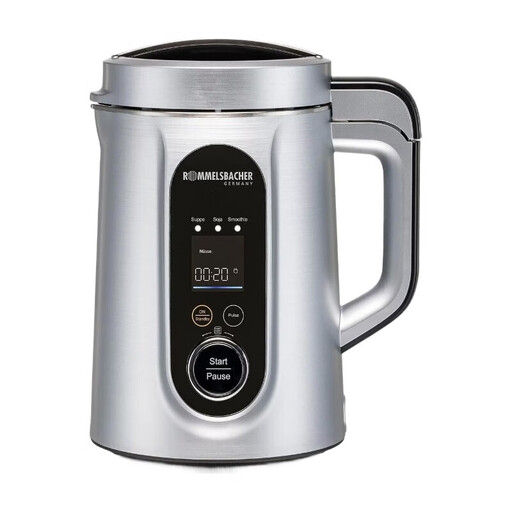
Rommelsbacher Soup & Vegetable Drink Maker SVD 1400
This soup maker could be a good fit if you want to make tomato soup in one appliance; check that the instructions for this model suit your preferred batch size and texture.
The jug and its contents can become hot. Don’t fill above the MAX mark, don’t immerse the appliance in water and unplug it before cleaning.
The Dutch Government states that electrical appliances on the EU market must carry a CE marking. Check the marking on the specific product.
View at Joybuy
Frequently asked questions
Can I make one small bowl of tomato and basil soup in a 1.2-litre jug?
You can’t tell from the maximum capacity. Compare the amount in your recipe with the MIN and MAX marks on the exact model; Philips warns that its SoupMaker won’t work properly if the liquid level falls outside those limits.
When should I add basil to tomato soup?
It depends on the recipe. In a DOMO recipe for tomato soup with pesto, the tomatoes are prepared using the smooth soup programme and fresh basil is added when serving. This recipe doesn’t specify a minimum fill level for a soup maker.
How should I store and reheat leftover soup?
The Netherlands Nutrition Centre advises cooling cooked leftovers within two hours and storing them in the fridge. Eat them within two days and, when reheating, heat them thoroughly until piping hot; don’t save leftovers that have already been reheated for another time.
Who can help in the Netherlands if my soup maker breaks down too soon during normal use?
According to ACM ConsuWijzer, the retailer is responsible for the statutory guarantee. If a product is faulty, you may be entitled to a free repair, replacement or refund; a manufacturer’s guarantee doesn’t replace this statutory right.
What should I check when buying an electric soup maker in the Netherlands?
The Dutch Government states that electrical appliances on the EU market must carry a CE marking. Check the marking on the specific product and follow the accompanying safety instructions; a product name alone doesn’t confirm that the item on offer carries the marking.


