What should you look for when choosing one?
Start with the portion you usually make and where you’ll store the soup maker. Then compare capacity and cleaning instructions; extra programmes are most useful if you’ll use them for other recipes as well as soup.
| What to consider |
What should you look for? |
Who is this important for? |
| Small portions and limited space |
Check the minimum and maximum fill markings, and compare the dimensions with the space you have available. |
If I usually cook for one, I want to be able to make a small portion without taking up too much cupboard space. Around 33% of consumers prioritise small portions and limited space. |
| Easy cleaning |
Check the manual to see which parts can be removed, whether there’s a cleaning function and which cleaning methods are permitted. |
In a shared kitchen, I want to be able to clean the jug after use and put it away. Around 25% of consumers make easy cleaning their top priority. |
| Sharing or storing portions |
Compare the usable batch size and consider whether you have enough fridge or freezer space. |
If I cook for housemates or want to save portions, I want to make enough soup in one cycle and store the leftovers properly. Around 25% of consumers make larger batches their top priority. |
| Extra features beyond soup |
Check which hot and cold programmes the exact model offers and how to clean the parts afterwards. |
If I want to use the same appliance for other recipes too, I compare the available programmes with what I actually make. Around 17% of consumers prioritise versatility. |
Soup makers at Joybuy
Joybuy products suited to making soup and preparing other recipes.
 No image available
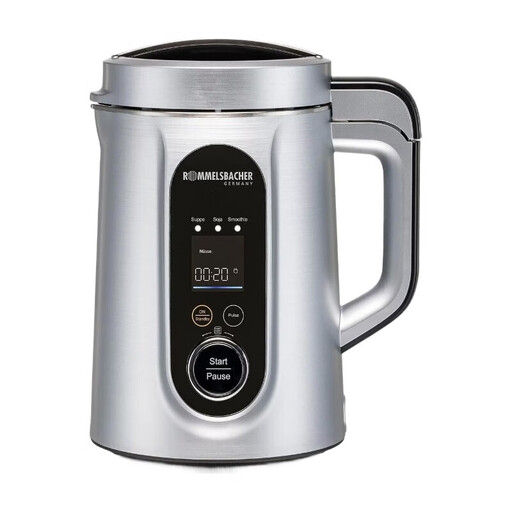
Rommelsbacher Soup & Vegetable Drink Maker SVD 1400
An option to compare if you’d like to use the same appliance for other recipes as well as soup.
Joybuy
 No image available
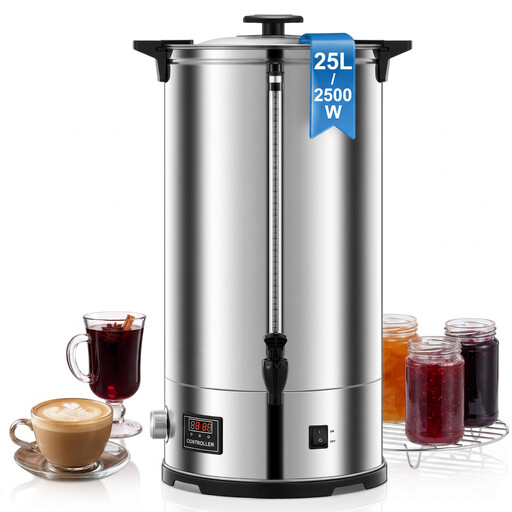
FOHERE 25L Hot Water Dispenser, Soup Maker
Only compare this product if you’re looking for an appliance for much larger quantities than a small student-sized batch.
The product title lists a 25-litre capacity, timer and temperature control. That stated capacity is considerably larger than what you’d need for a small portion of soup.
Joybuy
Frequently asked questions
How do you make carrot and coriander soup in a soup maker?
Good Food uses the smooth soup setting for its recipe and adds fresh coriander after the cooking cycle, before blending the soup again. Follow the fill limits and instructions for your model.
How long can you keep leftover soup?
The Netherlands Nutrition Centre advises letting leftovers cool within two hours and storing them in a sealed container in the fridge at 4 °C. Eat them within two days or freeze them; for frozen leftovers, the Centre recommends a maximum of three months.
What should you do if your soup maker doesn’t work properly after purchase?
If the product is faulty, contact the seller. According to the Government of the Netherlands, there’s no fixed statutory guarantee period in the Netherlands; what you can reasonably expect depends, among other things, on the product and the sales information.
Does an electric soup maker need a CE marking in the Netherlands?
Electrical products covered by the relevant regulations must carry a CE marking. The Netherlands Food and Consumer Product Safety Authority explains that the marking is a declaration by the manufacturer and isn’t, in itself, proof of an independent assessment.
How do you connect a soup maker safely in a shared kitchen?
Follow the appliance’s instructions. The Netherlands Fire Service advises fully unwinding cable reels and, where possible, plugging high-power appliances directly into a socket.


