
Smooth soup enthusiast
You want to heat and blend vegetables until smooth in one appliance. Look for a smooth soup programme and check whether you can blend the soup manually afterwards; Philips and DOMO describe these features for specific models.


Choose an electric soup maker that heats ingredients and has a smooth soup programme. Then compare the jug capacity with your usual portions and measure the space where you plan to use or store it. A larger jug or extra programmes aren’t automatically useful in a small kitchen: check the exact model’s dimensions, fill markings and cleaning instructions too.
You want to heat and blend vegetables until smooth in one appliance. Look for a smooth soup programme and check whether you can blend the soup manually afterwards; Philips and DOMO describe these features for specific models.
You want an appliance you can set down, fill and store without it taking up too much of your available space. Compare its dimensions with the space in your kitchen; DOMO, for example, publishes the dimensions of the DO705BL.
You’d rather make a larger batch in one go and weigh up the jug capacity against the space the appliance takes up. DOMO and Princess list different nominal jug capacities for their specific models.
Start with the texture you want, then measure your available space and choose a jug capacity that suits the amount of soup you usually make.
| What to consider | What should you check? | Who is this important for? |
|---|---|---|
| Smooth texture | Check that the exact model heats ingredients, has a smooth soup programme and allows you to blend the soup manually afterwards. For the SoupMaker models mentioned, Philips advises keeping the liquid level between MIN and MAX. | I want to cook and blend vegetables without a separate blending step. Around 34% of consumers prioritise a smooth texture. |
| Worktop space | Measure the available space and compare it with the dimensions of the exact model, allowing room to open the lid. DOMO lists the DO705BL as measuring 18 × 22 × 32,5 cm. | I want to use and store the appliance without losing my limited worktop space. Around 33% of consumers say available space is their main consideration. |
| Amount made per batch | Compare the amount you want to make with both the permitted fill markings and the appliance’s dimensions. The nominal jug capacity doesn’t mean you can choose any fill level. | I’d rather make a larger batch at once and want to know whether it will fit in a single cycle. Around 20% of consumers prioritise batch size. |
| Cleaning | Check which parts can get wet and whether the exact model has a cleaning programme. For the models mentioned, Philips warns against immersing the motor unit or rinsing its exterior. | I make soup often and want to know how to clean the jug and motor unit safely after use. Around 13% of consumers prioritise ease of maintenance. |
A capacity of, say, 1,2 or 2 litres doesn’t tell you how much space the appliance itself takes up. It could therefore be awkward to use or store.
Measure the space where you plan to use and store it, and compare this with the dimensions of the exact model. Check that there’s enough room to fill the appliance and open it too.
A cleaning function doesn’t mean that every part can go under the tap. For the HR2204/80R1 and the related models mentioned, Philips says not to immerse the motor unit or rinse its exterior.
Check the manual for the exact model and follow the cleaning instructions for the jug, lid and motor unit separately.
The Dutch retailer page describes the Moulinex LM841B10, while the manufacturer page that was opened relates to the LM841810. The model codes don’t necessarily refer to the same version.
Check the full model code and the features of the product on offer before making a decision.
The SoupMaker HR2204/80R1 is a specific version with a 1,2-litre jug; Philips presents this version as refurbished.
According to DOMO, the DO705BL has a 2-litre jug and smooth and extra smooth functions.
According to Princess, the 214001 Soup Blender XL has a 1,6-litre jug.
Coolblue Netherlands describes the Easy Soup LM841B10 as a soup maker with a capacity of 1,2 litres.
These product options are appliances whose product names mention soup preparation. For the specific model, check the product information, stated capacity and dimensions, and whether the applicable EU rules require a CE mark.
 No image available
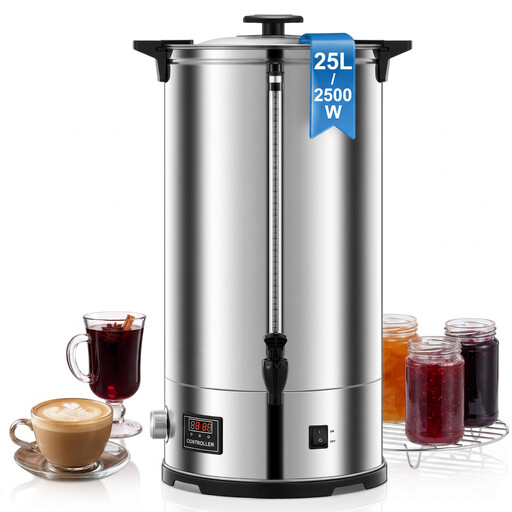
The product name mentions soup preparation and a cooking pot; check whether the stated 25L capacity suits the amount you want to make.
The product name lists a 2500W motor, a stainless steel cooking pot, a timer and temperature control. Compare the product information and dimensions of the specific model with the space in your kitchen.
Before buying, check the product information and whether the applicable EU rules require this model to carry a CE mark.
 No image available
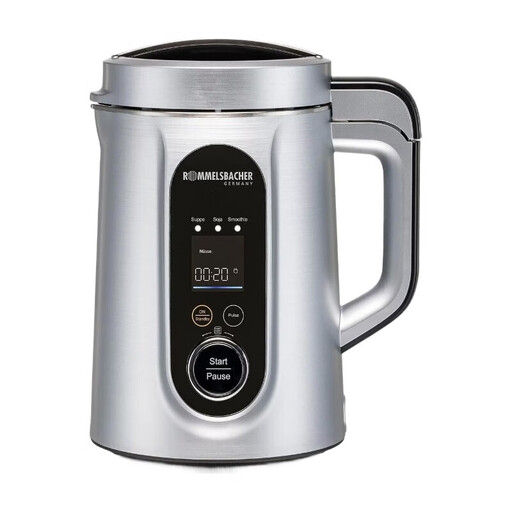
The description mentions heating and blending for soup; the stated capacity of 1,3 litres may suit anyone making smaller amounts. The jug capacity doesn’t tell you how large the appliance is externally.
The product description lists nine automatic programmes and a pulse function. The claim about smooth blending comes from the product description, not an independent performance test.
The inner pot and its contents get hot: follow the maximum fill marking and don’t immerse the main unit in water. For this model too, check the product information and the applicable EU rules on CE marking.
Don’t assume so just because it’s called a ‘blender’. The Consumentenbond says a heat-resistant jug is essential for blending soup; only some blenders also heat the soup. Always follow the instructions for your model too.
For the SoupMaker models covered by Philips’ advice, you can blend the soup manually afterwards if needed. Philips also advises cutting ingredients into smaller pieces, defrosting them fully and keeping the liquid level between MIN and MAX. Check the manual before applying this advice to another model.
Not without checking the manual for the exact model. For the HR2204/80R1 and the related models mentioned, Philips says not to immerse the motor unit or rinse its exterior.
No. According to the Dutch government, there is no fixed statutory warranty period in the Netherlands. You’re entitled to a product that works as it should, and if there’s a fault, you should contact the seller; any manufacturer’s warranty is separate.
A CE mark is only compulsory when the applicable harmonised EU rules require one. The European Union’s Your Europe website explains this condition, while the European Commission sets out the rules for electrical equipment under the Low Voltage Directive. Check the product information and marking for the specific model.