
Small-batch cook
You usually cook for yourself and want to know whether the minimum fill level suits your portion size. The jug’s stated capacity doesn’t tell you the smallest amount of soup you can make.


For smooth vegetable soup in a small student kitchen, a soup maker with both a heating function and a smooth soup programme is a sensible place to start. Then compare the minimum fill level, dimensions and cleaning requirements. A larger jug is most useful if you regularly make extra portions and can store them safely.
You usually cook for yourself and want to know whether the minimum fill level suits your portion size. The jug’s stated capacity doesn’t tell you the smallest amount of soup you can make.
You want to heat and blend vegetables in one appliance, without needing both a large pan and a separate blender on the worktop.
You like making several portions at once and have enough fridge or freezer space to store the leftovers safely. The Netherlands Nutrition Centre advises cooling leftovers within two hours.
First, check that the appliance heats and blends vegetables to make smooth soup. Then make sure its capacity, dimensions and cleaning requirements suit your kitchen and routine.
| Consideration | What to look for | Who should consider this? |
|---|---|---|
| Smooth soup in one appliance | Check whether the model heats and blends ingredients, and whether it has a smooth soup programme. Follow the manual for ingredient quantities and fill levels. | If I want to make vegetable soup without cooking and blending separately, the combination of functions is my first consideration. Around 33% of consumers prioritise making smooth soup. |
| Small portions | Check both the minimum and maximum fill markings; the stated jug capacity doesn’t indicate the minimum batch size. | If I usually eat alone, I want to check whether my portion fits within the fill markings. Around 27% of consumers prioritise being able to make a practical small portion. |
| Space and cleaning | Measure the space available and check how to clean the blades and inside of the jug. If there’s a cleaning programme, find out what you’ll still need to clean by hand afterwards. | In a shared kitchen, I want the appliance to fit the available space and my cleaning routine. Around 20% of consumers put space and cleaning first. |
| Storing multiple portions | Match the batch size to the maximum fill level and the space available for sealed containers in your fridge or freezer. The Netherlands Nutrition Centre advises cooling leftovers within two hours. | If I batch cook, I want to be able to store the extra soup properly. Around 20% of consumers prioritise making several portions for later. |
The capacity in litres doesn’t tell you the minimum amount you need to fill it with. This matters if you usually cook for yourself.
Compare the amount you want to make with both the minimum and maximum fill markings in the manual for the exact model.
A cold blending function isn’t the same as a programme that heats and blends ingredients to make soup.
Check the manual to see which programme is intended for hot, smooth vegetable soup.
Extra portions are only practical if you can chill them promptly and have enough storage space.
Choose a batch size that suits your fridge or freezer space, and follow the Netherlands Nutrition Centre’s storage advice.
These brands and models offer examples of features and trade-offs; their inclusion doesn’t in itself mean they’re available at Joybuy.
The DO727BL is a compact option to compare if you have a small kitchen and want a separate smooth soup function.
The Easy Soup LM841B10 is an option to compare if you’re looking for a heating soup maker with an automatic cleaning programme.
The 212040 is an option to compare if you want separate blending and stirring functions as well as heating.
The SoupMaker range described by Philips is worth considering if you want to make smooth hot soup as well as cold dishes.
A soup maker for anyone who wants to heat and blend vegetables in one appliance to make smooth soup.
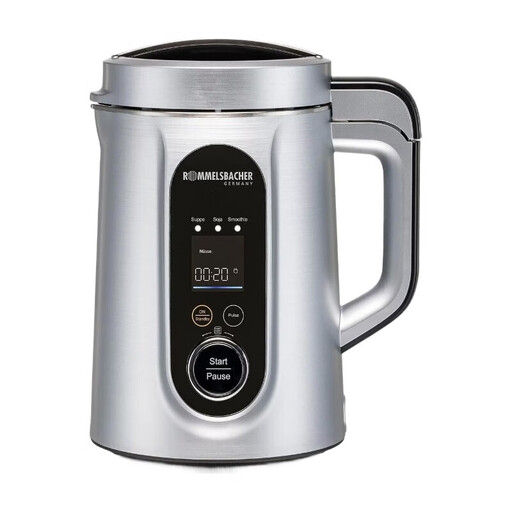 No image available
Suitable if you want to heat and blend vegetables for soup in one appliance; the product description mentions a mixing system for smooth results.
Before buying, check the CE marking and relevant conformity information for the specific item intended for the Dutch market.
The jug and its contents get hot during and after use. Do not immerse the base unit in water, and unplug the appliance before cleaning.
No. The jug capacity alone doesn’t tell you the minimum amount you need to make. Check the minimum fill marking and the manual for the exact appliance against the quantity you want to prepare.
According to the Netherlands Nutrition Centre, cool leftovers within two hours and store them covered in the fridge at 4 °C; eat them within two days or freeze them. When serving soup again, reheat it thoroughly until steaming hot, and ideally avoid reheating leftovers a second time. This is food safety advice, not a feature of a soup maker.
Report the fault to the seller. According to the Government of the Netherlands, there is no fixed statutory guarantee period in the Netherlands; what you can expect from a product depends, among other things, on the product and the information provided. A manufacturer’s guarantee is in addition to your statutory rights.
The Netherlands Food and Consumer Product Safety Authority gives kitchen appliances as an example of electrical equipment and states that CE marking may be required for electrical products. Check the marking and product details of the specific item you want to buy.