
Small-batch cook
You usually make soup for one or two people and want to know whether your portion will reach the minimum fill marking. For the SoupMaker models mentioned, Philips advises keeping the liquid level between MIN and MAX.


First, check that your usual portion falls between the MIN and MAX markings on the specific model; a 1.2-litre jug capacity alone won’t tell you whether it can make a single portion. Then look for a smooth soup programme and weigh up extra blending options, ease of cleaning and room for leftovers. These are manufacturers’ product specifications, not an independent comparison of the finished blended result.
You usually make soup for one or two people and want to know whether your portion will reach the minimum fill marking. For the SoupMaker models mentioned, Philips advises keeping the liquid level between MIN and MAX.
You want vegetable soup without noticeable chunks, so you look for a smooth soup programme and the option to blend it further if needed. Philips recommends blending manually or using the pulse function if the soup isn’t smooth enough.
You prefer to make a larger amount for later and weigh up the jug capacity against storing leftovers promptly. The Netherlands Nutrition Centre offers advice on cooling and storing leftovers.
| Buying concern | What to look for | Who is this important to? |
|---|---|---|
| Portion size | Check the MIN and MAX markings or the manual for the exact model. Don’t use the maximum jug capacity as a guide to the smallest batch you can make. | If you usually cook for one or two people, you’ll want to know whether your recipe falls within the fill limits. Around 34% of consumers prioritise small portions. |
| Smooth texture | Look for a smooth soup programme and check whether the model supports manual blending or pulsing. | If you want vegetable soup without noticeable chunks, the programme and any extra blending option are worth considering. Around 33% of consumers prioritise a smooth texture. |
| Controls and cleaning | Check whether there’s a cleaning programme and which cleaning methods the manual allows. A cleaning programme doesn’t automatically mean the jug is dishwasher-safe. | If you want to keep cooking and cleaning steps to a minimum, the controls and permitted cleaning methods are important. Around 20% of consumers prioritise ease of use. |
| Storing extra portions | Choose a larger capacity only if you want to make and store that extra soup. Remember to allow for storage containers and space in your fridge or freezer. | If you’re deliberately making soup for later, extra capacity can be useful, but weigh it up against storage and using the soup in time. Around 13% of consumers prioritise extra portions for later. |
The jug capacity doesn’t tell you the minimum amount of liquid needed. For the SoupMaker models mentioned, Philips says the liquid level must be between MIN and MAX.
Compare the volume of your usual recipe with the fill markings or the manual for the exact model.
Otherwise, you could end up making and storing more soup than you intended.
A cleaning programme doesn’t mean that the jug or parts can go in the dishwasher. A Dutch product listing for the Moulinex LM841810 states that it isn’t dishwasher-safe.
Check the cleaning instructions for the version you’re planning to buy.
If parts need to be cleaned by hand, that’s an extra step after cooking.
Princess lists the capacity of the Princess 214001 as 1.6 litres; the larger capacity doesn’t prove that it can make small portions. Also think about how you’ll store and use any extra soup.
Choose extra capacity if you genuinely plan to store and use the larger batch.
You’ll need suitable storage containers and space in your fridge or freezer for leftovers. The Netherlands Nutrition Centre advises cooling leftovers quickly, storing them in a sealed container and not leaving them out of the fridge for more than two hours.
The DOMO DO727BL is worth considering if a compact jug and a smooth soup programme are important to you.
The Viva SoupMaker HR2204/80R1 is an option to compare if you’re looking for a 1.2-litre jug and several programmes.
The Easy Soup LM841810 is worth considering if you want to compare a smooth soup programme and a cleaning programme.
The Princess 214001 Soup Maker XL is worth considering if, despite having a small household, you deliberately make extra soup for later.
The products below range from a soup and drinks maker to a large hot water dispenser with a cooking pot. For each model, check that its capacity and instructions suit the portions you want to make.
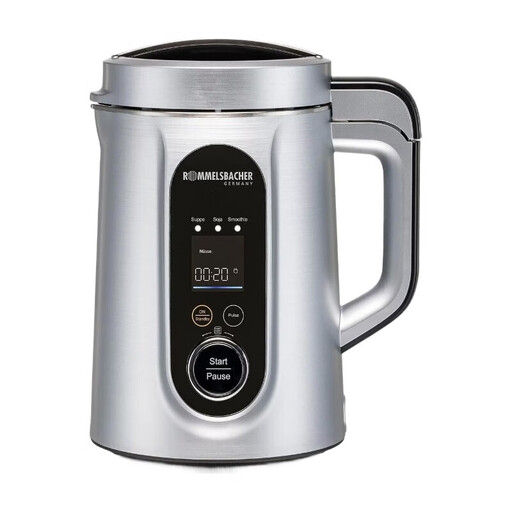 No image available
The product name describes an appliance for making soup and plant-based drinks; before buying, check the minimum fill amount for your portion.
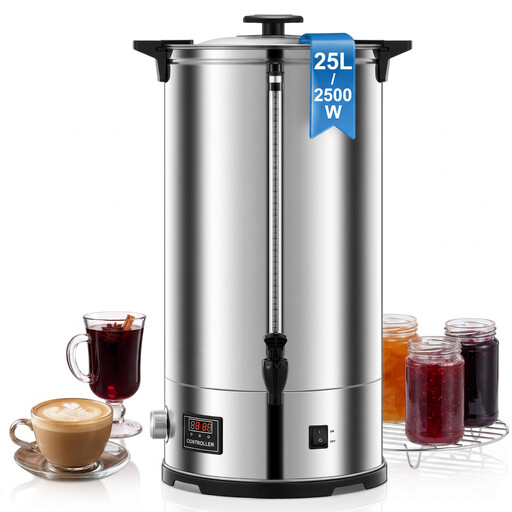 No image available
The product name describes a hot water dispenser with a cooking pot for soup; check that this size suits your household and the portions you want to make.
Capacity stated in the product name: 25L.
Power stated in the product name: 2500W.
The product name mentions a timer and temperature control.
You can’t tell from the maximum jug capacity alone. Check the MIN marking or the manual for the exact model; for the SoupMaker models mentioned, Philips says the liquid must be between MIN and MAX.
For the models mentioned, Philips recommends blending manually or using the pulse function if the soup isn’t smooth enough and the model supports that function. Make sure you also follow the MIN and MAX markings; for another brand, follow its own manual.
No, a cleaning programme doesn’t automatically mean the jug or parts can go in the dishwasher. A Dutch product listing for the Moulinex LM841810 says it isn’t dishwasher-safe; always check the manual for the version you’re buying.
The Netherlands Nutrition Centre advises cooling leftovers quickly, storing them in a sealed container and not leaving them out of the fridge for more than two hours. It recommends keeping them for two days in the fridge or three months in the freezer.
According to the Netherlands Food and Consumer Product Safety Authority (NVWA), electrical equipment within the scope of the Low Voltage Directive must meet statutory safety requirements; the directive applies to rated AC voltages between 50 V and 1,000 V. Check the markings and instructions for the specific appliance; these general rules don’t independently confirm that every model complies.