
Cooking for one or two
You want to make a small amount of smooth vegetable soup without preparing more than you need. The DOMO manuals show why the minimum fill level for the exact model matters.


For small batches, the minimum fill level matters more than the jug’s total capacity: according to the DOMO manuals, the DO727BL requires a minimum of 0.6 litres and the DO1004BL a minimum of 0.8 litres; both models list a smooth programme. If you want to make less, you can cook the soup in a pan and blend it with a hand blender, but heating and blending will then be separate steps. Choose an automatic soup maker only if your batch falls within the fill limits for the exact model, and check that the specific appliance carries the applicable CE marking.
You want to make a small amount of smooth vegetable soup without preparing more than you need. The DOMO manuals show why the minimum fill level for the exact model matters.
You want to heat and blend vegetables in one appliance. A compact model with an explicit smooth programme could suit you, as long as your batch falls within the stated fill limits.
You want to adjust the quantity and texture yourself as you cook. A pan and hand blender are an alternative to an automatic cycle, with separate steps for heating and blending.
First, compare the amount you want to make with the MIN and MAX limits. Then decide whether you want automatic heating and blending or prefer to control the cooking yourself.
Suitable if: your batch is between 0.6 and 1.2 litres; the DOMO DO727BL lists a smooth programme.
Consider: making less than the stated minimum falls outside this model’s usage limits.
Suitable if: you usually make 0.8–1.0 litres and want smooth and reheat programmes; the DOMO DO1004BL lists both.
Consider: the minimum fill is 0.8 litres, even though the jug has a capacity of 1 litre.
Suitable if: you want to adjust the quantity or texture yourself as you cook, or make less than a soup maker’s minimum fill level allows.
Consider: you heat the soup in a pan and blend it separately, rather than using an automatic cook-and-blend programme.
| What to consider | What to check before buying | Who is this most important for? |
|---|---|---|
| Minimum fill level | Compare the total batch you want to make with the MIN and MAX levels. According to DOMO, the DO727BL requires 0.6–1.2 litres and the DO1004BL 0.8–1.0 litres. | When I cook for one or two, I don’t want to make more than I need, so I keep the total amount within the stated limits. Around 36% of consumers prioritise the minimum batch size. |
| Smooth texture | Check whether the exact model lists a smooth soup programme, and follow the instructions for liquid and fill levels. | If I mainly want smooth vegetable soup, I look for a suitable programme and check the model’s filling instructions. Around 28% of consumers put smooth texture first. |
| Automatic heating and blending | Check whether the appliance both heats and blends, and whether its programmes suit the way you cook. | If I want to do as little as possible by hand while cooking, I look for an appliance that heats and blends, and take its programmes and fill limits into account. Around 18% of consumers mainly choose automatic cooking. |
| Cleaning and leftovers | Read the cleaning instructions for the exact model and think about what you’ll do with any leftover soup. | If I often make small batches, I want to know how to clean the appliance after use and how to store leftovers. Around 18% of consumers prioritise maintenance and everyday convenience. |
The jug’s capacity doesn’t tell you how much you need to make at minimum. For example, the manual for the DOMO DO1004BL specifies a minimum of 800 ml.
Before buying, compare the total amount you want to make with the MIN and MAX levels in the manual for the exact model.
Some blenders can heat soup, but according to the Consumentenbond, hot soup requires a heat-resistant jug. Not every appliance combines heating and blending.
Check separately whether the appliance heats, is suitable for hot ingredients, and has a programme or function that suits the way you cook.
For the SoupMaker models mentioned, Philips warns that the liquid level must be between MIN and MAX for the appliance to work properly.
Follow the fill and liquid instructions for your chosen model; a programme name is not an independent test of the result.
The compact My Soup Express models reviewed differ in their minimum fill levels.
According to Philips, the Viva SoupMaker HR2204/80R1 reviewed has a 1.2-litre jug and six programmes. The product page consulted is for a refurbished item.
According to the manufacturer, the Princess 212040 combines heating and blending in a 1.3-litre jug.
A hand blender is an alternative if you cook the soup in a pan first and then blend it yourself.
These products are suitable for making soup in a pan and blending it afterwards, or for appliances that combine heating and blending. For electrical appliances covered by the Dutch Commodities Act (Electrical Equipment) Order, check the CE marking on the specific item; according to the Netherlands Food and Consumer Product Safety Authority, this marking is compulsory.
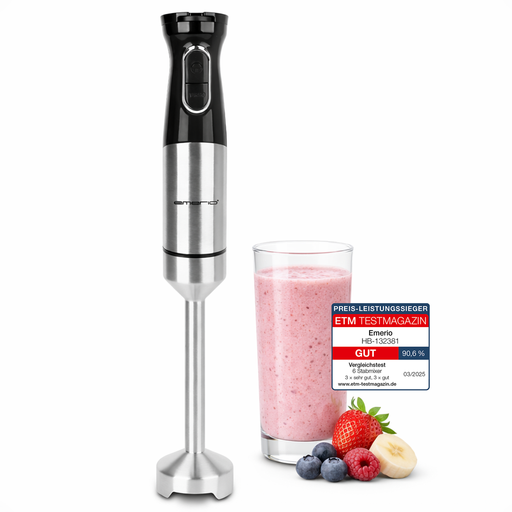 No image available
For soup you cook in a pan first and then blend yourself; the product information lists blending soup and use with hot ingredients.
The product name lists 1000 W and variable speed.
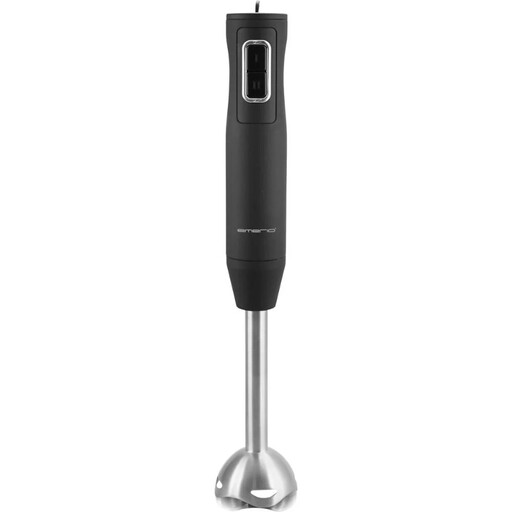 No image available
For anyone who cooks soup in a pan and wants to adjust the texture while blending; the product information lists smooth soup as a suggested use.
 No image available
For small quantities you want to blend in batches. Before using it for soup, check whether the jug is suitable for hot ingredients.
The product name lists 250 W and a 500 ml glass jug.
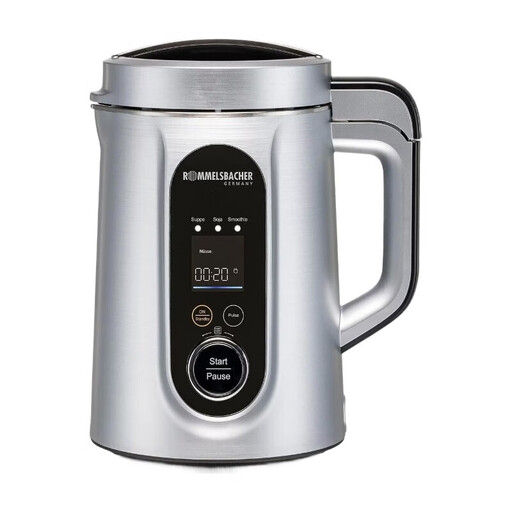 No image available
For anyone who wants heating and blending in one appliance; the product information describes a soup and vegetable drink maker with integrated heating and automatic programmes.
The product information mentions a blending system for smooth results; this is not an independent test result.
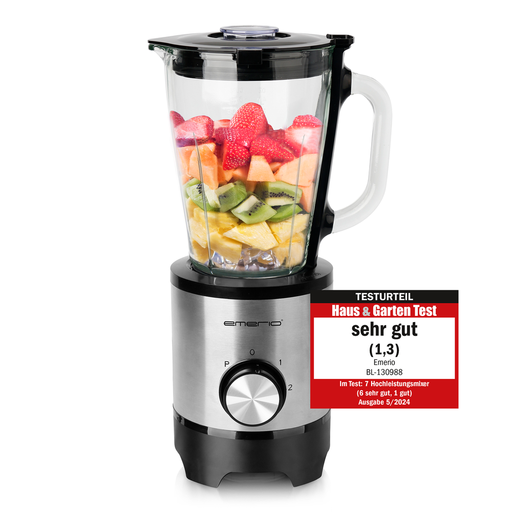 No image available
For soup that you prepare separately and then want to blend. According to the product instructions, hot liquids must not be warmer than 60 °C.
The product name lists a 1.5-litre glass jug.
It depends on the minimum fill level, not just the jug’s capacity. According to the manual, the DOMO DO1004BL has a minimum of 800 ml and the DO727BL a minimum of 0.6 litres; compare the total amount you want to make with the manual for the exact model.
Follow the MIN and MAX markings and the manual for your chosen model. For the soup maker mentioned, Philips advises against using a scouring pad on the jug or lid to remove burnt-on residue; check the cleaning instructions before applying this advice to another model.
According to the Netherlands Nutrition Centre, leftovers should be in the fridge or freezer within 2 hours. Covered leftovers can be kept in the fridge for up to 2 days or frozen.
According to ACM ConsuWijzer, you have a legal warranty for as long as you could reasonably expect the product to work properly; there is no general fixed time limit. For a standard online purchase, the legal cooling-off period usually ends 14 days after delivery, subject to exceptions that you should check for your specific purchase.
CE marking is compulsory for electrical equipment covered by the Dutch Commodities Act (Electrical Equipment) Order. Check the marking on the specific appliance; on its own, it is not proof of an independent inspection.