
Small-portion cook
You usually make soup for yourself or a small group and don’t want to store a larger jug than you need. Philips Netherlands lists the HR2204/80R1 as having a 1.2-litre jug.


For smaller portions, a compact soup maker is a sensible choice. If you’re cooking for several housemates, compare the permitted fill level with the space the appliance takes up. Philips lists the HR2204/80R1 as having a 1.2-litre capacity and programmes for thin and thick soup, while DOMO lists a 1.6-litre capacity and programmes for smooth and chunky soup for the DO737BL. A heated cooking blender offers more ways to prepare food, but it’s worth considering mainly if you’ll use those extra features.
You usually make soup for yourself or a small group and don’t want to store a larger jug than you need. Philips Netherlands lists the HR2204/80R1 as having a 1.2-litre jug.
You want to make one batch for several people, so you’re comparing capacity and the choice of smooth or chunky soup. DOMO lists a 1.6-litre capacity and programmes for smooth and chunky soup for the DO737BL.
You want to be able to clean the jug after use and put the appliance away without getting in anyone’s way. Cleaning instructions vary by model; DOMO lists a cleaning function and removable blades for the DO737BL.
| What to consider | What should you check? | Who is this important for? |
|---|---|---|
| Portions and space | Compare the capacity and fill marks of the exact model with your recipe and available cupboard space. Philips Netherlands lists 1.2 litres for the HR2204/80R1; DOMO lists 1.6 litres for the DO737BL. | If I’m cooking for myself, I don’t want to use more capacity or cupboard space than I need; around 33% of consumers give the right portion size and space top priority. |
| Soup texture | Check that the model has programmes for your preferred texture. Philips Netherlands lists programmes for thin and thick soup; DOMO lists programmes for smooth and chunky soup. | If I want my leek and potato soup smooth or, instead, chunky, I look for the matching programmes; around 25% of consumers put their preferred soup texture first. |
| Cleaning after use | Check the instructions for the jug, blades, lid and electrical parts separately. DOMO lists a cleaning function and removable blades for the DO737BL. | If I share a kitchen with others, I want to leave the appliance clean and tidy after cooking; around 25% of consumers give ease of cleaning top priority. |
| Extra features and space | Consider whether you want to make other hot or cold dishes as well as soup, and check the jug capacity and storage space. Tefal Netherlands lists a 1.75-litre jug and programmes for hot and cold preparations for the BL83SD30. | If I’m looking for one appliance that can prepare a wider range of dishes, I want to make proper use of its extra features; around 17% of consumers put versatility first. |
For the Philips HR2204 variants mentioned, the liquid level must stay between the MIN and MAX marks. So the nominal capacity alone doesn’t tell you how much of each ingredient and liquid you can use in every recipe.
Before you start, compare your recipe with the fill marks and the manual for the exact model.
If your recipe doesn’t fit within the permitted fill level, you may need to make it in two batches.
DOMO lists a cleaning function and removable blades for the DO737BL. That doesn’t automatically mean that all the parts are dishwasher-safe.
Check the care instructions separately for the jug, blades, lid and electrical parts.
An appliance with extra hot and cold functions may offer more options than you need for leek and potato soup. Unused features can also mean you need more cupboard space.
Decide what else you’ll actually want to make, then compare the model’s dimensions and cleaning instructions.
If you don’t use the extra features, the space the appliance takes up may be less practical in a shared kitchen.
Philips Netherlands describes the HR2204/80R1 as a 1.2-litre soup maker with six programmes.
DOMO describes the DO737BL as a 1.6-litre soup maker with programmes for smooth and chunky soup.
Tefal Netherlands describes the Perfectmix Cook BL83SD30 as a heated blender with programmes for hot and cold preparations.
The selection below includes a soup and vegetable drink maker and a soup maker with a very large cooking pot. Compare the amount you actually want to make with the storage space available in your shared kitchen.
 No image available
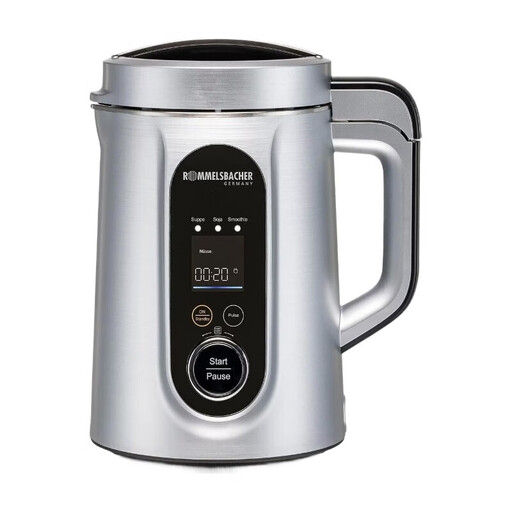
This soup and vegetable drink maker is an option if you’re considering one appliance for both soup and vegetable drinks.
Follow the warnings about hot contents and don’t exceed the fill mark. Use the appliance with the lid locked in place and don’t immerse the housing in water.
 No image available
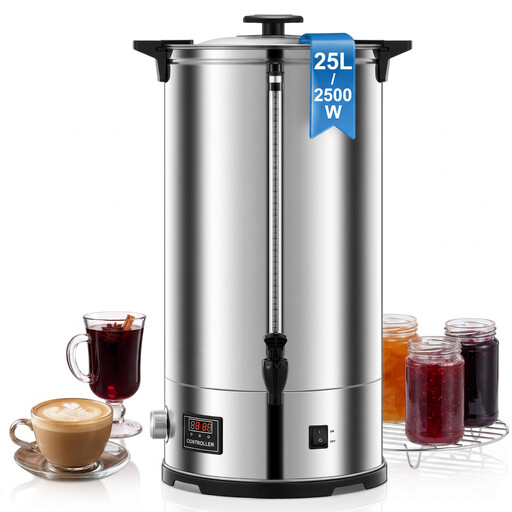
With a 25-litre capacity, this model is only suitable for making a very large batch and when there’s enough space in the shared kitchen.
The product name lists a stainless steel cooking pot, a 2500 W motor, a timer and temperature control. Check the fill marks and the storage space required before choosing this model.
Not without first checking the fill limits for the exact model. Keep the ingredients and liquid between the MIN and MAX marks; Philips says that a liquid level outside these limits can affect how the HR2204 variants mentioned work.
Follow the cleaning instructions for the exact model and put the parts away after use. DOMO lists a cleaning function and removable blades for the DO737BL, but that doesn’t mean all the parts are dishwasher-safe.
Leave the soup to cool, then put any leftovers in the fridge or freezer within two hours. The Netherlands Nutrition Centre advises keeping leftovers in the fridge for no more than two days; this is food safety advice, not a soup maker specification.
According to the Dutch government, you should contact the seller if you have a problem with a product. Also check what any additional warranty covers.
Electrical appliances covered by the EU Low Voltage Directive must meet the applicable safety requirements and carry the CE marking; materials that come into contact with food are also subject to Regulation (EC) No 1935/2004. The European Commission and EUR-Lex describe these frameworks, but this doesn’t confirm that a specific item offered for sale complies with them.