
Cook with a narrow worktop
Wants to make a few lunches without giving up too much permanent worktop space, so compares the appliance’s external dimensions as well as its capacity.


Start by considering the space on your worktop and how much soup you want to make for lunches in each batch. A smaller jug may suit a few portions and a tight space. A larger jug is more convenient for batch cooking, provided the appliance fits and you can cool and store the soup in good time.
Wants to make a few lunches without giving up too much permanent worktop space, so compares the appliance’s external dimensions as well as its capacity.
Wants to portion out more soup in each batch and also considers the space needed for the appliance and chilled portions.
Wants to switch between smooth and chunky soup or make other dishes too, and weighs this up against the space required and cleaning involved.
Choose this option: if available worktop width is your main constraint and you make a modest amount in each batch. DOMO lists the DO727BL as 20.50 cm wide, with a capacity of 1.2 litres.
Bear in mind: a smaller jug may mean making more batches if you’re preparing several lunches. Check the fill markers and the clearance above the appliance.
Choose this option: if you want to prepare several lunches at once and have room for the DOMO DO705BL, which the manufacturer lists as having a 2-litre capacity.
Bear in mind: its listed width is 22.00 cm and its height is 32.50 cm. A larger batch also needs to be chilled promptly and requires enough storage space.
Choose this option: if you’re looking for a capacity between 1.2 and 2 litres, or want to make other dishes as well as soup. Princess lists the 214001 at 1.6 litres; Rommelsbacher gives the SVD 1400 a maximum capacity of 1.3 litres.
Bear in mind: extra programmes don’t tell you whether an appliance will fit on your worktop. Check the external dimensions of the exact model.
| What to consider | What to look for when buying | Who is this important for? |
|---|---|---|
| Will the appliance fit on the worktop? | Measure the available width and height, then compare them with the external dimensions of the exact model. Leave space to fill the appliance and remove the lid too. | If I have limited worktop space, I want to know whether the soup maker will actually fit there. Around 33% of consumers put available space first. |
| How many lunches per batch? | Compare the amount you want to make with the minimum and maximum fill markers. The stated jug capacity does not automatically tell you how much you can make in every batch. | If I want to make several lunches at once, the amount per batch is a major consideration. Around 27% of consumers choose batch size as their main priority. |
| What do you want to make? | Check which soup textures and other programmes are listed for the exact model, and choose features that suit what you actually want to prepare. | If I want to switch between smooth and chunky soup or make other dishes too, I look at the programmes. Around 20% of consumers put their choice of dishes first. |
| How do you clean the appliance? | Check the manual for instructions on cleaning the jug, blade, lid and electrical parts. A cleaning programme doesn’t necessarily clean every component. | If I use the appliance regularly, I want to know how much cleaning each batch involves. Around 20% of consumers name ease of maintenance as their main consideration. |
Capacity doesn’t tell you how much space the soup maker takes up. A model that looks large enough on paper may be too wide or too tall for the spot you have in mind.
Measure the available space and compare it with the dimensions of the exact model. Leave room to prepare ingredients and clean the appliance too.
Once cooked, soup needs to be chilled promptly and can only be kept in the fridge for a limited time.
The Netherlands Nutrition Centre advises cooling leftovers within 2 hours, storing them covered in the fridge and eating them within 2 days. When serving, reheat chilled leftovers thoroughly until piping hot.
A programme doesn’t automatically tell you which parts still need to be cleaned by hand afterwards.
Check the manual for the exact model to find out how to clean the jug, blade, lid and electrical parts.
The DO727BL and DO705BL have clear capacity and size specifications, making it easy to compare a smaller jug with a larger batch.
The Viva SoupMaker HR2204/80R1 is worth considering if a 1.2-litre jug and several soup settings suit the way you plan to use it.
According to Princess, the 214001 has a capacity of 1.6 litres, putting it between the 1.2- and 2-litre models mentioned here.
The SVD 1400 is designed for people who want to make other things alongside soup, such as plant-based drinks or porridge.
This selection includes a soup and vegetable drink maker and an electric ramen cooker, with soup listed as one of its uses. Check which type of appliance and cooking method suits your lunches.
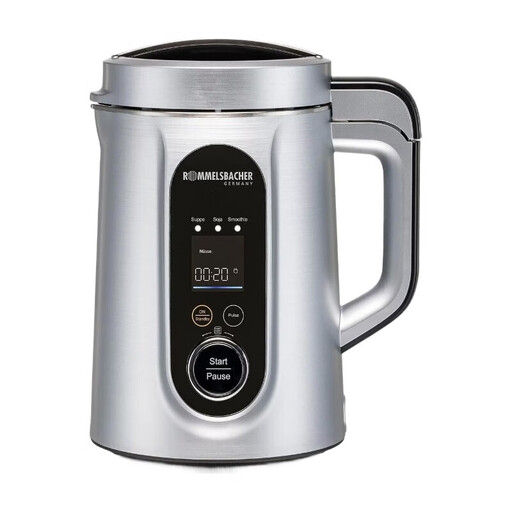 No image available
An option if you want to make plant-based drinks or porridge as well as soup. Check the dimensions before placing it on a narrow worktop.
Rommelsbacher lists a maximum fill level of 1.3 litres, nine programmes and a cleaning programme.
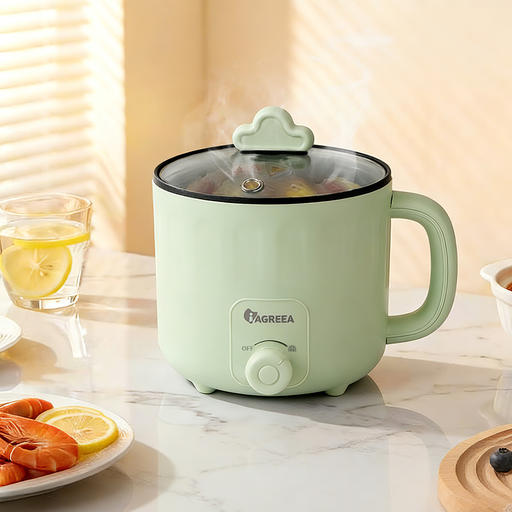 No image available
An electric ramen cooker for anyone considering a pan-style cooking method. Soup is listed as one of its uses, rather than its only function.
The product name lists a capacity of 1.6L.
Work out how much soup you want to portion out in each batch, then measure the space available. The stated capacities and external dimensions of the DOMO DO727BL and DO705BL differ. Check the fill markers on your chosen model too.
The Netherlands Nutrition Centre advises letting leftovers cool within 2 hours, storing them covered in the fridge and eating them within 2 days. When serving, reheat chilled soup thoroughly until piping hot. Keep the soup chilled during transport; this storage period is not a guarantee for any particular flask.
If a product is faulty, contact the seller. According to the Dutch Government, there is no fixed legal guarantee period of exactly two years in the Netherlands. What you can expect depends, among other things, on the product and the sales information.
According to the Dutch Government’s Business.gov.nl, electrical appliances placed on the market must meet the applicable European requirements. After the required assessment, the manufacturer applies the CE marking and draws up an EU Declaration of Conformity. Check the information for the specific appliance; a general description alone doesn’t confirm that all requirements have been met.