What should you look for when choosing?
First, work out how much soup you want to serve and check the filling limit allowed by your chosen recipe. Then plan your batches, the texture you want and the cleaning needed between batches.
| What to consider |
What should you look for? |
Who should pay particular attention? |
| Usable capacity per batch |
Multiply the number of guests by the amount you want to serve each person, then compare the total with the recipe’s filling limit. DOMO lists a capacity of 2,2 l for the DO716BL; Coolblue describes it as making 2 l of soup. Check the manual and filling markings. |
If I’m cooking for lots of guests, I want to know how much soup I can actually make per batch. Around 36% of consumers put usable capacity per batch first. |
| Batches and serving time |
Add together the preparation time and any cleaning needed between all the batches. DOMO lists a 20-minute preparation time for the DO716BL and a keep-warm function of up to 30 minutes for the DO739BL. These are manufacturer specifications for specific models, not a guarantee for every recipe. |
If I want to serve at a set time, I need to know whether all the batches will be ready in time. Around 29% of consumers put batch planning first. |
| Smooth soup or chunks |
Check whether the exact model has programmes for the texture you want. DOMO lists chunky, smooth and extra smooth programmes for the DO716BL; Princess describes smooth and chunky soup programmes for the 214001. |
For tomato and basil soup, I want to decide in advance whether it should be smooth or have chunks. Around 21% of consumers prioritise their preferred soup texture. |
| Cleaning between batches |
Check the cleaning steps specified in the manual. Kenwood lists Easy Clean for the SoupEasy CBL01.000BS; this doesn’t automatically mean the parts are dishwasher-safe. |
If I’m making several batches in a row, I want to know how much cleaning is involved between them. Around 14% of consumers put ease of cleaning first. |
Soup makers on Joybuy
These product picks include appliances whose product name mentions soup-making. Check the usable capacity and usage restrictions for each model before planning a neighbourhood meal.
 No image available
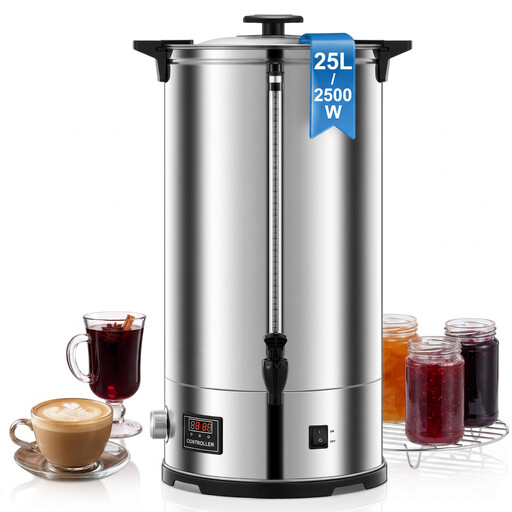
FOHERE 25L Hot Water Dispenser and Soup Maker
The product name mentions soup-making and a hot water dispenser. Check how much soup the cooking pot can actually make before planning to use the appliance for a neighbourhood meal.
The product name lists a 2500W motor, a stainless steel cooking pot, a timer and temperature control.
Joybuy
 No image available
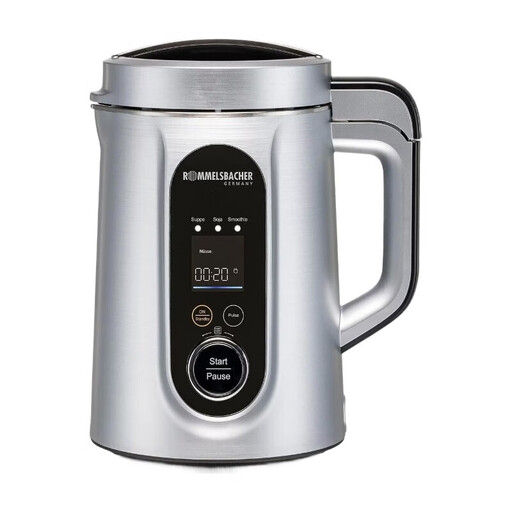
Rommelsbacher Soup & Vegetable Drink Maker SVD 1400
This model is marketed as an appliance for making soup and vegetable drinks. It is listed for domestic use; check whether that suits how you plan to use it for the meal.
Joybuy
Frequently asked questions
How do I work out how many batches I’ll need for a neighbourhood meal?
Multiply the number of guests by the amount of soup you want to serve each person, then divide the total by the filling quantity permitted for your recipe. Round up to the next whole batch and check the filling markings in the manual; the stated jug capacity doesn’t automatically tell you how much one recipe makes.
When should I add the basil?
That depends on the recipe, not on any proven difference between soup makers. In a recipe for tomato and basil broth, Voedingscentrum describes sprinkling the basil over the bowls after cooking. For ingredients that go into the jug during a programme, follow the instructions for your chosen appliance.
How should I store and reheat soup I’ve made in advance?
According to Voedingscentrum, cool leftovers quickly and put them, covered, in the fridge within 2 hours, ideally at 4 °C. Keep them there for no more than 2 days. Before serving, reheat them until piping hot all the way through, stirring well; a keep-warm function doesn’t replace these steps.
What can I do if my soup maker breaks too soon during normal use?
In the Netherlands, statutory rights apply in addition to any manufacturer’s guarantee. ACM ConsuWijzer says the seller is responsible for providing an appropriate solution free of charge if the product doesn’t perform as you could reasonably expect during normal use. There isn’t one fixed statutory guarantee period for every soup maker.
Do I need to register with the NVWA for a neighbourhood meal?
The NVWA says registration and a food safety plan are required if you sell food several times a year. According to the NVWA, you don’t need to register if you sell food just once a year. A neighbourhood meal can also be shared for free, so don’t apply these sales rules to a free meal without taking that distinction into account. If you’re selling food, also check the requirements for safe food handling and allergen information.


