
Host cooking for a group
Wants to make enough soup in one go and compares the amount needed with the capacity and fill markings of the exact model.


Choose the capacity based on how much soup you actually want to serve: Philips and Moulinex quote 1.2 litres for specific models, while DOMO lists 2 litres for the DO705BL. Then compare the programmes for smooth or chunky soup, and add preparation and serving time to the stated cooking time. If your serving time might change, check whether the exact model has a keep-warm function. These are manufacturers’ specifications, not independent tests using leek and potato soup.
Wants to make enough soup in one go and compares the amount needed with the capacity and fill markings of the exact model.
Wants the soup ready before friends arrive and factors in the cooking time, preparation and, where available, keeping it warm.
Wants to serve leek and potato soup smooth or with chunks, and is looking for a programme to suit that preference.
| What to consider | What to look for | Who is this most important for? |
|---|---|---|
| Enough soup for your guests | Work out the total amount you want to serve and compare it with the capacity and minimum and maximum fill markings of the exact model. | When I’m cooking for friends, I want to know whether one batch will be enough. Around 33% of consumers mainly prioritise making enough soup in one batch. |
| Serving on time | Add time for chopping and serving separately to the stated cooking time. Philips quotes 18 minutes for the refurbished HR2204/80R1, and DOMO quotes 20 minutes for the DO705BL; Moulinex states that the LM841B10 keeps soup warm for 40 minutes. | When my guests are arriving at a set time, I want to plan preparation and cooking carefully. Around 33% of consumers mainly value being able to serve soup on time. |
| Smooth or chunky soup | Check which texture programmes the exact model has and follow the instructions for chopping the ingredients. | If I have a clear preference for smooth soup or soup with chunks, I want the programme to suit it. Around 17% of consumers mainly choose based on their preferred soup texture. |
| Cleaning up afterwards | Check the cleaning instructions and which parts are available for the exact model; don’t assume they are dishwasher-safe unless this is confirmed. | If I want to use the appliance regularly, I want to know how to clean it and the blades after cooking. Around 17% of consumers mainly prioritise easy maintenance. |
The stated capacity doesn’t automatically tell you how many bowls your recipe will make; portion size and the fill limits matter too.
Measure out the amount you need and check the fill markings before preparing ingredients for all your guests.
Making a second batch takes extra preparation time.
The stated cooking time won’t necessarily include washing, peeling, chopping or making a second batch.
Allow separate time for preparation and serving; if your serving time might change, check whether the exact model has a keep-warm function.
According to the Consumers’ Association, a blender is only suitable for hot soup if its jug is heat-resistant; only some blenders can heat the soup as well.
Check the instructions to see whether the jug can handle hot soup and whether the appliance actually heats it.
The features and capacities listed apply to the models and versions specified; they are not a general assessment of the entire brand.
DOMO lists a 2-litre jug and programmes for smooth and chunky soup for the DO705BL.
The Philips Viva SoupMaker HR2204/80R1 is a refurbished version with a stated capacity of 1.2 litres.
Moulinex lists a capacity of 1.2 litres and a keep-warm function for the Easy Soup LM841B10.
SharkNinja describes the HB150EU as a Foodi 2-in-1 blender and soup maker, for anyone who also wants a blender function.
These Joybuy products range from soup and vegetable drink makers to cooking pots whose product titles mention soup preparation. For a herbal decoction pot, check specifically whether the described preparation is suitable for ordinary leek and potato soup.
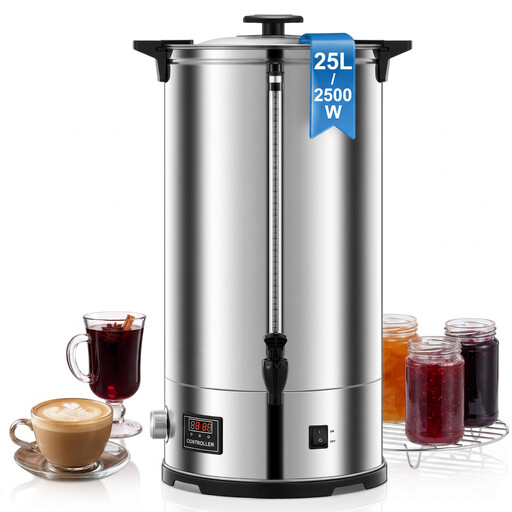 Image unavailable
The product title mentions soup preparation, timer and temperature controls; check whether the settings suit your recipe and serving time.
The title lists 25L, a 2500W motor and a stainless steel cooking pot.
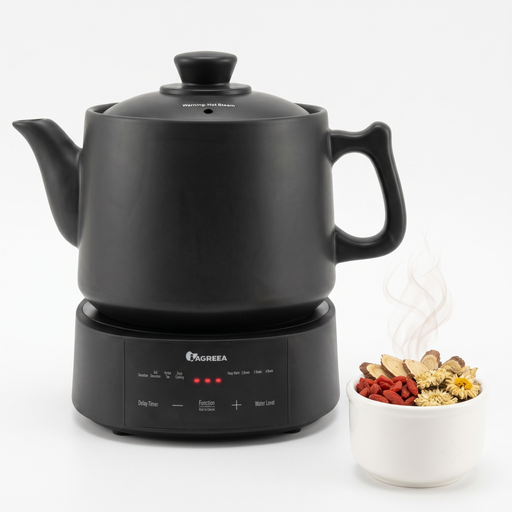 Image unavailable
The product title describes a herbal decoction pot and mentions tonic soup; before buying, check whether its functions are suitable for ordinary leek and potato soup.
The title lists 4.5L, 600W, a 24H delay timer and automatic keep-warm function.
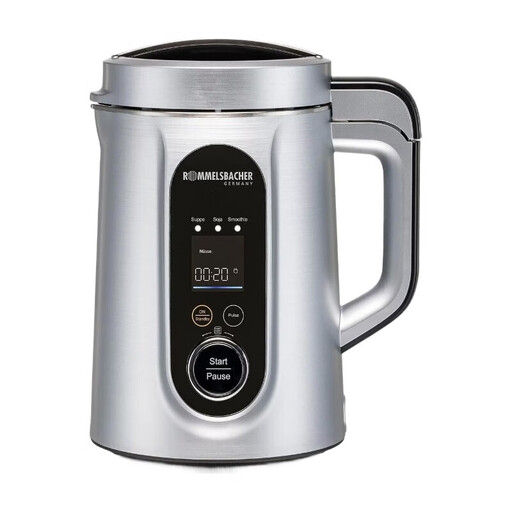 Image unavailable
The product name mentions making soup and vegetable drinks; check the maximum fill line and instructions for your recipe.
The stated usage restrictions are: keep to the maximum fill line, the inner pot gets hot during and after use, and don’t immerse the main unit in water when cleaning.
Work out how much soup you want to serve in total and compare it with the fill limits of the exact appliance. Philips lists 1.2 litres for the refurbished HR2204/80R1 and Moulinex lists 1.2 litres for the LM841B10; DOMO lists 2 litres for the DO705BL. The number of bowls will depend on portion size.
Allow separate time for preparation and serving in addition to the programme time. Philips states that the refurbished HR2204/80R1 makes soup in 18 minutes, and DOMO states 20 minutes for the DO705BL; Moulinex says the LM841B10 keeps soup warm for 40 minutes after cooking.
The Philips SoupMaker recipe book includes leek soup and describes how to chop leeks and potatoes. Follow the chosen soup maker’s own instructions for ingredients, piece size, fill markings and programme; the recipe book isn’t a test of every model mentioned.
According to the Netherlands Food and Consumer Product Safety Authority, CE marking is mandatory for electrical appliances covered by the Commodities Act Decree on Electrical Equipment. Parts that come into contact with food must meet the applicable Dutch and European requirements for food contact materials. Check the information for the exact appliance being sold; a general product description alone doesn’t establish that these requirements have been met.
For an online purchase in the Netherlands, ACM ConsuWijzer says you generally have a 14-day cooling-off period after delivery; check the applicable terms and exceptions. If the product breaks, the Government of the Netherlands says the seller must provide a solution; a manufacturer’s warranty doesn’t replace this obligation.