
Hosting a larger group
You want to work out in advance how many bowls you’ll need and whether one batch will be enough. Compare the portions you want to serve with the maximum fill level, rather than relying on the stated jug capacity alone.


Choose a soup maker only after comparing the amount you want to serve each guest with the maximum fill level for hot soup; you may need to make a second batch for a larger group. Also check that the exact model has a chunky soup programme, as this doesn’t automatically guarantee the texture you want. The Netherlands Nutrition Centre advises cooking dried pulses until tender. Use cooked lentils, or follow a suitable recipe and the appliance instructions when using dried lentils.
You want to work out in advance how many bowls you’ll need and whether one batch will be enough. Compare the portions you want to serve with the maximum fill level, rather than relying on the stated jug capacity alone.
You want to keep the vegetables and lentils recognisable, so look for a chunky programme or the option to adjust the blending yourself.
You want to cook the lentils properly, plan when to serve the soup and store any leftovers safely and promptly.
First work out how much soup you’ll need, then check the hot-fill line on the exact model. Next, consider the texture setting, how to cook your chosen lentils and how much time you’ll have to serve and clean up.
| What to consider | What should you check? | Who is this important for? |
|---|---|---|
| Enough soup for your guests | Compare the total amount you want with the hot-fill line; jug capacity alone doesn’t guarantee a certain number of bowls. | For a dinner party, I want to know in advance whether one batch will be enough for everyone. Around 36% of consumers put having enough soup for their guests first. |
| Distinct chunks | Check whether the exact model has a chunky soup programme and manual blending controls. | If I want to keep the lentils and vegetables recognisable, I look for a chunky setting and, ideally, control over blending. This is the main buying concern for around 29% of consumers. |
| Cooking lentils properly | Check whether the lentils are dried or already cooked, and follow a suitable recipe and the instructions. | When using dried lentils, I mainly want to know how to cook them until tender without relying on a programme and hoping for the best. Around 21% of consumers make this their top priority. |
| Timing and cleaning | Check the keep-warm and cleaning functions, and plan extra batches if the capacity calls for them. | If I’m planning several batches, I want to know how the appliance keeps the soup warm and how easy it is to clean. Timing and maintenance come first for around 14% of consumers. |
The stated capacity doesn’t tell you how much thick, hot soup you can make without exceeding the fill line. Your portion size and the space needed for ingredients also matter.
Work out the total amount you need for your guests and compare it with the fill line on the exact model.
If one batch isn’t enough, you may need to make another batch or use an additional pan.
A recipe designed for a smooth soup programme doesn’t mean the same result will work for a chunky soup. The Netherlands Nutrition Centre says dried pulses should be cooked until tender; DOMO’s red lentil recipe uses Extra smooth.
Use cooked lentils for a simple chunky version, or follow a suitable recipe and check that the lentils are tender.
The product title on the Joybuy Netherlands page for the Ninja HB150EU calls it a centrifugal juicer, while the description also mentions a blender and soup maker. These descriptions don’t clearly point to the same type of product.
Check the full product name, model and specifications before deciding that a listing is for a soup maker.
The DO705BL and DO716BL are options with a chunky programme for anyone considering making a larger batch.
The Viva HR2203/80 is a more compact option with a thick soup programme and a manual blending function.
Kenwood says the SoupEasy CBL01.000BS combines a Chunky Soup programme with keep-warm and cleaning functions.
The Easy Soup LM841B10 is a compact option for anyone who values simplicity and a keep-warm function.
This Joybuy selection includes appliances for making soup, but the product titles don’t confirm that they have a suitable chunky programme. For chunky lentil soup, check the instructions and fill line for the exact model. Before buying, also check the relevant CE marking and information about parts that come into contact with food.
 No image available
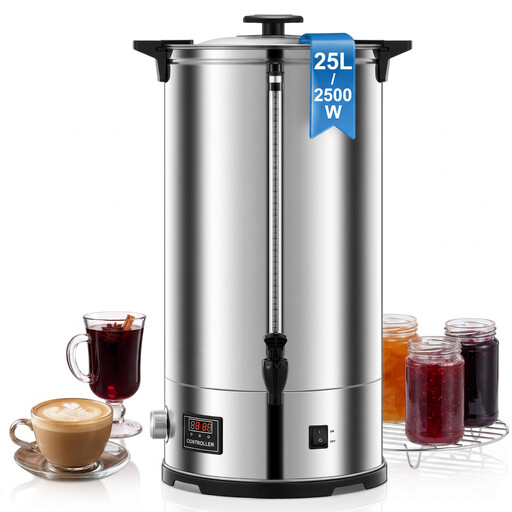
The product title mentions making soup in a cooking pot; check whether the controls suit the chunky texture you want.
The title mentions a stainless steel cooking pot, a timer and temperature control.
 No image available
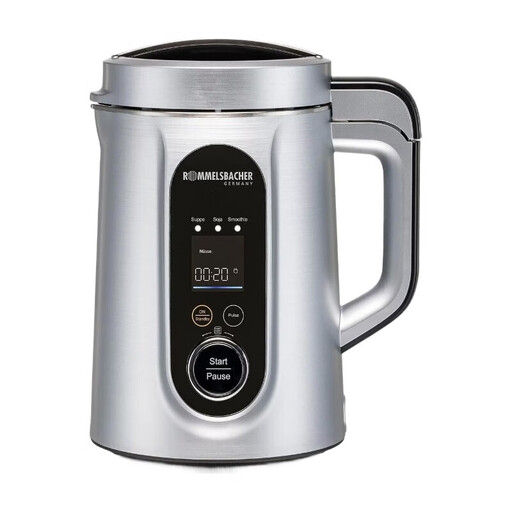
This model is less suited to soup with distinct chunks: the product description says its blending system is designed to produce a very smooth result.
The description lists a heated 1.3 l inner pot, nine automatic programmes and a pulse function. The appliance is described as being for domestic use.
Don’t assume you can without a suitable recipe or the appliance instructions. The Netherlands Nutrition Centre advises cooking dried pulses until tender; lentils from a jar, tin or pouch only need heating through. DOMO’s red lentil recipe uses Extra smooth, not Chunky.
Multiply the number of bowls you plan to serve by the amount you want in each bowl, then compare the result with the maximum hot-fill level for your chosen model. The stated jug capacity alone doesn’t tell you how much soup you can make in one batch.
Cool leftovers quickly and put them in a well-sealed container in the fridge or freezer within 2 hours. The Netherlands Nutrition Centre recommends a fridge temperature of 4 °C; keeping soup warm in an appliance isn’t a substitute for chilled storage.
If a product is faulty, contact the seller in the Netherlands to find a solution. According to the Dutch government, statutory consumer guarantees in the Netherlands don’t have a fixed two-year time limit; a manufacturer’s guarantee is separate.
The Netherlands Food and Consumer Product Safety Authority (NVWA) states that electrical products placed on the market in the Netherlands must have a CE marking. Parts that come into contact with food must also comply with the relevant food-contact material rules. A product listing alone doesn’t confirm that a particular model meets these requirements.