
Host serving lots of bowls of soup
If you’re making soup for several guests, it’s especially useful to compare your recipe quantity with the appliance’s fill marks. DOMO, Princess and Philips list different jug capacities for the models mentioned.


Start by working out how much you want to serve in each batch. The stated jug capacity doesn’t guarantee that your full recipe, including solid ingredients and liquid, will fit. Then choose a smooth or chunky setting to suit your preferred texture. If you want to fry the leek first or prefer to choose your own pan size, you could also cook the soup in a pan and blend it with a hand blender. Before buying, check the fill limits, cleaning instructions and product safety information for the exact model.
If you’re making soup for several guests, it’s especially useful to compare your recipe quantity with the appliance’s fill marks. DOMO, Princess and Philips list different jug capacities for the models mentioned.
If you want to serve smooth soup or keep some chunks in it, compare the programmes available on the exact model. DOMO and Princess list programmes for different soup textures.
If you’re cooking before your guests arrive, remember to allow time for cooling and storage too. The Netherlands Nutrition Centre advises putting leftovers in the fridge, well covered, within two hours.
A good fit if: making a larger batch in one go is a priority. DOMO lists a 2-litre capacity for the DO705BL, along with programmes for smooth and chunky soup.
Bear in mind: a larger stated capacity doesn’t remove the need to consider space and cleaning. Check the fill marks against your recipe.
A good fit if: you’re serving smaller portions or can make several batches. Princess lists a capacity of 1.6 litres for the 214001, while Philips lists 1.2 litres for the refurbished HR2204/80R1.
Bear in mind: you may need to make extra batches for a larger quantity. Philips describes the 1.2-litre model as suitable for four portions.
A good fit if: you want to fry the leek first or decide for yourself when and how long to blend. The Netherlands Nutrition Centre’s potato and leek soup recipe uses a pan, followed by a hand blender or food processor.
Bear in mind: cooking and blending need your attention. The recipe referenced includes chicken, so you’ll need to adapt it for vegetarian guests.
A good fit if: you want to make other hot and cold recipes as well as soup. Tefal lists programmes for smooth and chunky soup on the Perfectmix Cook BL83SD30.
Bear in mind: the stated jug capacity of 1.75 litres doesn’t tell you how much hot soup with ingredients will fit in one go. Check the permitted fill level.
| What to consider | What should you check? | Who is this important for? |
|---|---|---|
| Usable quantity per batch | Compare the total recipe quantity with the minimum and maximum fill marks. DOMO lists 2 litres, Princess 1.6 litres and Philips 1.2 litres for the refurbished HR2204/80R1. | If I’m making soup for guests, I want to know whether my recipe will fit in one batch. Around 36% of consumers prioritise the quantity per batch. |
| Smooth or chunky texture | Check whether the model has a programme for your preferred texture. DOMO and Princess list settings for smooth and chunky soup. | If I want to serve smooth soup or keep some chunks in it, I want to tailor the texture to my guests. Around 29% of consumers make texture their top priority. |
| Preparation and storage | Plan the cooking and any extra batches around serving time. The Netherlands Nutrition Centre advises putting leftovers in the fridge at 4 °C, covered, within two hours. | If I’m cooking before dinner, I want to be able to store the soup in good time without leaving the final preparations until my guests arrive. Around 21% of consumers prioritise planning and storage. |
| Cleaning and other uses | Read the cleaning instructions for the exact model and consider whether you’ll use its extra features outside this dinner party. DOMO lists a cleaning function and removable blades for the DO705BL. | If I want to use the appliance after the dinner party too, I want its cleaning requirements and features to suit my routine. Around 14% of consumers prioritise maintenance and wider use. |
The leek, potato and liquid must all fit within the fill limits of the exact appliance. The models mentioned have different stated capacities.
Calculate the total quantity for the number of bowls you want to serve, then compare it with the fill marks in the manual.
If your recipe won’t fit in one batch, you’ll need extra cooking time and washing-up.
The Netherlands Nutrition Centre’s recipe fries the leek before cooking. A smooth or chunky programme alone doesn’t mean the appliance has a frying function.
Choose a method that suits your recipe, or use a pan and hand blender if you want to fry the leek first.
With this method, you may also need to clean a separate pan.
A stated cooking time applies to the preparation described by the manufacturer for that specific model. It won’t necessarily include chopping, extra batches or every step of your dinner.
Plan your preparation and the number of batches separately. Chill any soup you’re storing promptly; the Netherlands Nutrition Centre advises putting leftovers in the fridge at 4 °C, covered, within two hours.
DOMO’s DO705BL is a soup maker with a manufacturer-stated capacity of 2 litres.
The Princess 214001 is a soup maker with a manufacturer-stated capacity of 1.6 litres.
The HR2204/80R1 is a refurbished Philips SoupMaker with a capacity of 1.2 litres, as stated by Philips.
The Tefal Perfectmix Cook BL83SD30 is a heated blender with a manufacturer-stated jug capacity of 1.75 litres.
This selection includes a soup maker, soup and kitchen blenders, and hand blenders for puréeing soup after cooking it in a pan. Before buying, check the fill limits and product safety information for the exact model.
 No image available
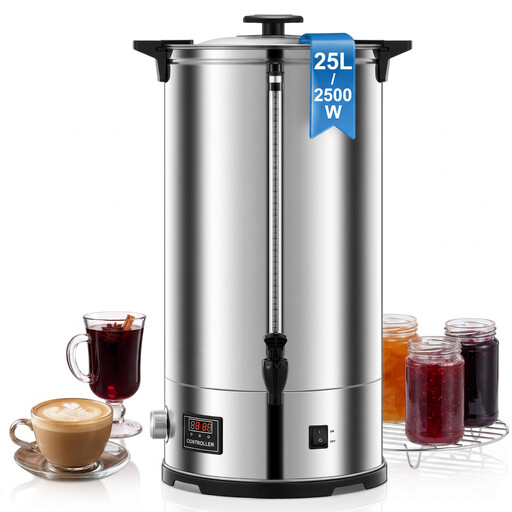
The product title mentions making soup in a cooking pot. Check that the method described suits your recipe.
The title lists a 25L water dispenser, a 2500W motor, a stainless steel cooking pot, a timer and temperature control. The 25 litres refers to the stated dispenser capacity, not a confirmed quantity of soup per batch.
 No image available
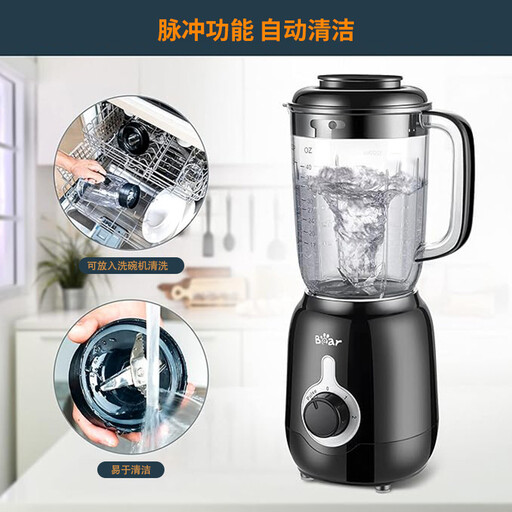
The product description lists puréeing as a use. Before adding hot soup, check that the jug is suitable for the temperature of your ingredients.
The title lists two speeds, a pulse function and four stainless steel blades.
 No image available
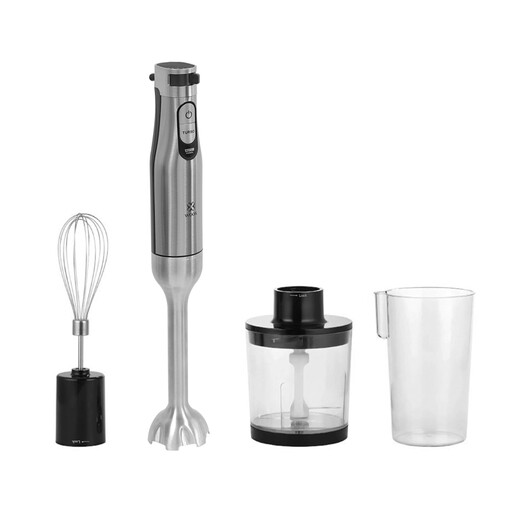
The product description lists soup and puréeing as uses, making it a good option if you cook soup in a pan and then choose the texture yourself.
The title lists two speeds, a whisk, a chopper, a 500 ml chopping bowl and an 800 ml measuring beaker.
 No image available
The product description mentions blending soup. A hand blender could be a good fit if you cook soup in a separate pan and want to choose the texture yourself.
The title lists variable speed and accessories including a chopper, whisk and milk frother.
 No image available
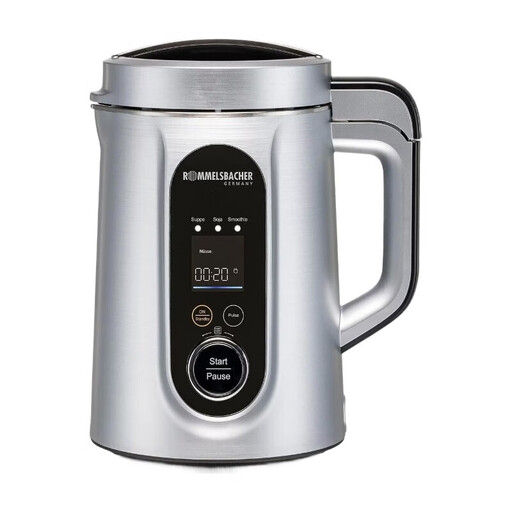
The product description lists automatic soup programmes. Check the fill limits for the exact model before adding your full recipe.
The description lists a heated stainless steel inner jug with a capacity of up to 1.3 litres.
It depends on the number of guests and how much you serve in each bowl. Philips says the 1.2-litre HR2204/80R1 is suitable for four portions. Check that the portion size works for your course, and compare the full recipe with the fill limits.
It depends on the recipe. The Netherlands Nutrition Centre’s recipe fries the leek in a pan first, then blends the soup with a hand blender or food processor. If you want to follow this step, check whether your chosen appliance can fry ingredients separately.
The Netherlands Nutrition Centre advises putting leftovers in the fridge, well covered, within two hours of cooking. The recommended fridge temperature is 4 °C. It also advises keeping cooked leftovers in the fridge for no longer than two days.
CE marking is compulsory for electrical products placed on the market in the Netherlands. The Netherlands Food and Consumer Product Safety Authority includes kitchen appliances in its information about electrical appliances. CE marking is not an independent performance test of how well the appliance makes soup.
If the product doesn’t meet what you could reasonably expect under normal use, you may be entitled to a remedy under the legal guarantee. According to ACM ConsuWijzer, the seller must then provide an appropriate solution at no cost. In many cases, online purchases from a business also come with a 14-day cooling-off period, as explained by the Dutch government. This is separate from your rights if the product is faulty.