What should you look for when choosing?
For a late meal, the texture you want, the amount of soup and the work involved alongside the programme all help determine which model fits your routine.
| What to consider |
What should you check? |
Who should consider this? |
| Time and effort |
Check how long the programme you want takes, and allow separately for chopping and cleaning. |
After an evening class, I want to know how much work there is beyond the programme; around 36% of consumers choosing a soup maker for this situation put time and effort first. |
| Smoothness |
Check whether the exact model has a smooth soup setting and how long the programme takes. |
For carrot soup, I want to be able to adjust the texture to suit my preference; around 29% of these consumers make a smooth result their top buying priority. |
| Jug capacity |
Compare the capacity and fill limits in the manual with the number of portions you usually make. |
If I’m cooking for housemates or for later, I want to make enough in one go without relying on the maximum jug capacity; around 21% of these consumers prioritise making several portions. |
| Cleaning |
Read the care instructions for the jug, blades and electrical components. |
After eating, I don’t want to spend longer than necessary washing up; around 14% of these consumers make easy cleaning their top buying priority. |
Making soup with Joybuy products
The products below are electric cooking pots whose product information mentions making soup. They’re intended for cooking or simmering soup; check whether the exact model can also produce the smooth texture you want, and don’t assume it has a blending function.
 No image available
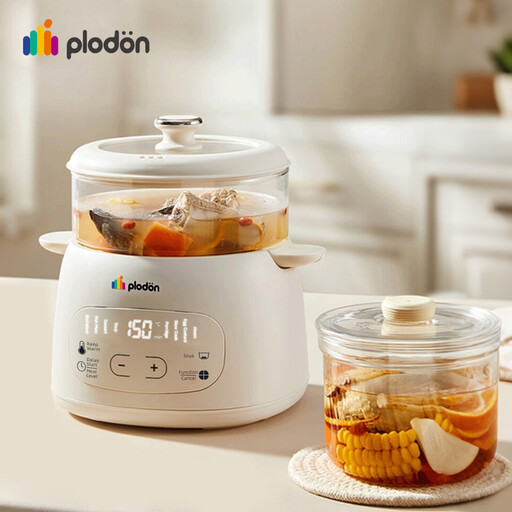
Plodon PLD-KC-DDZ01 electric cooking pot, 2 L, 800 W
The product information lists a soup menu; check whether this model can make the type of soup you want.
The product name lists a 2-litre capacity, 800 W, five heat settings, and keep-warm and delayed-start functions.
View at Joybuy
 No image available
IAGREEA MC-XZE2066 slow cooker, 2.6 L, 1,000 W
The product information mentions soup making and three manual heat settings; check whether these settings suit your recipe.
The product name lists a 2.6-litre capacity, 1,000 W, three manual heat settings and a non-stick pot.
View at Joybuy
 No image available
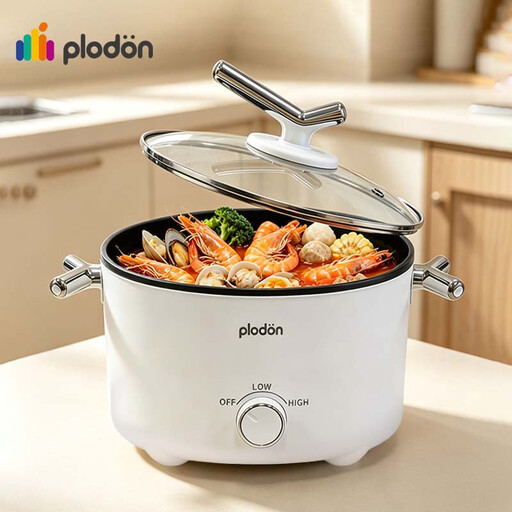
Plodon Quick-Cook Ramen Cooker, 2 L, 1,000 W
The product information mentions simmering soup; consider this a cooking pot for soup and don’t assume it has a smooth soup function.
The product name lists a 2-litre capacity, 1,000 W and two power settings.
View at Joybuy
 No image available
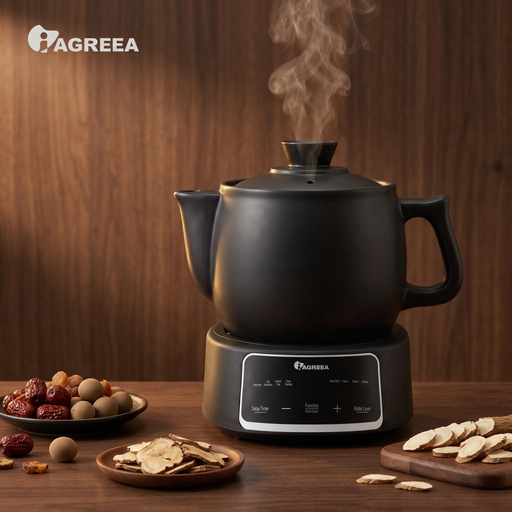
IAGREEA JYC3060 electric cooking pot, 3.5 L
The product information mentions a soup setting and timer; check whether the settings suit the way you want to cook.
The product name lists a 3.5-litre capacity, 600 W, four preset settings and a 24-hour delayed start.
View at Joybuy
 No image available
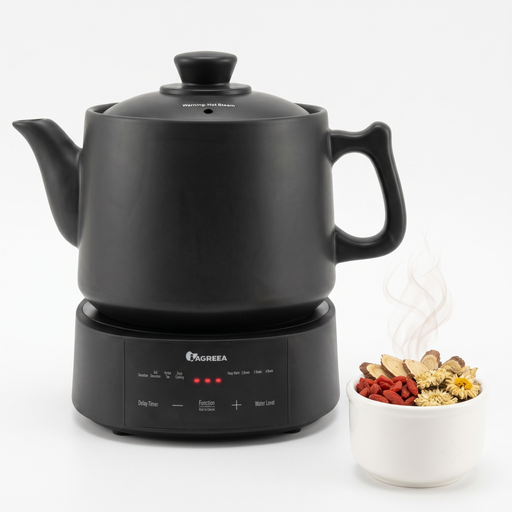
IAGREEA JYC4556 electric cooking pot, 4.5 L
Soup is listed as one of its uses; the larger capacity is most relevant if you really do want to make a bigger batch.
The product name lists a 4.5-litre capacity, 600 W, four preset settings and a 24-hour delayed start.
View at Joybuy
Frequently asked questions
Can I treat the stated preparation time as the time until my meal is ready?
Not without allowing for preparation and cleaning too. Philips says the HR2204/80R1 makes soup in 18 minutes, DOMO quotes 20 minutes for the DO705BL, and Princess says the 214001 makes hot soup in 25 minutes; these are different manufacturers’ specifications, not like-for-like measurements of total preparation time.
What should I bear in mind when using and cleaning it for the first time?
Follow the manual for the exact model for fill limits and instructions on cleaning the jug, blades and electrical components. A cleaning function, such as the one DOMO lists for the DO705BL, doesn’t automatically mean rinsing or further cleaning is unnecessary.
How should I store leftover soup?
The Netherlands Nutrition Centre advises cooling leftovers quickly and putting them in the fridge or freezer, covered היט, within 2 hours. As a general guideline, leftovers from a meal can be kept in the fridge for up to 2 days; also follow the guidance for the ingredients you’ve used.
Do I need to contact the manufacturer about the warranty?
No. According to the Dutch government, if there’s a problem with a product, the seller must provide a solution. Any manufacturer’s warranty or additional cover is separate from this point of contact.
What safety requirements apply to an electric soup maker in the Netherlands?
The NVWA outlines safety requirements for electrical equipment and states that products covered by the Dutch Electrical Equipment Decree must carry the CE marking. For the Low Voltage Directive to apply, the NVWA specifies, among other things, a rated AC voltage of 50 to 1,000 V. Check the electrical specifications, markings and usage restrictions for a specific model; this does not confirm that an individual item complies.


