
Cooking for several guests
You want to make enough soup for dinner, so you’re comparing jug capacity and the number of batches needed. Princess and DOMO state that the models mentioned here have a capacity of 2 litres.


For dinner with several guests, a soup maker with a stated capacity of 2 litres, such as the Princess 214002 or DOMO DO705BL, is worth comparing. For smaller quantities, the 1.2-litre Philips HR2204/80R1 is a more compact option. Stated capacity does not guarantee a set number of portions, so check the fill limits and use your own recipe as a guide. A soup maker prepares the soup, but it doesn’t replace cooling and refrigerating lunch portions separately.
You want to make enough soup for dinner, so you’re comparing jug capacity and the number of batches needed. Princess and DOMO state that the models mentioned here have a capacity of 2 litres.
You portion soup into containers to take with you, so you’ll need to plan how to cool, refrigerate and reheat it as well as how to make it. The Voedingscentrum provides guidance on leftovers.
You want to switch between smooth and chunky soup, or find an appliance that can do more than just make soup. Check the functions of the exact model rather than looking only at the number of programmes.
Start with the quantity you want to make in each batch. Then compare your preferred soup texture and how easy the appliance is to clean. Plan how you’ll store lunch portions separately from the cooking.
| What to consider | What should you check? | Who is this important for? |
|---|---|---|
| Quantity per batch | Compare the stated capacity with the minimum and maximum fill levels in the instruction manual. The Princess 214002 and DOMO DO705BL are listed as 2 litres; the Philips HR2204/80R1 is listed as 1.2 litres. | If I’m cooking for several guests, I want to know whether my recipe will fit in one batch. Around 36% of consumers give top priority to making enough soup in each batch. |
| Storing lunch portions | Plan how many individual portions you’ll make and where you’ll refrigerate them. The Voedingscentrum advises cooling leftovers within two hours, storing them at 4 °C and eating refrigerated leftovers within two days. | I want to portion soup in advance and store it safely for packed lunches; this is the main priority for around 29% of consumers. |
| Texture and extra functions | Check the functions of the model you’re considering: Princess and DOMO list smooth and chunky soup settings, while Tefal lists programmes for smooth and thick soup. | If I want to choose between smooth and chunky soup for each recipe, or make other things too, I look at the available functions. Around 21% of consumers prioritise this kind of variety. |
| Cleaning | Check the cleaning instructions and which parts can be removed. DOMO lists a cleaning function and removable blades for the DO705BL. | I don’t want dinner and lunch prep to leave me with unnecessary washing up; easy cleaning is the main buying concern for around 14% of consumers. |
The amount needed per bowl and the fill limits vary depending on the recipe and model. A jug’s capacity doesn’t automatically tell you how many dinner or lunch portions you can make.
Work out the volume of your recipe and check the minimum and maximum fill levels in the instruction manual for the exact model.
If the capacity isn’t enough for your recipe, you may need to make another batch.
Princess describes the 214002’s jug as double-walled and portable. This doesn’t confirm how long lunch soup can be stored safely; the storage advice for prepared leftovers still applies.
Plan how to cool and refrigerate the soup separately. The Voedingscentrum recommends sealed containers and storage at 4 °C.
You may need sealable containers and space in the fridge for individual lunch portions.
Philips describes the HR2204/80R1 as refurbished, so the product condition matters when you’re deciding what to order.
Check the full model code and the stated condition of the product in the listing.
The Princess 214002 Family XL is a 2-litre soup maker worth comparing if you want to prepare larger quantities in each batch.
The DO705BL is a 2-litre soup maker worth comparing if you want to prepare larger portions and different soup textures.
The Philips HR2204/80R1 is a soup maker with a stated capacity of 1.2 litres, worth comparing if you usually make smaller quantities.
The Perfectmix Cook BL83SD30 is a heated blender worth comparing if you want to make other hot and cold dishes as well as soup.
This selection includes heated blenders and appliances described as soup makers or soup pans; capacity and functions vary by model. For the exact model, check the voltage range and whether it carries the required CE marking. According to the European Commission, the Low Voltage Directive applies to electrical equipment designed for 50–1,000 V AC or 75–1,500 V DC. Its applicability and compliance must be established for each model.
 No image available
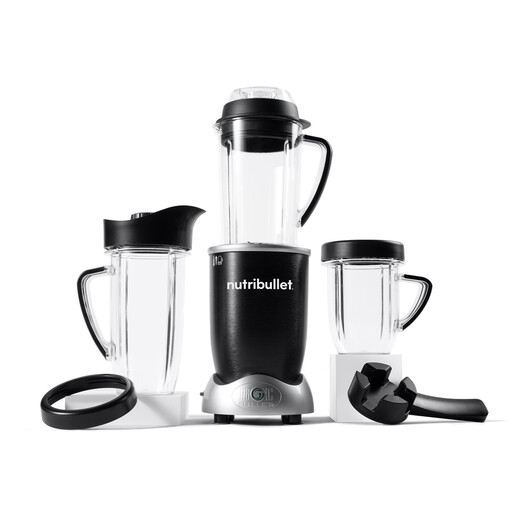
A heated blender worth comparing if you want to make soup as well as cold recipes.
The product description lists a 1-litre jug for hot ingredients and a 7-minute soup setting. According to the description, the parts are dishwasher-safe, except for the base unit and blades.
 No image available
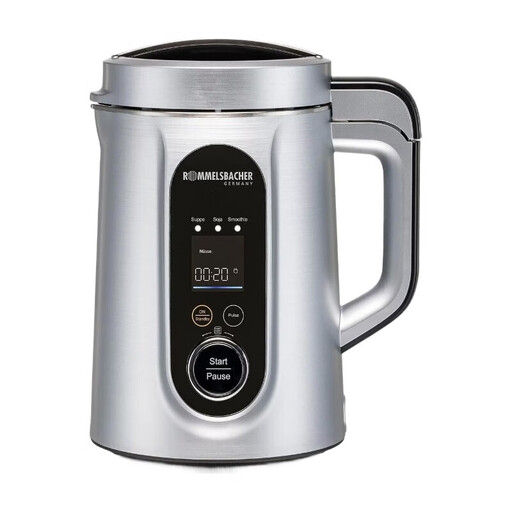
A heated soup and vegetable drink maker worth comparing if you want to make several types of plant-based recipes.
The product description lists a maximum capacity of 1.3 litres, nine automatic programmes and a blending system for a smooth result. It also states that the appliance is for domestic use only.
 No image available
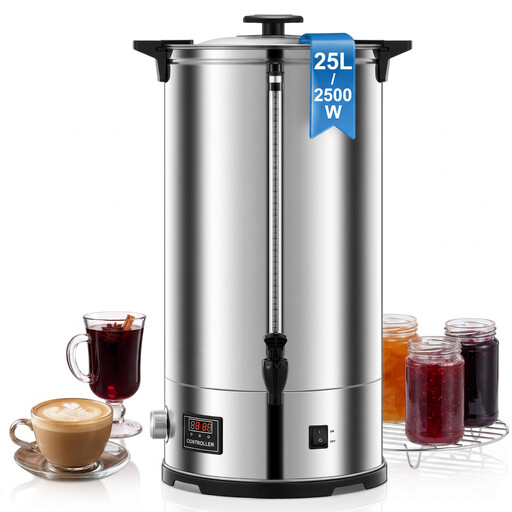
An appliance described in its product name as a hot water dispenser and soup maker; compare its stated use with the way you plan to cook.
The product name lists a 25L cooking pot, 2500W power, a timer and temperature control.
First work out the total quantity in your recipe and how many bowls you want to serve, then compare this with the fill limits in the instruction manual. Princess lists a capacity of 2 litres for the 214002, and DOMO lists 2 litres for the DO705BL. Philips lists 1.2 litres for the HR2204/80R1. These capacities don’t equate to fixed numbers of portions.
The Voedingscentrum advises cooling leftovers within two hours, storing them in sealed containers at 4 °C and eating refrigerated leftovers within two days. Before eating, reheat leftovers thoroughly until piping hot, and don’t reheat them again once they’ve already been reheated.
According to the European Commission, electrical equipment within the applicable voltage range of Directive 2014/35/EU must carry CE marking before it is placed on the EU market. Check the voltage range and marking for the exact model; a general reference to the brand doesn’t confirm that a specific listing meets the requirements.
Philips describes the HR2204/80R1 as refurbished. Check the product condition and full model code in the listing before you order.