
Cooking for a group
You want to make enough soup for lunch containers and a neighbourhood meal, so you’ll want to check the jug capacity and number of batches first.


Choose the jug capacity based on the total amount you want to make for lunch containers and guests. A 2-litre model may need fewer batches than a smaller model to make the same amount, but jug capacity doesn’t guarantee a particular recipe yield. Also check whether you want to make smooth and chunky soup, and how to clean the exact model. A soup maker doesn’t replace a plan to cool soup quickly, transport it chilled and reheat it thoroughly later.
You want to make enough soup for lunch containers and a neighbourhood meal, so you’ll want to check the jug capacity and number of batches first.
You prepare soup in advance to take with you. Alongside a suitable appliance, you’ll need a practical plan for cooling, storing and transporting it.
You want to choose between smooth and chunky soup to suit different diners, so check the programmes on the exact model.
Best suited to: filling several lunch containers or serving guests in one go; DOMO and Princess list a 2-litre capacity for the models mentioned.
Keep in mind: even with a 2-litre model, you may need more than one batch to make the total amount you want. The capacity doesn’t guarantee a set recipe yield.
Best suited to: making smaller quantities most of the time; examples include the 1.2-litre Philips HR2204/80 and the 1.6-litre DOMO DO737BL.
Keep in mind: you may need extra batches for several guests. For Philips, also check the full model code and product condition.
Best suited to: consider this approach if the quantity won’t fit in a soup maker jug and you already have a suitable pan and hand blender.
Keep in mind: cooking and blending are separate steps. Check that the hand blender is suitable for the ingredients and pan you’re using.
| What to consider | What should you check? | Who is this important for? |
|---|---|---|
| Amount per batch | Compare the stated jug capacity with your own portion plan. Don’t treat it as a guaranteed yield for every recipe. | If I’m making soup for several lunch containers and guests, I want to know how many batches I’ll need. Around 33% of consumers focus on making enough soup per batch. |
| Preparing ahead and taking it with you | Plan how you’ll cool portions quickly, store them in sealed containers and transport them chilled. The Voedingscentrum recommends using a cool bag when transporting chilled prepared food. | If I’m making soup in advance for a later lunch, I want to organise cooling and transport properly too. Around 27% of consumers prioritise preparing food ahead and taking it with them. |
| Smooth or chunky | Check the exact model code to see whether it has separate programmes for smooth and chunky soup. A programme isn’t an independent taste or performance test. | If my guests prefer different textures, I want to be able to choose for each batch. Around 20% of consumers focus on having the option to make smooth or chunky soup. |
| Cleaning | Read the cleaning instructions for the exact model and check which parts can be removed. Don’t assume that parts are dishwasher-safe just because the appliance has a cleaning programme. | If I’m making several batches in a row, I want to know how much cleaning each one involves. Around 20% of consumers focus on cleaning between batches. |
Stated capacity varies between models and doesn’t tell you exactly how many portions your recipe will make.
Plan the total amount of soup you need first, then compare it with the capacity of the exact model.
An insulated jug doesn’t prove that soup will stay at a safe temperature while it’s being transported. The Voedingscentrum’s food storage advice is separate from the appliance’s features.
Make a separate plan to cool the soup quickly and store and transport it chilled. Don’t rely on an insulation claim instead of following food safety advice.
A cleaning function doesn’t necessarily mean that every part will be cleaned without manual effort or can go in the dishwasher.
Before you buy, check the manual and cleaning instructions for the full model code.
Philips lists the HR2204/80R1 as a refurbished model, while a listing from a Dutch retailer refers to the HR2204/80.
Check the full model code, product condition and offer terms separately.
The DO705BL and DO737BL models can be compared by jug capacity and programmes.
The 214002 Family XL is listed as a 2-litre model, while the 212040 is a smaller 1.3-litre model.
A listing from a Dutch retailer describes the Viva HR2204/80 as a 1.2-litre model with six programmes.
The Joybuy products below are cooking pots that mention soup preparation in their product information, rather than a selection of traditional soup makers. When choosing, consider the capacity, appliance type and stated usage restrictions.
 No image available
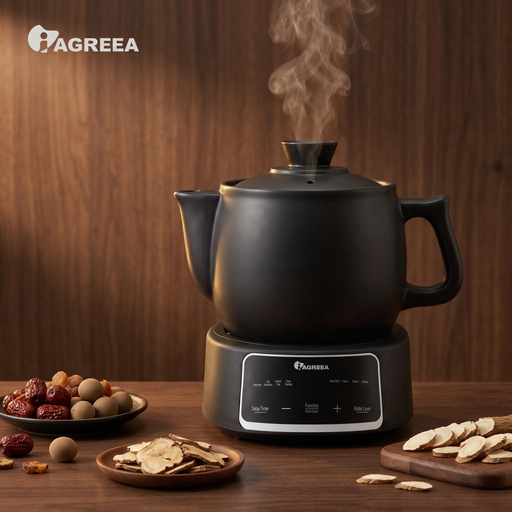
The product information mentions soup preparation and a 7.1-litre capacity, which may be useful if you’re planning a larger batch.
The product name states that it serves 10; adjust the quantity to suit your own portions. According to the product information, the appliance is for household use only, not commercial use.
 No image available
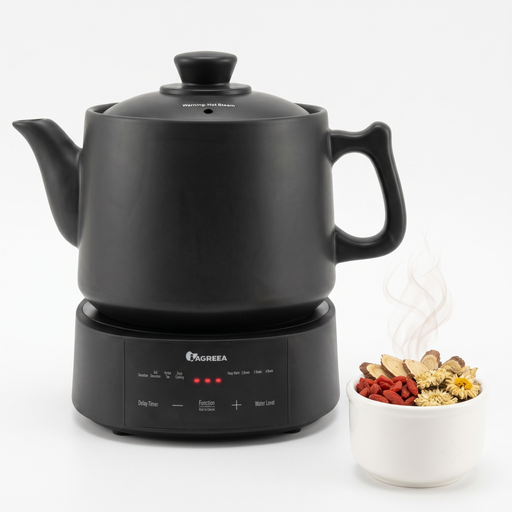
The product information mentions a soup setting and a 3.5-litre capacity. Check whether an herbal decoction pot suits the way you want to prepare soup.
The product name lists four preset settings and a 24-hour timer.
 No image available
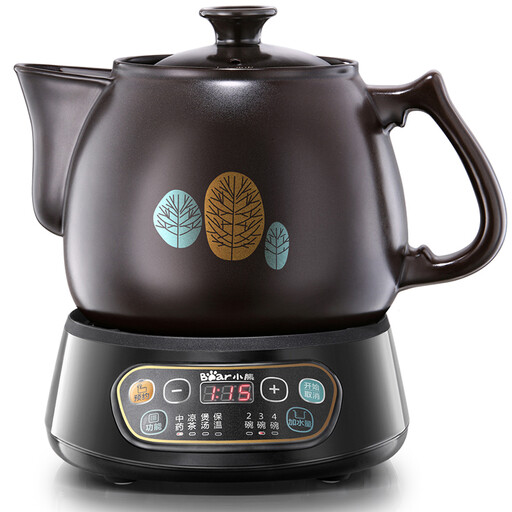
The product name mentions tonic soup and a 4.5-litre capacity. Check whether this type of herbal decoction pot suits your cooking method.
The product name lists four preset settings, an adjustable water level and a keep-warm function.
 No image available
The product information mentions a soup setting and a 3.5-litre capacity. This is an herbal pot, not an appliance described as a soup maker.
According to the instructions, the ceramic pot must not be submerged in water.
 No image available
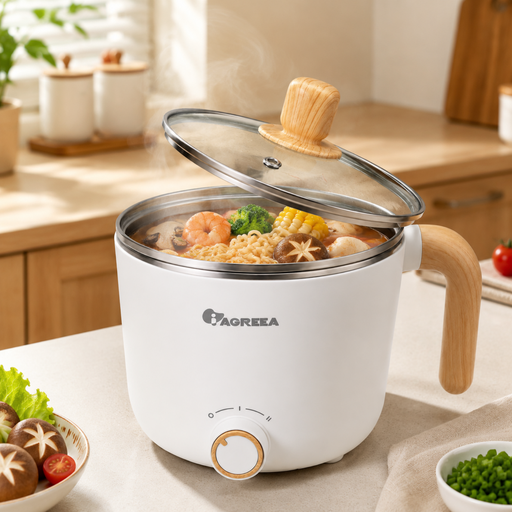
The product information mentions soup preparation and a 1.0-litre capacity. This may suit a small quantity, but you may need extra batches for a neighbourhood meal.
The product name lists a stainless steel inner pot and two power settings: 300W and 600W.
Compare the stated jug capacity with the amount you want to serve in lunch containers and to guests. The models discussed range from 1.2 to 2 litres, but that capacity doesn’t guarantee how much soup each recipe will make.
The Voedingscentrum advises cooling prepared food quickly, storing it in a well-sealed container and not leaving it out of the fridge for more than 2 hours. For meal prep, it recommends keeping food in the fridge for up to 2 days, setting the fridge to an ideal temperature of 4 °C and reheating food thoroughly until it’s steaming hot. Use a cool bag when transporting chilled prepared food; this is food safety advice, not a feature of the soup maker.
Check the manual for the exact model code before putting the jug or any parts in the dishwasher. A cleaning function doesn’t prove that the jug is dishwasher-safe.
According to ACM ConsuWijzer, the seller is responsible for offering a suitable solution if a consumer product is faulty. This could include a repair, replacement or refund. There isn’t one fixed time limit that applies to every purchase.
This depends, among other things, on whether you sell the soup and how often. The NVWA says registration is required if you sell food several times a year, but not for a single sale per year. For sales at events, the NVWA also lists food safety rules that apply to private individuals; these rules for sales don’t automatically apply when sharing food privately.