
Batch cooks making larger portions
You want to prepare several portions for later in one cooking session, so you’re mainly comparing usable jug capacity and fill limits.


Start by choosing a capacity that suits the amount of soup you want to make and store in each batch: a 1.2-litre jug may mean making several batches if you want to prepare a larger amount, while the models discussed here with capacities of 2 and 2.2 litres offer more stated capacity. Then consider whether a smooth soup setting, a sauté function or easier cleaning matters most for the way you cook. Before scaling up a recipe, check the fill limits for the exact model.
You want to prepare several portions for later in one cooking session, so you’re mainly comparing usable jug capacity and fill limits.
You want to blend carrot and coriander into a smooth soup, and are weighing up a smooth soup programme against blending it yourself in the pan.
You want to heat onion or spices first, and need to decide whether a sauté function could replace a separate pan in your cooking routine.
Start with the amount of soup you want to make in each batch. Then compare the texture you want, the preparation steps and the cleaning process with the features of the exact model.
| What to consider | What should you check? | Who should give this more thought? |
|---|---|---|
| Amount per batch | Compare the permitted minimum and maximum fill levels for hot soup with the quantities in your recipe. | If I’m cooking for several days, I want to know how much soup I can really make in each batch and whether the fill limit suits my recipe. For around 34% of consumers, batch size is their top buying priority. |
| Smooth texture | Check whether the exact model has a smooth soup setting and which ingredients the manual says are suitable. | If I want smooth carrot soup, I focus on the appliance’s soup and blending settings. For around 20% of consumers, texture comes first. |
| Sautéing aromatics | Look specifically for a sauté function; a standard soup setting doesn’t automatically mean you can fry ingredients in the appliance. | If I want to sauté onion, garlic or spices in the same appliance first, this feature is essential for me. Around 13% of consumers make sautéing ingredients first their top priority. |
| Cleaning | Compare the cleaning programme, whether the blades can be removed, and the instructions for the jug and lid. | If I regularly make several batches, I want to know how much manual cleaning is involved. For around 20% of consumers, easy cleaning matters most. |
| Storing your soup | Plan your containers and fridge or freezer space before choosing the batch size you want to make. | If I’m making soup ahead, the portion size needs to suit what I can cool and store promptly. Around 13% of consumers make storage their top buying priority. |
The capacity in a product name doesn’t automatically tell you how much liquid and how many ingredients you can heat at once for every recipe.
Before scaling up a batch recipe, check the minimum and maximum fill levels for hot soup on the exact model.
A lower permitted fill level could mean extra cooking rounds and more cleaning.
A soup setting isn’t the same as a sauté function. A recipe that starts with fried aromatics may require a separate pan.
Choose a sauté function only if that step suits your recipe and cooking routine.
Without this function, sautéing could mean using and washing an extra pan.
DOMO lists a cleaning function for both the DO705BL and DO728BL, but says the blades are removable only on the DO705BL.
Read the cleaning instructions for the exact model, especially if you’re making several batches in a row.
Depending on the model, you may still need to do some extra cleaning by hand after the programme.
Voedingscentrum advises not leaving prepared food out of the fridge for longer than two hours and keeping it chilled for no more than two days.
Divide the soup into portions, cool them promptly and freeze any portions you want to eat later.
These brands offer models with different capacities and preparation features. The features mentioned apply to the specific models, not every product from each brand.
The DO705BL has a stated capacity of 2 litres; the DO728BL has a capacity of 2.2 litres and a sauté function.
The Viva SoupMaker HR2204/80R1 has a stated capacity of 1.2 litres.
The Easy Soup LM841810 has a stated capacity of 1.2 litres; the Soup & Plus LM926B00 lists a capacity range of 0.5 to 2 litres.
SharkNinja describes the Foodi HB150EU as a combination blender and soup maker.
Joybuy product picks suited to soup-making, including an appliance with timer and temperature control and a more compact soup maker.
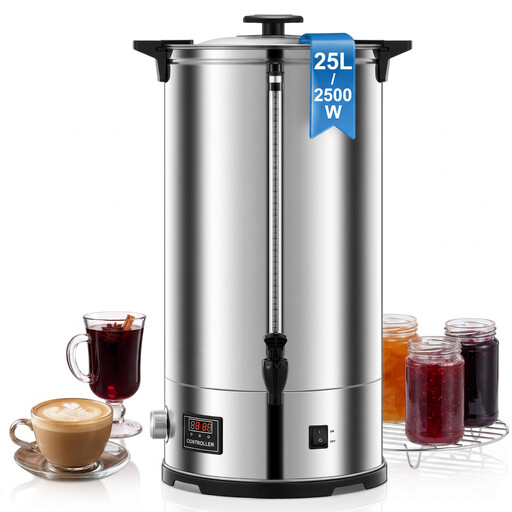 No image available
A good fit if you’re specifically looking for a soup maker with timer and temperature control; check that the preparation method and fill limits suit your recipe.
The product title lists a stainless steel cooking pot, a 2500 W motor, and timer and temperature control.
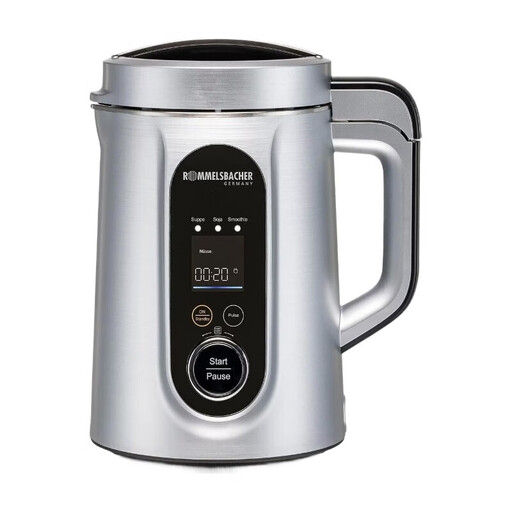 No image available
Its stated capacity of 1.3 litres could suit smaller batches, or work well if you don’t mind making several batches; stay within the maximum fill line.
The product information lists nine automatic programmes, a pulse function and a heated stainless steel inner jug.
Only if the total amount of ingredients and liquid stays within the hot soup fill limits for your exact model. The stated jug capacity doesn’t indicate the limit for every recipe, so make several batches if needed.
Not necessarily. In a Voedingscentrum recipe, onion, garlic and ground coriander are fried in a pan first; DOMO lists a sauté function for the DO728BL. Choose this feature if you’d like to sauté your aromatics in the same appliance.
According to Voedingscentrum, don’t leave prepared food out of the fridge for longer than two hours, and keep it chilled for no more than two days. Freeze any portions you want to eat later.
Ondernemersplein explains that the manufacturer must meet the applicable European safety requirements, draw up an EU declaration of conformity and apply the required CE marking. The CE marking isn’t an independent quality rating for an individual product.
According to ACM ConsuWijzer, when you buy a product online you’ll generally have a statutory cooling-off period that ends 14 days after delivery. There are exceptions, so check whether any apply to your order.