If you’re already cooking the courgette soup in a large pan, a hand blender is a practical choice: you can blend it straight in the pan without having to transfer it. A blender jug is suitable if you want to work in batches and the instructions for that specific model allow hot ingredients. A soup maker combines cooking and blending, but its usable capacity will determine whether you need to make several batches. Before buying, check the model instructions, the amount of soup you need and how easy it is to clean.
Which appliance is right for you?
Cooking in a large soup pan
You’re already cooking the courgette soup for the neighbours in a pan and want to blend it there without transferring it. Bosch describes its hand blenders as suitable for blending directly in the pan; the Consumentenbond discusses using a hand blender as an alternative to a jug blender.
Making soup in batches
You’re considering a blender jug and want to know whether the instructions for that specific model allow you to use it with hot soup. The Consumentenbond highlights a heat-resistant jug as something to look for; the permitted temperature can vary from model to model.
Combining cooking and blending
You want to cook and blend soup in one appliance, and are comparing its usable capacity with the amount you need for your guests. Philips lists a 1.2-litre jug for the HR2204/80R1; Kenwood gives the SoupEasy CBL01.000BS a usable liquid capacity of 1.2–1.5 litres.
What should you consider when choosing?
Hand blender in the pan
Choose this option: if the soup is already in a large pan and you don’t want to transfer it.
Bear in mind: you’ll need to hold the blender, so compare the grip, cord length and instructions for use in a pan.
Blender jug
Choose this option: if you want to blend the soup in batches and the instructions allow it to be used at the soup’s temperature.
Bear in mind: you’ll need to transfer the soup and stay within the permitted fill level.
Soup maker
Choose this option: if you want to combine cooking and blending in one appliance.
Bear in mind: compare its usable capacity with your recipe; a larger quantity may require several batches.
| What to consider |
What to look for when buying |
Who is this important for? |
| Blending in a large pan |
Check the grip, cord length, splash control and instructions for use in a pan. |
If I’m making a large pan of soup, I want to blend it without transferring it. Around 36% of consumers say blending in the pan is their main reason for buying. |
| Hot soup in a jug |
Check the permitted temperature, fill level and instructions for the full model number. |
Anyone considering a blender jug will want to know whether soup can go in it and how much it holds. Around 29% of consumers put safe use with a jug first. |
| Capacity and programmes |
Compare the usable capacity in litres and the programmes with the quantity in your recipe. |
If I want to combine cooking and blending, the capacity needs to suit the amount I’m making for my guests. Around 21% of consumers say combining the two is their main reason for buying. |
| Cleaning and versatility |
Check the cleaning instructions for each part and consider whether you’ll use accessories or a cleaning programme. |
If you also want to use the appliance for other cooking tasks, you may want to weigh up its accessories as well as how it’s cleaned. Around 14% of consumers prioritise maintenance and versatility. |
Common buying mistakes
-
Assuming every blender jug can handle hot soup
Permitted ingredients and temperatures vary by model. The Consumentenbond highlights a heat-resistant jug as something to look for; Philips specifies that some of its vacuum blender models should only be used with cold or room-temperature ingredients.
Check the instructions for the full model number before pouring hot soup into the jug.
If the jug isn’t suitable for hot soup, you may need to wait for the soup to cool or choose another way to blend it.
-
Confusing the stated jug capacity with the usable amount
The amount you can safely process may differ from a general serving claim. With a soup maker, its capacity may also determine whether you need to make several batches for dinner.
Compare the volume of your recipe with the usable capacity and the instructions for the specific model.
Making several batches means extra preparation time and washing up.
-
Assuming a two-year manufacturer’s warranty is the limit of your rights
ACM ConsuWijzer distinguishes between a commercial guarantee and the statutory guarantee in the Netherlands; there is no fixed two-year limit for the statutory guarantee.
Keep your proof of purchase and contact the retailer if a fault develops sooner than you could reasonably expect.
Brands to compare
Bosch
The Bosch ErgoMixx MSM67160 is a specific hand blender worth comparing if you want to blend soup directly in the pan.
- Bosch lists an anti-splash system, 12 speed settings, a chopper and a whisk for the MSM67160.
- The accessories are most relevant if you’ll use them for other cooking tasks too; these specifications don’t prove that the model has won a test or that every Bosch hand blender is suitable.
Braun
The MultiQuick MQ7035X is a hand blender worth comparing if you’re looking for variable speed control and additional accessories.
- Braun lists variable speed control, a 1.5-metre cord and a chopper for the MQ7035X.
- Braun’s claim about a larger active cutting area is a claim made by the brand, not an independent comparison. Also check which accessories are included in the set you choose.
Philips
Philips SoupMaker models combine soup-making and blending; compare the full model number and capacity.
- Philips lists a 1.2-litre jug and six automatic programmes for the HR2204/80R1.
- These details don’t automatically apply to the HR2203/80: Philips lists five automatic programmes for that model. A jug with limited capacity may mean making several batches for dinner with the neighbours.
Kenwood
The SoupEasy CBL01.000BS is a soup maker worth comparing if you want to cook and blend soup in one appliance.
- Kenwood lists a usable liquid capacity of 1.2–1.5 litres, five programmes and a cleaning programme.
- Kenwood’s claims about an especially smooth result and easy cleaning are the manufacturer’s own claims. Compare the capacity with the amount of soup you want to make.
Joybuy products for blending soup
These products are suited to blending soup with a hand blender or blender jug. For hot soup, always check the instructions for the full model.
 No image available
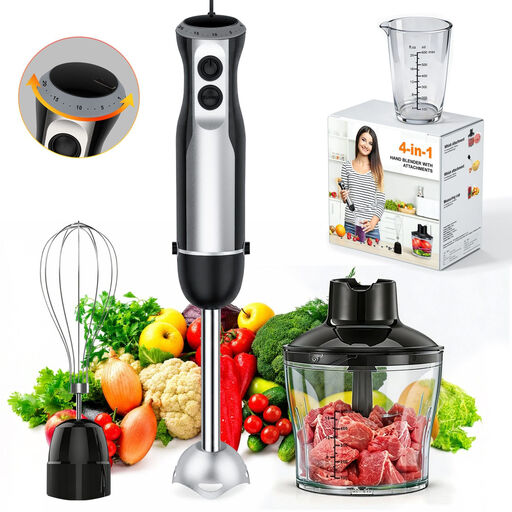
1000 W 4-in-1 hand blender with 20 speeds
A hand blender to consider if you want to blend soup in the pan.
1000 W, 4-in-1, 20 speeds and a turbo function.
View at Joybuy
 No image available
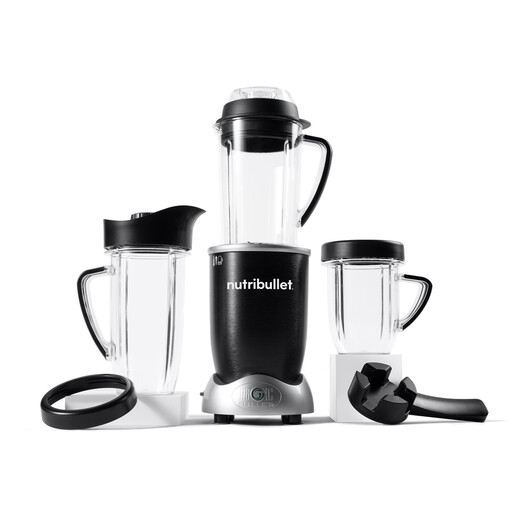
Nutribullet RX blender 1700 W
A blender to consider if you want to prepare and blend soup in a jug; check the instructions for hot ingredients and the amount you want to process.
1700 W, 10-piece set and heat-resistant cups.
View at Joybuy
 No image available
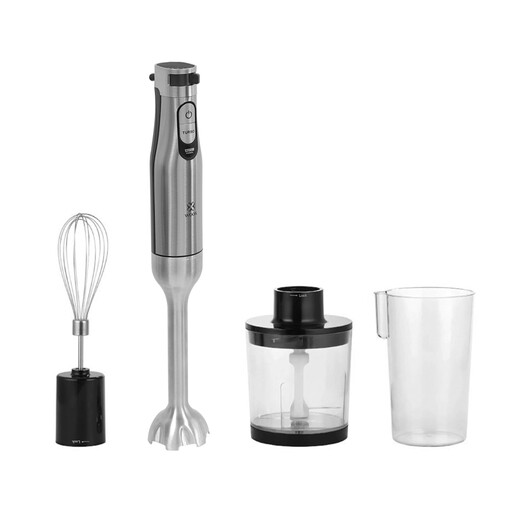
WOOX 1200 W 4-in-1 hand blender
A hand blender to consider if you want to blend soup in the pan and use the other listed accessories too.
1200 W, variable speed control and a set with a chopper, whisk and milk frother.
View at Joybuy
 No image available
Braun MQ55254M MultiQuick 5 Pro hand blender
A hand blender to consider if you want to blend soup in the pan. The usage information warns against processing boiling liquids.
Check the instructions for soup temperature and accessory use.
View at Joybuy
 No image available
Philips Blender HR3020/20, 1000 W
A blender to consider if you want to blend soup in batches; compare the jug capacity with the amount in your recipe.
1.5-litre jug. The product information gives a maximum temperature of 80 °C; allow hotter liquids to cool first.
View at Joybuy
Frequently asked questions
Can every blender handle hot courgette soup?
No. Check the instructions for the exact blender and jug. The Consumentenbond says a heat-resistant jug is essential for blending soup; Philips specifies that some of its vacuum blenders should only be used with cold or room-temperature ingredients.
How do you work out how many batches a soup maker will need?
Compare the quantity in your recipe with the model’s usable capacity. Philips lists a 1.2-litre jug for the HR2204/80R1; Kenwood gives the SoupEasy CBL01.000BS a usable liquid capacity of 1.2–1.5 litres.
How should you store leftover soup after dinner with the neighbours?
Cool leftovers quickly, store them in a sealed container and don’t leave them out of the fridge for more than two hours. This is the advice from the Voedingscentrum; also follow the appropriate storage guidance for the ingredients.
Which Dutch safety and guarantee rules are relevant?
Electrical appliances placed on the Dutch market must meet the applicable European safety requirements. Business.gov.nl states that once manufacturers have met the technical and administrative requirements, they must apply a CE mark and draw up an EU declaration of conformity. A CE mark on its own does not prove that an individual appliance being sold meets every requirement. ACM ConsuWijzer explains that the statutory guarantee in the Netherlands has no fixed two-year term: what you can expect depends, among other things, on the product and normal use.


