
Cooking with a large soup pan
You’re cooking sweet potato soup in a pan and want to blend the whole batch without pouring it into a blender jug.


For a large pan of sweet potato soup that you’ve already cooked, a stick blender is often the practical choice: you can blend the soup in the pan without transferring it all to a jug. If you’d rather cook the soup in the appliance or prepare it in portions, compare a soup maker with a heated jug blender based on usable capacity. For any appliance, check the instructions for hot ingredients and the maximum fill level.
You’re cooking sweet potato soup in a pan and want to blend the whole batch without pouring it into a blender jug.
You want control when blending hot soup, so you’re checking the blender foot, controls and temperature instructions for the exact appliance.
You’d like to use a soup programme and are happy to make the meal in batches. Usable capacity will determine whether that’s practical.
| What to consider | What to check | Who is it important for? |
|---|---|---|
| Blending a large batch in the pan | Check that the blender foot fits your pan and see how long the manual says you can use the exact model for. | If you want to blend a large pan of soup without transferring it, you’ll want to check that the blender suits your pan and how you plan to use it. Around 36% of consumers put blending in the pan first. |
| Splashes and temperature | Read the temperature instructions for the exact model. Keep the stick blender foot below the surface of the liquid, as directed in the instructions. | When making hot soup, you’ll want to minimise splashes and check that the appliance can handle the temperature. Around 29% of consumers prioritise splash and temperature control. |
| Ease of use and cleaning | Check which parts can be removed and which, according to the manual, are dishwasher-safe. | If you want fewer separate parts to clean after cooking, look at how easy the appliance is to use and maintain. Around 21% of consumers prioritise ease of use and cleaning. |
| Automatic cooking and capacity | Compare the amount you plan to make with the usable capacity and fill markings of the exact model. | If you want to use a soup programme and don’t mind making several batches, the amount you can prepare at a time matters. Around 14% of consumers prioritise automatic cooking in portions. |
Total capacity and usable capacity can differ. For example, Tefal lists a total capacity of 2 litres and a usable capacity of 1.75 litres for the Perfectmix Cook BL83SD30.
Compare the amount of soup you plan to make with the usable capacity and fill markings for the exact model, rather than looking only at the largest litre figure.
Temperature instructions vary by model. Philips specifies cold or room-temperature ingredients for the HR3756/00, HR3752/00 and HR3868/00 models; this doesn’t automatically apply to every blender.
Before pouring anything in, read the manual for your exact model. Don’t assume it’s suitable for hot soup based on the product name alone.
Power and programmes alone don’t tell you how much soup you can process at a time or how long you can blend continuously.
First work out how much soup you’ll be making, then check the capacity, maximum fill level and usage time in the manual for the model you’re considering.
The ErgoMixx MSM66110 is an example of a stick blender for blending soup in the pan.
The MultiQuick 7 MQ7000X is an option if you want to control the speed as you blend using the button.
Philips offers different ways to prepare soup: the HR2531/00 is a ProMix stick blender, while the HR2203/80 is a SoupMaker.
The Perfectmix Cook BL83SD30 is a heated jug blender, while the Turbomix HB1218 is a stick blender.
This selection includes stick blenders for blending soup by hand and jug blenders for making it in portions. Pay particular attention to the instructions for hot ingredients.
 No image available
A hand blender for anyone who wants to blend soup by hand in the cooking pan.
Finish: White.
 No image available
A hand blender for anyone who wants to blend soup in the pan and adjust the speed.
Power: 800 W. Material: stainless steel. The product name specifies variable speed control.
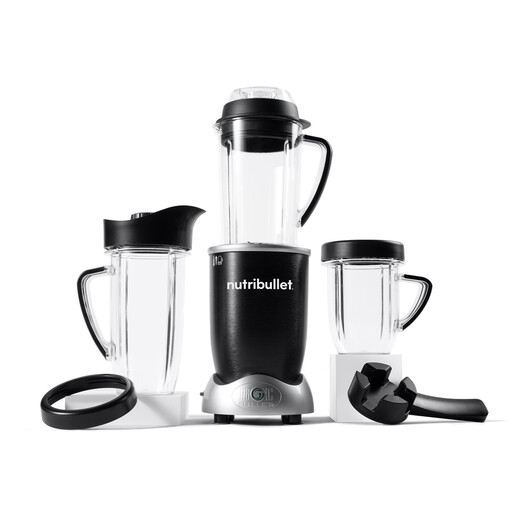 No image available
A blender for anyone considering a heated way to prepare soup in portions. For a larger meal, bear in mind that you may need to make several batches.
Power: 1700 W. The product name specifies a 10-piece set and heat-resistant cups. The cup described for hot ingredients has a capacity of 1 L.
 No image available
A hand blender set for anyone who wants to blend soup by hand. Follow the stated restrictions for hot ingredients.
The product name specifies a chopper and whisk. For hot ingredients, the product description recommends using small portions in a heat-resistant container.
 No image available
A jug blender for anyone who wants to make soup in measured portions. The temperature limit is important when blending hot soup.
Power: 1000 W. Jug capacity: 1,5 L. Do not process ingredients hotter than 80 °C; allow hot liquids to cool first.
No, don’t assume you can. Philips specifies cold or room-temperature ingredients for the HR3756/00, HR3752/00 and HR3868/00 models. Check the manual for your exact model; a heated blender is a different product category.
The Netherlands Nutrition Centre advises covering leftovers, letting them cool and putting them in the fridge within two hours of cooking. Set the fridge to 4 °C. This doesn’t mean you should put a large, hot pan straight into the fridge.
According to ACM ConsuWijzer, you have a legal guarantee in addition to any manufacturer’s warranty. If the appliance doesn’t perform as you could reasonably expect during normal use, the retailer must resolve the issue under the applicable terms. There is no single fixed legal end date for appliances.
Not simply because neighbours are eating together. The NVWA outlines rules for selling food at markets and events, and says that anyone who prepares and sells food several times a year must have a HACCP food safety plan. Whether this applies to a particular meal depends on the circumstances.
Yes. According to the European Commission, food contact materials must comply with Regulation (EC) No 1935/2004 when placed on the European market. This general rule doesn’t confirm that a specific model complies with it.