
Making soup in a large pan
You want to blend enough for everyone straight in the pan, so you don’t have to transfer hot soup in batches. The Consumentenbond notes that blending in the pan is a practical use for a stick blender.


For a large pan of sweet potato soup, a stick blender is handy if you want to blend the soup straight in the pan and avoid transferring hot soup. A jug blender is a better choice when a smooth texture is your priority, provided the instructions for the exact model say it can handle the soup’s temperature. A soup maker combines cooking and blending, but its usable capacity will determine whether you need to make several batches. Cook firm vegetables until soft, and always follow the appliance’s filling and safety instructions.
You want to blend enough for everyone straight in the pan, so you don’t have to transfer hot soup in batches. The Consumentenbond notes that blending in the pan is a practical use for a stick blender.
You prioritise an even texture and are happy to blend the soup in several batches if needed. The Consumentenbond describes texture as a factor to consider when choosing between a stick blender and a jug blender.
You want to heat and blend ingredients in one appliance, and will choose an amount that fits the usable capacity of your soup maker or cooking blender.
First decide whether you want to blend directly in the pan, make smooth soup in a jug, or heat and blend automatically. Then check that the capacity and instructions suit your recipe.
| What to consider | What to look for | Who is this important for? |
|---|---|---|
| Large quantities | Check that there is room to blend in the pan without splashing, and that the appliance is suitable for soup according to its instructions. | If I’m making one large pan for a group, I’d rather not transfer hot soup. Around 33% of consumers prioritise blending a large panful. |
| Smooth texture | Compare the texture you can expect, and check the usable capacity and temperature instructions for the exact model. | If an even texture matters most to me, I can blend in several batches if necessary. Around 27% of consumers prioritise a smooth result. |
| Automatic preparation | Check which heating and blending programmes the model offers, and compare its usable capacity with the amount you plan to make. | If I want to cook and blend in one appliance, I’ll take into account how much it can make in one go. Around 20% of consumers prioritise automatic preparation. |
| Cleaning and storage | Check which parts can be removed, how each part should be cleaned, and the appliance’s dimensions. | If I have limited space for washing up and storage, these practical considerations matter alongside the way I blend. Around 20% of consumers prioritise cleaning and storage. |
A jug may hold more than the amount you can actually blend, according to its specifications. Tefal lists a usable capacity of 1.5 litres for the BL871D31 and 1.75 litres for the BL83SD30.
Compare the usable capacity with your recipe and the amount of soup you want to make for your guests.
The permitted temperature varies by model. A hot jug can also cause burns, and you must observe the maximum fill level.
Check the instructions for the exact model for hot liquids, maximum fill levels and whether you need to let the soup cool before blending.
A soup maker combines preparation steps, but its usable capacity may mean you need to make several batches. Philips lists a 1.2-litre jug for the refurbished HR2204/80R1.
First work out how much soup you need, then compare the capacity and programmes with blending directly in a suitable pan.
Making several batches takes extra preparation time. Also consider how much space the appliance will take up when stored.
MultiQuick stick blenders are an option for blending in the pan; the MultiQuick 5 Pro range includes the MQ 55254 M.
The range includes both a jug blender for hot preparations and a heated cooking blender.
The Viva SoupMaker HR2204/80R1 is a refurbished model that, according to Philips, heats and blends soup.
These Joybuy products include jug blenders and stick blenders for making soup. Choose between blending directly in the pan or in batches in a jug.
 No image available
A jug blender for anyone who wants to blend soup in a jug; the product name lists blending soup as one of its uses.
The product name lists 1300 W, a 1.5 l jug, four titanium blades, two speeds and a pulse button.
 No image available
The product description mentions blending soup and a working capacity of 1.5 litres.
The description lists three speeds, a pulse function and a maximum ingredient temperature of 80 °C. Allow hotter liquids to cool first.
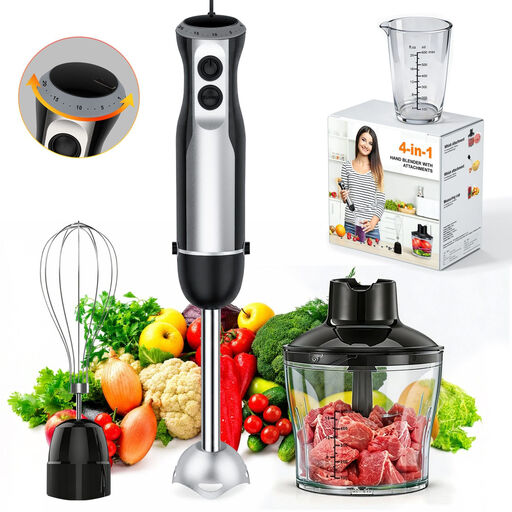 No image available
The product name mentions blending soup; a stick blender can be used directly in a suitable soup pan.
The product name lists 1000 W, 20 speeds, turbo and a 4-in-1 design.
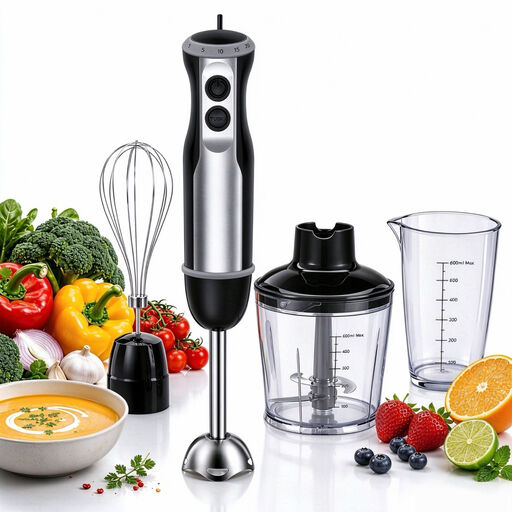 No image available
The product name lists soup as one of its uses; this type of blender is suitable for blending directly in a suitable pan.
The product description lists six speeds and a turbo function.
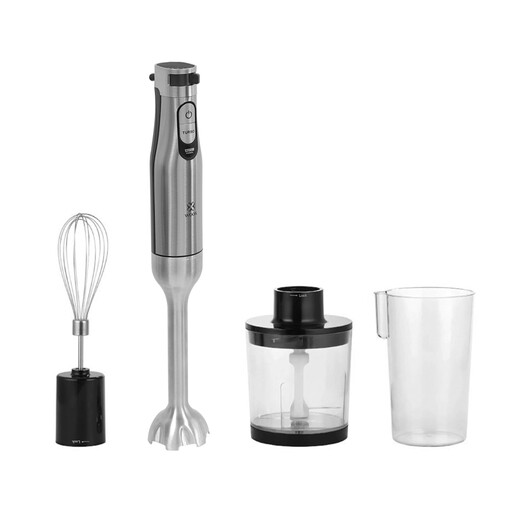 No image available
The product name lists soup as one of its uses; a stick blender can blend directly in a suitable soup pan.
The description lists 1200 W, variable speed with trigger control, and a set with a chopper, whisk and milk frother.
No, not every blender jug is suitable for boiling soup. Check the instructions for the exact model for hot liquids and maximum fill levels. The Consumentenbond advises letting boiling liquids cool slightly first; some models also have specific temperature limits.
When using a standard blender or stick blender, cook firm vegetables until soft first so they’re easier to blend; this is the Consumentenbond’s advice. If you’re using a heated soup maker, follow the recipe and the instructions for that model.
Cool leftovers quickly, seal them well and put them in the fridge or freezer within two hours of cooking. This is the storage advice from the Voedingscentrum. Clean removable blender parts according to the instructions, and don’t assume that every part is dishwasher-safe.
When you buy as a consumer, the product must be of satisfactory quality; if it’s faulty, the seller must offer an appropriate solution. The Rijksoverheid states that there is no fixed statutory guarantee period in the Netherlands. When you buy online from a business, you usually have a 14-day cooling-off period, with some exceptions.