
Warming up soup after class
You want to heat up a portion of soup easily, without extra oven functions. The Netherlands Nutrition Centre advises stirring the soup while it heats and making sure leftovers are piping hot throughout.


If you mainly want to heat up soup, a solo microwave is the most straightforward choice. A combination microwave makes sense if you’ll also use its oven function for baking. Measure your soup bowl and compare it with the turntable and the available kitchen space. The Consumers’ Association explains the difference between solo and combination microwaves; the Netherlands Nutrition Centre advises stirring soup partway through heating and reheating leftovers until piping hot throughout.
You want to heat up a portion of soup easily, without extra oven functions. The Netherlands Nutrition Centre advises stirring the soup while it heats and making sure leftovers are piping hot throughout.
You’re short on worktop space and want to check both the appliance’s external dimensions and the space available for your own bowl.
As well as reheating, you want to use an oven function. So before choosing a combination microwave, consider whether you genuinely need it for baking.
First decide whether you only want to reheat food or bake as well. Then check that your bowl will fit the model you’ve chosen and that you have enough space for it.
| What to consider | What to look for | Who is this most important for? |
|---|---|---|
| Heating soup thoroughly | Check that the time and power settings are easy to adjust. Stir the soup while it heats and check the whole portion. | After an evening class, I want to set my soup to heat easily and check it partway through. Around 36% of consumers give thorough reheating top priority. |
| Bowl and kitchen space | Measure your bowl and compare it with the turntable dimensions. Also measure the space available for the appliance. | If my bowl or worktop space is a tight fit, I want to know in advance. Around 29% of consumers prioritise the fit of their bowl and the space in their kitchen. |
| Controls and cleaning | Check how the specific model lets you set the time and power, and how to clean the interior and turntable. | After a late class, I want to set the time and power easily and clean up any spilled soup. Around 21% of consumers prioritise easy-to-use controls. |
| Other cooking functions | Choose a combination microwave only if you also want to use the oven function for baking. | I want to be able to bake as well as heat up soup, and want to know whether I need an extra oven function for that. Around 14% of consumers give extra cooking functions top priority. |
The capacity in litres doesn’t tell you whether your soup bowl will fit on the turntable or be able to rotate freely.
Measure your bowl and compare its size with the turntable and the interior dimensions of the specific model.
According to the Netherlands Nutrition Centre, cold spots can remain when using a microwave, even if the appliance has a turntable.
Stir the soup partway through heating and check that the whole portion is piping hot.
The oven function doesn’t in itself offer any benefit for heating soup. It’s useful if you also want to bake.
Decide which other dishes you’ll actually want to make in the appliance before comparing solo and combination models.
A manufacturer’s warranty doesn’t replace your statutory rights if a product is faulty.
Keep your proof of purchase and contact the seller if there’s a problem with a faulty product.
The Tomado TMS2003B is a freestanding solo microwave for anyone who mainly wants to reheat food without an oven function.
The ETNA SMV720 is a freestanding solo microwave with rotary controls, for anyone looking for simple settings.
The Inventum MN207S is a freestanding solo microwave with a net capacity of 20 litres, a digital display and programmes.
The Samsung MS23K3513AK/EN is a 23-litre solo microwave for anyone looking for features such as a defrost function or a ceramic interior.
This selection includes freestanding solo microwaves for mainly reheating food, and combination microwaves for anyone who also wants to use grill or oven functions.
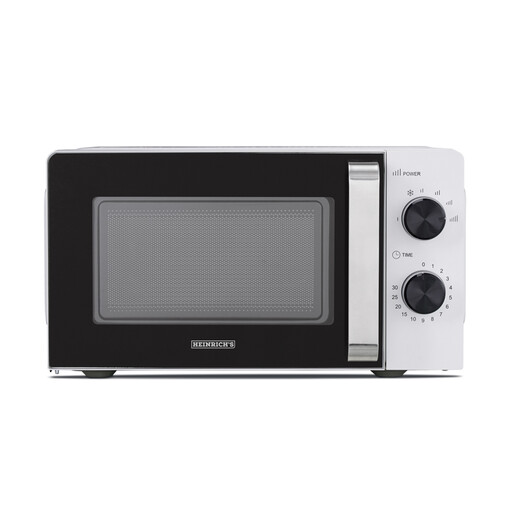 No image available
An option for anyone looking for a freestanding solo microwave to heat up soup.
The product name lists 20 L, 700 W, six power levels, a 30-minute timer, a defrost function, interior lighting and a turntable.
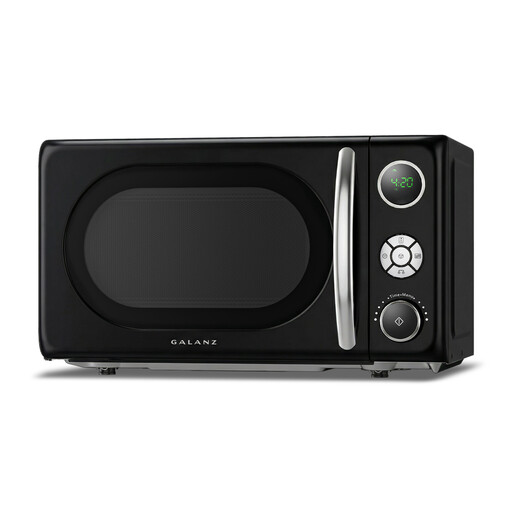 No image available
An option for anyone who wants to heat up soup in a freestanding microwave with digital controls.
The product name lists 20 L, six power levels, a digital display, a defrost function and a fermentation function. Don’t run the appliance empty or use metal utensils.
 No image available
An option for anyone who wants to heat up soup and also use the grill or convection function.
The product name lists a 25 L capacity and grill and convection functions. Don’t run the appliance empty, and don’t use metal or aluminium foil unless the manual says it’s safe to do so.
 No image available
An option for anyone who wants to heat up soup and also wants grill and convection functions.
The product name lists a capacity of 20 L. If installing the appliance in a cabinet, make sure there’s sufficient ventilation and follow the manual’s guidance on metal objects.
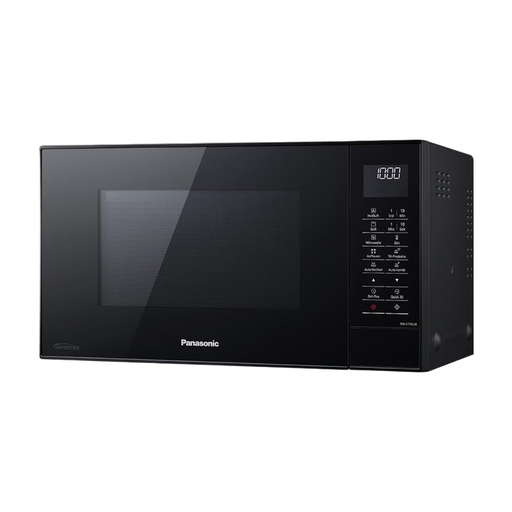 No image available
An option for anyone who wants to fit a larger bowl and use grill or convection functions as well as reheating.
The product name lists 27 L, 1000 W microwave power and inverter technology. According to the product information, leave at least 10 cm of ventilation space and don’t use metal in microwave mode.
Keep leftover soup chilled and, according to the Netherlands Nutrition Centre, eat it within two days. Use microwave-safe crockery, stir the soup while it heats and make sure it’s piping hot throughout. It’s best not to reheat leftovers that have already been reheated.
No. Check that the bowl is suitable for microwave use and that it fits in your chosen model and can rotate freely. The Netherlands Nutrition Centre lists glass and suitable glazed crockery among the options. Also follow the guidance on your own bowl.
Check the external dimensions and follow the installation and cleaning instructions in the manual for the specific model. Don’t use an appliance with a damaged door or seal; the Inventum manual says it should be repaired by a qualified professional in this case.
No. According to the Dutch government, there’s no fixed statutory warranty period in the Netherlands. You’re entitled to a product that works as it should, and can contact the seller if there’s a problem. A manufacturer’s warranty is an additional benefit.
Electrical appliances must meet the applicable European product safety requirements. Dutch government information explains that CE marking and an EU declaration of conformity are obligations for the responsible economic operator when the applicable technical and administrative requirements have been met. CE marking isn’t a quality mark for a model’s reheating performance.