
Vandaag of morgen in huis

Kwaliteit gegarandeerd

Welkomstaanbiedingen ontgrendelen: GRATIS bezorging | Tot 80% korting | Gratis 30 dagen JoyPlus-proefperiode
Download de app
Quickly heating up a meal after a long day, warming a drink, or defrosting leftovers. For these daily tasks, a simple, reliable microwave is often all you need. A solo microwave is designed for exactly that: heating and defrosting, without the complex grill or oven functions you might never use.
But even within this category, there are choices to be made. Do you prefer rotary dials or a digital display? With or without a turntable? This guide will help you find a freestanding microwave that fits your kitchen and your needs, without unnecessary extras.
Before we highlight a few models, here are some practical points to make your choice easier.
The capacity of a microwave is expressed in litres. For most households, a 20-litre microwave is an excellent standard size. This is large enough for a standard dinner plate, a bowl of soup, or a container with a ready meal. A compact microwave with this capacity fits easily on the countertop in a student dorm, a small kitchen, or as a secondary appliance. Always measure the available space on your countertop beforehand to ensure the appliance will fit.
The way you operate the microwave significantly impacts its ease of use.
Most microwaves have a glass turntable that ensures even heating. However, there is an alternative: the microwave without a turntable, also known as a 'flatbed'.
Based on the features above, we have selected a few popular solo microwaves for you.
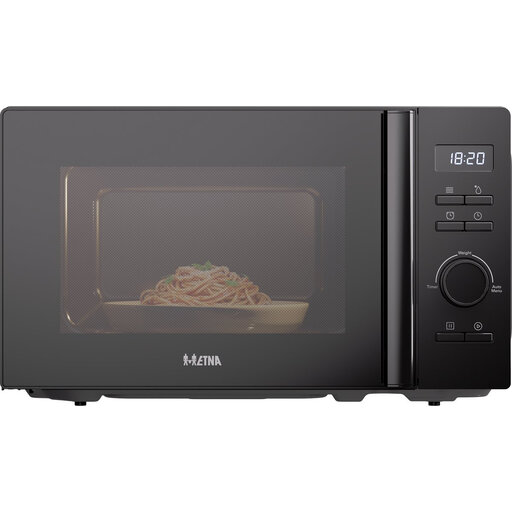
Why It Stands Out: The ETNA SMV820 combines a compact size with the benefits of digital controls. With 8 automatic programmes, you don't have to guess the right settings for common tasks. The bright LED display and the combined dial-and-push-button control make it modern and user-friendly.
Pros:
Who Is It For? For students, couples, or small families looking for a reliable microwave with a bit more convenience and precision than a basic model.
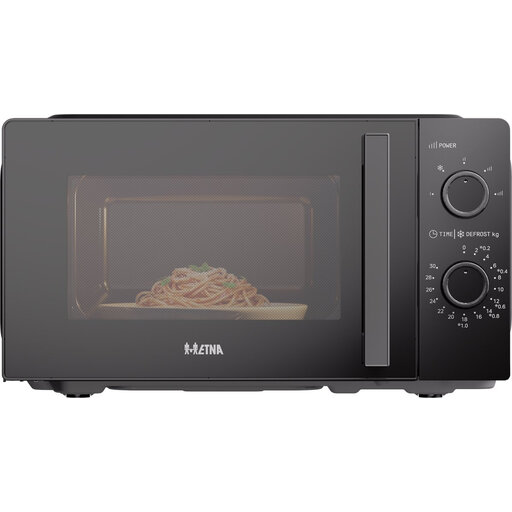
Why It Stands Out: This model is the definition of an easy-to-use microwave. No displays, no menus, no frills. With two clear rotary dials—one for the 5 power levels and one for the timer—the SMV720 does exactly what it's supposed to do.
Pros:
Who Is It For? Perfect for seniors, people who are not tech-savvy, or if you just need a no-nonsense appliance for the office, workshop, or a student flat.
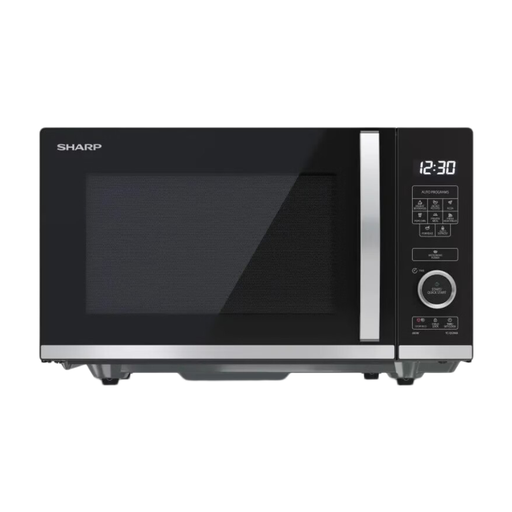
Why It Stands Out: The Sharp YC-QS204AE-B is a microwave without a turntable. This 'flatbed' design offers two major advantages: you can make optimal use of the 20-litre interior for larger or square-shaped dishes, and cleaning is significantly easier.
Pros:
Who Is It For? For anyone who dislikes cleaning a turntable or regularly uses oven dishes that don't fit on a standard plate. A modern choice for a busy household.
The models mentioned above all feature a neutral black finish. If you're aiming for a consistent look in your kitchen, it might be worthwhile to consider other appliances in the same style.
Check out our full collection of black kitchen appliances for more inspiration.
A solo microwave is a basic microwave designed for the core tasks: heating and defrosting food using microwaves. It does not have extra features like a grill, convection oven, or steam function, which makes the appliance simpler to use and often more affordable.
For general use, such as heating meals and drinks, a power output between 700 and 900 watts is typically sufficient. A higher wattage means your food will reach the desired temperature faster. Most microwaves have multiple power levels, so you can select a lower setting for defrosting or gently warming delicate dishes.
