
If you mainly reheat leftovers
You want to reheat a small portion of cooked peas after a visit to the market, without extra oven functions. Storing them properly and heating them all the way through matters more than a higher stated wattage.


If you mainly reheat peas or other leftovers, a solo microwave is generally the right choice; a combi microwave is mainly worthwhile if you also want to bake or grill. Check that your dish fits in the appliance and that you can stir the food during heating: a turntable is no substitute for stirring. The Netherlands Nutrition Centre advises that food should have been stored properly and be heated all the way through.
You want to reheat a small portion of cooked peas after a visit to the market, without extra oven functions. Storing them properly and heating them all the way through matters more than a higher stated wattage.
You have limited space and want to check in advance that the appliance, the required ventilation clearance and your own dish will all fit.
You may also want to use the appliance for baking or grilling. These extra functions aren’t necessary if you only want to reheat peas.
Start by thinking about what you need to reheat and the size of your dish. Then decide between straightforward microwave functions and extra oven features. Whichever model you choose, it’s still important to stir the peas while they’re heating.
| What to consider | What to look for | Who should pay particular attention? |
|---|---|---|
| Safe reheating | Check how the peas were transported and stored. Choose a microwave-safe dish and pause the heating to stir the peas. | If you want to reheat peas from the market, you’ll want to know how they were stored and be able to stir them part-way through. Around 36% of consumers prioritise safe, thorough reheating. |
| Easy to use | Compare the power, time and defrost settings with what you’ll actually use. | If you mainly want to reheat leftovers, there’s little benefit in features you won’t use. Look for controls that suit the task. Around 29% of consumers say ease of use is their top priority. |
| Space for the appliance and dish | Measure the space available and your dish; also check the clearance required by the installation instructions. | If you have a small kitchen or use your own dish, you’ll want to know in advance whether everything will fit. Around 21% of consumers put fit at the top of their list. |
| Extra cooking functions | Check which oven and grill functions the exact model has and whether you have room for it. | If you want to bake or grill as well as reheat, you can factor those functions into your choice. Around 14% of consumers say extra cooking options are their top priority. |
Your choice of appliance doesn’t change how the peas were transported or stored. Storage advice may differ depending on whether they’re home-cooked peas, groceries or a takeaway meal.
First, consider where they came from and how they were stored. The Netherlands Nutrition Centre advises keeping perishable groceries cool during transport and reheating leftovers thoroughly.
For reheating, you’ll use the microwave function; baking and grilling are different cooking tasks. Extra functions aren’t a necessary step for this main task.
Choose a combi microwave if you genuinely plan to use its oven or grill functions and have enough room for the appliance and the required clearance.
Extra functions can take up space even if you don’t use them for your main task.
The capacity doesn’t automatically tell you whether your dish will fit in the microwave or spin freely. The required clearance around the appliance matters too.
Measure your dish and the space where you plan to put the appliance, and check the installation instructions for the exact model.
Inventum offers freestanding solo models with a range of control options.
Samsung lists the MS23K3513AS/EN as a solo microwave with a 23 l capacity.
Bosch gives specific external dimensions for its freestanding solo microwave, the FFL020MW0.
LG offers combi microwaves for anyone planning to do more than just reheat food.
These models are designed for reheating and defrosting in a microwave. Compare the controls, stated functions and the space you’ll need.
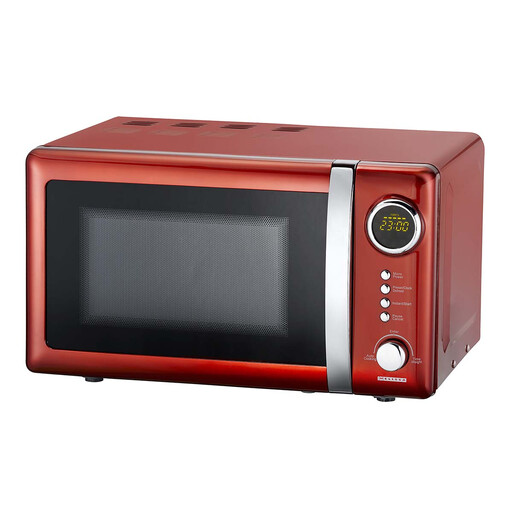 No image available
A solo microwave for anyone who mainly wants to reheat and defrost food.
The product name lists 12 programmes, five power levels and a 60-minute timer. According to the placement instructions, leave at least 10 cm of clearance around and above the appliance.
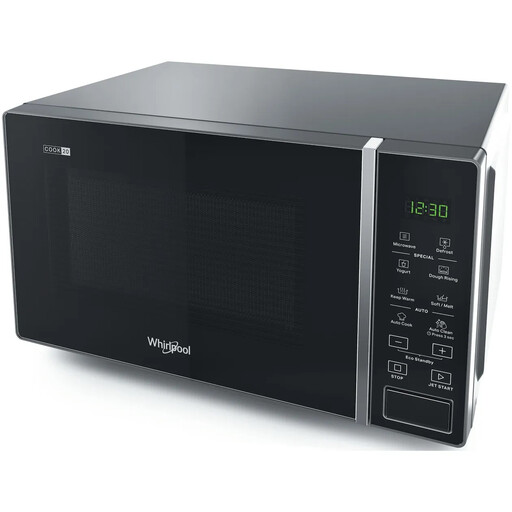 No image available
A freestanding model for anyone who wants to reheat leftovers using electronic controls.
The product name lists a 20 l capacity and 700 W power. According to the placement instructions, leave at least 10 cm of clearance at the sides and 20 cm above the appliance.
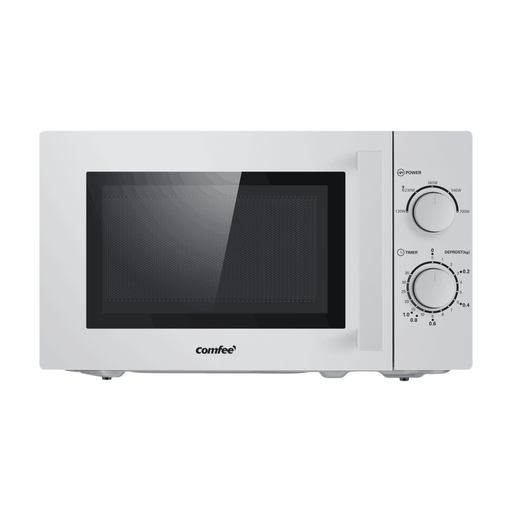 No image available
Mechanical controls are worth considering if you don’t want digital controls for a simple reheating task.
The product name lists five power levels and 700 W. According to the placement instructions, leave at least 20 cm of clearance beside the appliance and 30 cm above it.
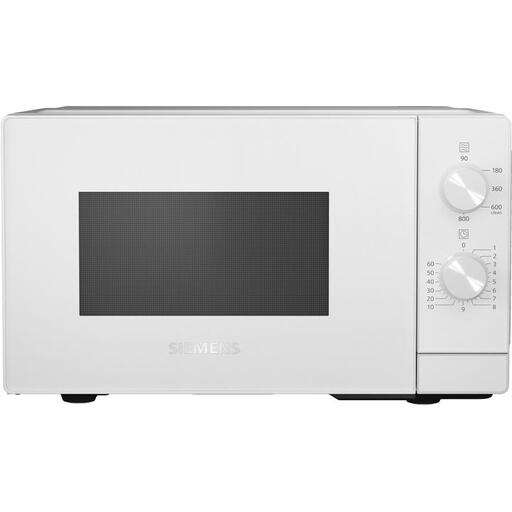 No image available
A solo option to compare if reheating and defrosting are your main requirements.
The product name lists six power levels, 800 W and a 20 l capacity.
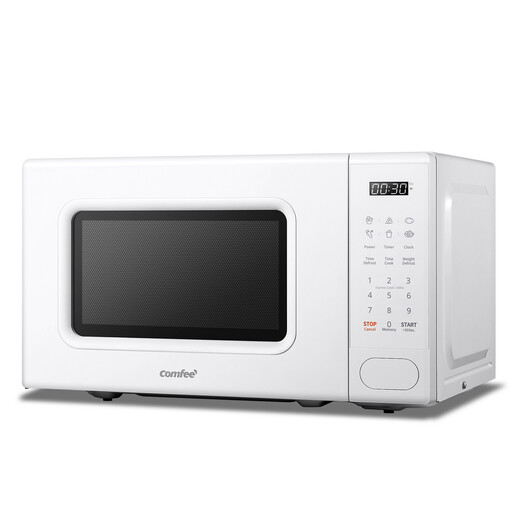 No image available
A digital option to compare if you want to use different settings for leftovers and defrosting.
The product name lists six cooking programmes, an express function, eleven power levels, defrosting and a memory function.
Put the peas in a microwave-safe dish and stir them while they’re heating. Heat them all the way through; according to the Netherlands Nutrition Centre, a turntable doesn’t remove the need to stir part-way through. The time required depends on the portion size and the appliance.
It depends on where the peas came from and how they’ve been kept cool. The Netherlands Nutrition Centre advises using a cool bag for perishable groceries and says that home-cooked leftovers and cooked green peas can be kept in the fridge for two days. Restaurant food brought home or takeaway leftovers should be eaten within one day, according to separate guidance.
First, check the packaging or symbol to see whether the material is microwave-safe. The Netherlands Nutrition Centre explains that microwave symbols indicate whether an item is suitable; if in doubt, transfer the peas to a microwave-safe dish.
Follow the installation and cleaning instructions for your chosen model, and keep the door and seal clean. The Inventum MN205S manual warns against using that model if the door or seal is damaged, until it has been repaired by a qualified professional. Don’t assume the measurements and instructions apply to a different model.
If a product breaks sooner than you could reasonably expect under normal use, the seller is responsible for providing a legal remedy, according to ACM ConsuWijzer. A manufacturer’s guarantee doesn’t replace this right, and the statutory period isn’t automatically two years for every product. Directive 2014/35/EU applies to electrical equipment designed for 50–1.000 V AC: equipment must carry a CE mark when placed on the EU market. This is a general product requirement, not confirmation that a specific model complies.