
Filming small solder joints
You want individual connections to be clearly visible. So look at the focusing distance, magnification and how much room the stand leaves for your hands and tools.


Start by thinking about the shot you want: are you mainly showing small solder joints, filming the whole process from above, or using the camera for other videos too? A digital microscope is designed for close-up details, while a document camera can show a larger work area. With a webcam or mirrorless camera, the results and setup depend on the focusing distance, camera angle and any extra equipment you may need.
You want individual connections to be clearly visible. So look at the focusing distance, magnification and how much room the stand leaves for your hands and tools.
You want to show the circuit board, your hands and each step of the process from above, perhaps while recording on a computer. Check that the camera and mount can cover the work area you need.
You want to use the camera for other videos too. A mirrorless camera can give you more flexibility with lenses and setup, but assess the camera body and lens as a complete combination.
Choose this option: if small solder joints are your main subject. The Andonstar AD407 Pro has a stated minimum focusing distance of 5 cm.
Bear in mind: a small image area shows less of your workspace. Check the clearance beneath the stand and how you plan to record the image.
Choose this option: if you want to film the circuit board, your hands and the process together from above using a computer.
Bear in mind: a large capture area can make small connections appear smaller on screen. Also check the exact model’s configuration and connections.
Choose this option: if you already record on a computer and can position the camera at a suitable distance above your workspace.
Bear in mind: a desk-view mode does not guarantee that small solder joints will be in focus. Check the framing, focusing distance and connection.
Choose this option: if you want to make other videos as well as soldering demonstrations and be able to change lenses.
Bear in mind: close-up performance depends on the lens you choose and is not automatically included with every camera kit. Assess the complete combination.
For soldering videos, the shot you want, focusing distance and recording setup all help determine which camera will suit your workspace.
| What to consider | What should you check? | Who is this important for? |
|---|---|---|
| Sharp close-ups | Measure the distance between the lens and circuit board. Check the focusing range, framing and space for the soldering iron and your hands. | If small connections need to be clearly visible, you’ll want to know whether the camera can focus at your working distance. Around 36% of consumers prioritise close-up detail. |
| Showing the whole process | Decide how much of your work area you want to show and check that your hands, stand and tools will fit in the frame. | If you want to show the process and the position of your tools together, a useful overhead view is important. Around 29% of consumers prioritise showing the whole work area. |
| Use for other videos | Assess the camera body and lens together for both soldering videos and any other planned use. | If you want to use the same camera for other videos too, lens choice will be a factor in your purchase. Around 21% of consumers prioritise this versatility. |
| Recording on a computer | Check the connection, compatibility with your computer and software, the mount and the focusing results. | If you want to record using your existing computer and keep your setup simple, the connection and positioning are important choices. Around 14% of consumers prioritise this computer-based setup. |
Resolution alone does not tell you whether the camera will focus at your chosen distance or show the solder joint large enough in the frame.
First check the working distance and framing from the planned camera position. Then compare the stated video resolution and frame rate of the exact model.
Logitech MX Brio’s Show Mode is designed for sharing work on a desk, but that does not prove that small solder joints will be clear from the height of your workspace.
Check the frame from the planned mounting height and compare the focusing range with cameras that have a stated short minimum focusing distance.
You may need a suitable mount or a different camera setup to get the angle you want.
The Canon EOS R50 supports a range of lenses, but the specifications of the separately described RF macro lens do not automatically apply to every kit.
Check the complete body-and-lens combination and exactly what is included in the offer.
A suitable lens may need to be bought separately; this depends on the configuration you choose.
According to Andonstar, the AD407 Pro is a digital microscope for a small work area, with a screen, HDMI output and microSD recording.
The V4K PRO document camera is one USB option for an overhead view. The specifications below are from IPEVO’s regional Canadian model page.
The Facecam Pro is a USB webcam for computer-based recording, where close focusing may be useful.
The MX Brio offers a downward-facing Show Mode for showing what’s on your desk.
The EOS R50 is a mirrorless camera for anyone who wants to change lenses and filming setups beyond their soldering workspace.
This selection of Joybuy products focuses on computer-based recording and camera setups for demonstrations. For each model, check that the focusing distance and frame suit your soldering workspace.
 No image available
A computer webcam to consider if you want to record your demonstration on a computer. Check that its fixed field of view suits your work area.
The product information lists 1080p video, autofocus and a 78° field of view.
 No image available
A computer webcam to consider if you need autofocus and a USB-A connection. Check that the frame works at your chosen working distance.
The product information lists 4K video, autofocus, USB-A, built-in dual microphones and a privacy cover. This variant is labelled as the EU version.
 No image available
The product description lists DeskView as a recording mode for desk-based demonstrations. Check the framing and focus at the height you plan to use.
The product information lists 4K, a 1/2-inch sensor, autofocus and DeskView.
 No image available
A computer webcam to consider if autofocus and automatic framing suit the way you film. Check the frame above your workspace.
The product information lists 4K, a 1/2-inch sensor, autofocus and automatic framing.
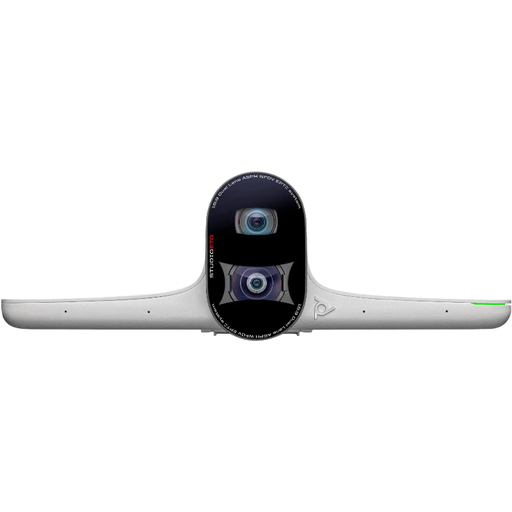 No image available
The mounting options described may be useful if you’re looking for a fixed camera setup. Check that the field of view suits the size of your soldering subject.
The product information lists two cameras, 4K video, USB-C and a 93°–111° field of view. A wide frame can make small solder joints appear smaller.
First measure the distance your setup allows, leaving room for your hands and soldering iron. Compare this with the stated focusing range for the exact model, then check the framing. Elgato states that the Facecam Pro has a minimum focusing distance of 10 cm; this is not a general standard for webcams.
Don’t assume that you can. Andonstar lists HDMI output and microSD recording for the AD407 Pro, so check what connections and recording setup you need. The specifications list USB video connections for the IPEVO V4K PRO and Elgato Facecam Pro.
Position the camera, cable and stand so they don’t get in the way of the hot soldering iron or your movements. For resin-based soldering flux, the UK workplace health and safety regulator HSE highlights the health risks from the fumes and describes local exhaust ventilation as a control measure. This information does not mean that UK workplace regulations apply to a hobbyist in the Netherlands.
According to ACM ConsuWijzer, online product purchases generally come with a statutory cooling-off period of up to 14 days after delivery, subject to legal exceptions. This is separate from your rights if a product does not meet what you can reasonably expect when used normally; in that case, contact the seller to find an appropriate solution.