
Vandaag of morgen in huis

Kwaliteit gegarandeerd

Welkomstaanbiedingen ontgrendelen: GRATIS bezorging | Tot 80% korting | Gratis 30 dagen JoyPlus-proefperiode
Download de app
A solar wall light with a motion sensor might seem easy to choose: look for plenty of LEDs, a high lumen rating and a low price. But in practice, a few other features matter more. For example, a light may be bright but still do little to illuminate a dark area where the solar panel gets hardly any direct sunlight.
For a driveway, garage, garden, shed or patio, there are three main pitfalls to watch out for:
Brightness is measured in lumens (lm). A higher rating can be useful for a driveway or large garden, while a lower brightness is often more comfortable by a front door or on a patio.
Check the colour temperature too:
A solar floodlight with several adjustable heads can illuminate a larger area. Just check that the light won’t shine directly into windows or onto the public road.
An outdoor light with a motion sensor only works well when its range suits the space. So check:
A solar light with a dusk sensor can respond automatically to ambient light. Some models combine low-level background lighting with brighter light when movement is detected. Others only switch on when they detect movement. The second option can save energy, but it won’t provide constant light along a garden path.
A clear IP rating is important for outdoor use. An IP65 outdoor light is dust-tight and protected against water jets from different directions. Even so, don’t install it somewhere water pools for long periods or where it could be flooded.
A solar wall light without wiring also needs enough daylight. Before installing it, check for:
According to the product information for the Philips models, a fully charged battery can provide light for up to four nights. Actual running time depends on factors including the amount of sunlight, the season, the lighting mode selected and how often the sensor is triggered.

Why it suits this buyer: This model is aimed at buyers who want to light a large outdoor area without electrical wiring, such as a garage, driveway or garden.
The product description specifies three lighting modes, three adjustable heads and a 180-degree detection angle. This gives a clearer picture of how the light is distributed than models that simply list a high number of LEDs.
3000 lumens, 302 LEDs, an IP65 rating and a stated detection range of 60 feet. The manufacturer specifies a 1800 mAh lithium-ion battery.

Why it suits this buyer: A good choice if you’re looking for a powerful outdoor LED wall light for an exterior wall, garage or driveway, and value an adjustable light head.
The specifications list 4000 lumens, IP65 protection and an adjustable head. The sensor information gives a range of 8 metres for direct approach and 16 metres for sideways approach.
Bright 5000 K white light, two lighting modes, a dusk sensor and installation without electrical wiring. The product information gives the light’s weight as 1,51 kg.
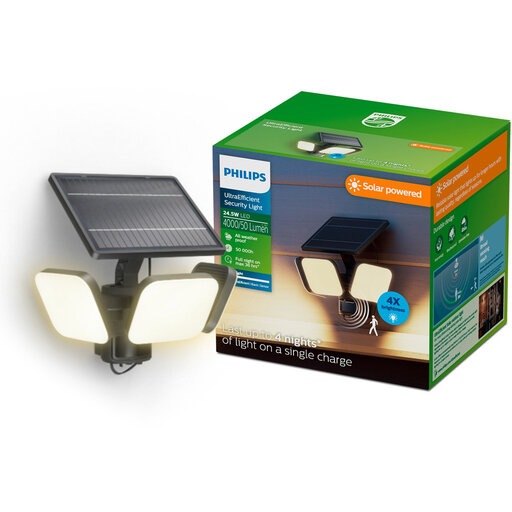
Why it suits this buyer: This version is a good fit if you need a powerful solar security light but prefer warm white light by an entrance, patio or home exterior.
The warmer colour temperature means you don’t have to choose based on lumens alone. The product information also lists the IP65 rating, sensor ranges and two lighting modes.
4000 lumens, 3000 K, an adjustable light head, a dusk sensor and installation without wiring. Philips states that the light can run for up to four nights after a full charge.
We’ve put together a complete, up-to-date list of products that meet these strict selection criteria and the applicable European safety requirements.
Install the light where the solar panel will get as much direct sunlight as possible during the day. A north-facing wall, a deep carport or a spot beneath a balcony can reduce charging performance. Also check that the sensor won’t be triggered constantly by branches, pets or passing traffic.
Clean the panel occasionally with a soft, damp cloth. Don’t use abrasive cleaners or solvents. Also check the fixings after stormy weather. Even with IP65 protection, it’s important not to open the casing or place the light underwater.
It can be, but the solar panel may generate less power because of shorter days, cloudy weather and shade. Choose a sunny spot for installation, keep the panel clean and use an energy-saving lighting mode if possible. Any stated number of hours or nights of operation is an estimate; actual performance depends on the conditions.
Lifespan varies depending on the battery, LED module, casing and how the light is used. Check whether the manufacturer provides information about the battery and warranty. Philips product information states that the light comes with a statutory warranty of at least two years under the applicable EU consumer rules. A battery with reduced capacity may affect how long the light stays on over time.
During normal use, the light is powered by its built-in battery, which charges during the day via the solar panel. So there’s no need for a permanent mains cable. However, bear in mind the purchase price, the possibility that the battery may need replacing, and the fact that insufficient sunlight can limit performance.
