
Vandaag of morgen in huis

Kwaliteit gegarandeerd

Welkomstaanbiedingen ontgrendelen: GRATIS bezorging | Tot 80% korting | Gratis 30 dagen JoyPlus-proefperiode
Download de app
A solar outdoor wall light with a motion sensor seems simple enough: mount it, let it soak up the sunlight and enjoy automatic light whenever someone walks past. But models can vary considerably in brightness, sensor range, weather protection and run time. A light that works well on a balcony won’t necessarily be the right choice for a dark driveway.
As a Joybuy Product Recommendation Officer, I’ve picked out the key product specifications so you can compare marketing claims with information you can check. Read on to find out what to look for before buying an outdoor light with a motion sensor.
A model with a high lumen count can potentially produce plenty of light, but that doesn’t automatically mean it will light your whole garden evenly. Light distribution, an adjustable head and mounting height all matter too. For an entrance or balcony, 300 to 500 lumens may be enough. For a driveway or larger garden, models with a higher light output and multiple light heads are more practical.
Check the colour temperature as well. 2700K to 3000K gives you warm white outdoor lighting with a softer feel. 5000K looks cooler and may be suitable when visibility matters more than atmosphere.
An IP44 outdoor light is protected against solid objects larger than 1 millimetre and splashing water. This makes it suitable for many sheltered exterior walls, patios and balconies, but not for direct jets of water or immersion.
An IP65 outdoor light offers greater protection against dust and jets of water. It may be a sensible choice for a more exposed wall or more intensive use. Don’t submerge an IP65 model either, and always follow the fitting instructions.
A solar panel needs regular, direct daylight to charge the battery. A north-facing wall, a spot beneath a canopy or shade from trees can reduce how long the light stays on. In winter and after several cloudy days, it may not stay on for as long or shine as brightly.
So, don’t just check that a solar panel is included; consider where you can install it too. A model with no wiring is easy to fit, but its performance still depends on the location you choose and how much sunshine it gets.
Lumens indicate how much light a fitting produces, according to its product specifications. Use this as a point of comparison, but also think about what you need it for:
For a pleasant ambience, 2700K or 3000K is usually a better fit. A cooler colour temperature may be more functional for a solar security light, but not everyone will find it comfortable on a patio.
Check whether the product specifications give a detection range and angle. A sensor that only responds to someone approaching head-on may work differently from one that detects movement from the side. Position the light so that your usual route passes through the detection zone, and don’t point the sensor directly at a busy road or public pavement.
A motion sensor makes a light more convenient, but it isn’t a security system in its own right. So, treat “security” as a description of how the light can be used, not as a guarantee against burglary.
Two or more lighting modes can help you use the battery more efficiently. For example, you could have a low level of background lighting with brighter light when movement is detected, or have the light switch on only when it detects movement. Also look out for:
Brands may state a lifespan or number of operating hours. For example, some Philips models are described as having a long lifespan. This is a manufacturer’s estimate, not a guarantee that every light will last exactly that long in all Dutch weather conditions.
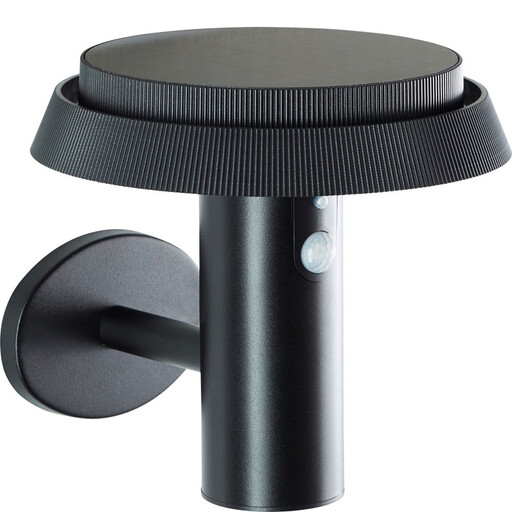
Why it suits this buyer: With 500 lumens, 3000K and a compact design, this is a practical choice for an entrance, patio or small garden path, with no wiring required.
The specifications state both 500 lumens and IP44, so you can assess the expected brightness and splash protection in advance.
Solar-powered, with an integrated motion sensor, 500 lumens and a dimming function, according to the product information.

Why it suits this buyer: This model combines 1000 lumens with 3000K, two lighting modes and an integrated dusk and motion sensor, making it suitable for an entrance, patio or balcony.
The product information clearly states 1000 lumens, 3000K and IP44. This makes it clear that it isn’t an IP65 model for direct jets of water.
No mains connection required, two lighting modes and a 3 m cable, according to the product specifications.
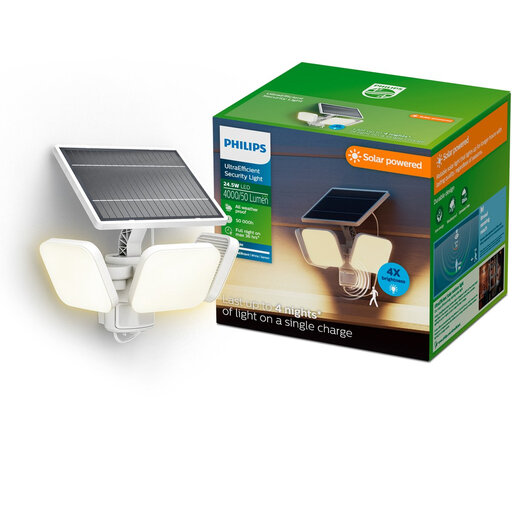
Why it suits this buyer: For a larger driveway, shed or exterior wall, this model offers 4000 lumens, IP65 protection and an adjustable light head, according to the product details.
The stated detection range is 8 metres when approached head-on and 16 metres when approached from the side. This makes the sensor information more useful when deciding where to install it.
4000 lumens, IP65, two lighting modes and, according to Philips, a run time of up to four nights on a fully charged battery.

Why it suits this buyer: With 400 lumens, warm white light at 2700K and a compact design, this light is a good fit for a balcony, small patio or decorative exterior lighting.
Its modest light output helps you avoid mistaking an ambient light for a powerful driveway light. The IP44 rating makes its limitations in exposed locations clear.
2700K warm white light, solar power, two lighting modes and a motion sensor, according to the product description.
We’ve put together a complete, up-to-date list of products that meet these strict selection criteria and the applicable European safety regulations.
A solar outdoor wall light with a motion sensor is particularly appealing if you don’t want to run a cable. If you need a light to stay on for long periods and very regularly, mains-powered LED outdoor lighting may be more practical. So compare run time and ease of installation, not just the purchase price.
It depends on sunlight, the season, battery capacity, lighting mode and how often it’s used. Manufacturers may state a number of operating hours or nights, but this will still depend on the conditions. Keep the solar panel clean and choose a sunny spot for installation.
When it’s in use, the light draws energy from its charged battery, so it doesn’t need to be connected to the mains. It does use energy collected by the solar panel during the day, though. In low sunlight, the run time may be reduced.
IP44 is suitable for splashing water and many everyday outdoor uses, such as a sheltered patio, balcony or exterior wall. For a fully exposed spot or a wall that is often hit by jets of water, IP65 is a more suitable choice. No IP rating means that you can submerge the light.
