
Vandaag of morgen in huis

Kwaliteit gegarandeerd

Welkomstaanbiedingen ontgrendelen: GRATIS bezorging | Tot 80% korting | Gratis 30 dagen JoyPlus-proefperiode
Download de app
Securing a driveway, garden, or shed without the hassle of pulling cables and finding power outlets. That's the promise of a solar-powered outdoor security camera. These cameras offer flexibility and ease of installation, but the market is vast, and the specifications can be confusing.
As a Joybuy Product Recommendation Officer, my job is to help you make an informed choice. In this article, we'll highlight the key points to consider and present a selection of popular models based on their specifications and features.
Before making a choice, it's helpful to consider a few technical features. These will determine how the camera performs in your specific situation.
The way the camera connects to the internet is crucial.
An outdoor camera with a solar panel is essentially a battery-powered security camera that is continuously recharged by the sun. Pay attention to the battery's capacity (expressed in mAh) and the solar panel's power output (in Watts). A larger battery provides a longer buffer for overcast days. Some panels are integrated, while others can be placed separately from the camera for optimal sun exposure.
Do you want to monitor a fixed point, like a front door? A camera with a fixed lens will suffice. Need to survey an entire area, such as a garden or parking lot? Then consider a 360-degree outdoor camera. Many of these models are wireless PTZ cameras, which stands for Pan-Tilt-Zoom. This allows you to remotely pan, tilt, and zoom the camera via the app.
Below is a selection of cameras that stand out for their specifications and capabilities.
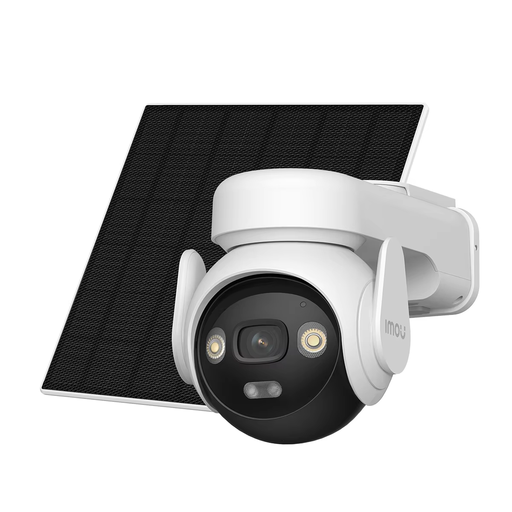
Why this model stands out: This model combines highly sought-after features into a single package. Its dual connectivity via 4G LTE and 2.4GHz Wi-Fi makes it extremely versatile. The high 5MP resolution ensures sharp images, and the PTZ function provides a full 360-degree overview. The large 10,000mAh battery and 5W solar panel are designed for autonomy. According to the manufacturer, IMOU, special technology also enables the camera to charge in low temperatures.
Pros:
Who is this camera for? For users seeking an all-in-one solution for locations both with and without Wi-Fi, such as a large property, a holiday home, or business premises. The 4G option makes it ideal for places where traditional cameras cannot be installed.
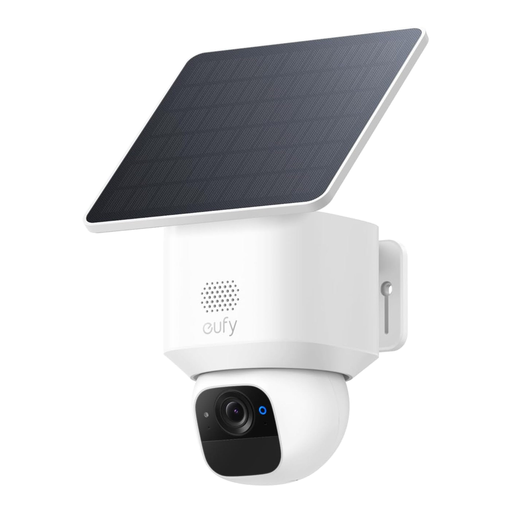
Why this model stands out: The eufy Solo Cam E30 focuses on smart surveillance around the home. The camera offers 360° rotation and can automatically track people or vehicles thanks to its built-in AI. According to eufy, the detachable solar panel needs just 2 hours of sunlight per day to keep the battery charged. Another key feature is the ability to store footage locally on a microSD card (not included), which means there are no mandatory subscription fees.
Pros:
Who is this camera for? For homeowners looking for a smart, user-friendly Wi-Fi camera for their driveway or garden. The automatic tracking and the lack of subscription fees for basic storage are strong selling points.
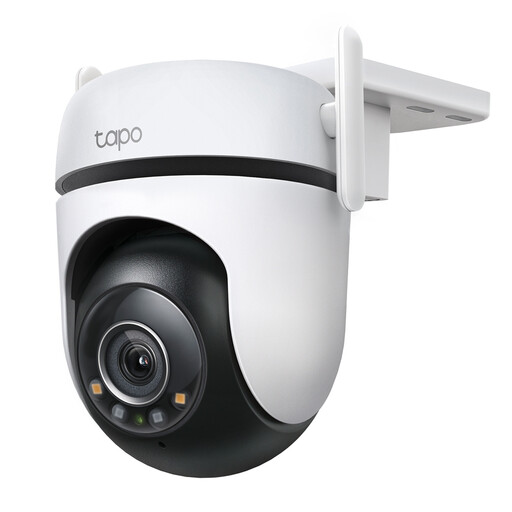
Why this model stands out: Although this model does not have a solar panel and thus requires a fixed power connection (AC), it is an interesting option for those seeking advanced imaging technology. The Tapo C520WS offers 2K QHD resolution and features a 'Starlight' sensor. According to TP-Link, this sensor, combined with the F1.6 lens, provides brighter, full-colour images in low light than many other cameras. The camera offers both Wi-Fi and a wired Ethernet connection for a stable link.
Pros:
Who is this camera for? For users who have a power outlet nearby and prioritise the highest possible image quality, especially at night. It is a powerful wireless PTZ camera (in terms of data connection) for whom a power supply is not an obstacle.
The world of security cameras is broad and diverse. The models above are just a starting point. Are you looking for a different type of camera, such as a more compact model or a complete set? Then explore our wider selection.
? Discover more options in our draadloos batterij-aangedreven CCTV camerasysteem category.
This varies by model and brand. Manufacturers often provide a guideline, such as "2 to 3 hours of direct sunlight per day." In practice, it depends on the sun's intensity, the panel's angle, and how often the camera is activated. A south-facing placement is recommended for optimal performance.
Yes, but performance may be reduced. The days are shorter, and the sun is less powerful. A camera with a large battery and an efficient solar panel has the best chance of operating continuously. Many apps offer a power-saving mode, which reduces motion detection sensitivity to conserve the battery during darker periods.
Yes, many cameras offer the option to store footage locally on a microSD card. This is a one-time purchase and avoids recurring fees. Cloud storage, often offered via a subscription, has the advantage that your footage is stored securely off-site, even if the camera is stolen or damaged.
