Joybuy Insights

Solar-Powered Security Cameras: A Hassle-Free Installation Guide

Need to secure a driveway, shed, or holiday home with no power outlet nearby? The thought of drilling holes and running long cables is enough for many to put it off. A solar-powered security camera offers a practical solution. These cameras operate completely autonomously, powered by the sun.

As a Joybuy Product Recommendation Officer, I'm here to help you make the right choices. In this article, we'll cover the key points to consider and highlight some popular options to help you find a model that fits your needs.

Buyer's Guide: What to Look For

The market for wireless security is expanding rapidly. To make the right choice, it's important to consider a few key technical specifications.

1. Connectivity: Wi-Fi or 4G?

The camera's location determines the best connection method.

  • Wi-Fi camera with battery and solar panel: Ideal for locations within your home network's range, such as the front or back garden, driveway, or shed. Installation is simple: connect the camera to your Wi-Fi, and it's ready to go.
  • 4G outdoor security camera: No Wi-Fi coverage at your desired location? Think of a remote stable, a construction site, or a holiday home. A 4G model with its own SIM card provides the solution. These cameras connect via the mobile network, making them completely independent of your home network.

2. Image Quality and Detection

A camera's purpose is to see what's happening. Therefore, the image quality and detection method are crucial.

  • Resolution: A higher resolution, such as 2K QHD (2560x1440 pixels), delivers significantly sharper images than standard Full HD (1080p). This makes it easier to recognise details like faces or number plates.
  • Night Vision: Standard infrared (black and white) night vision is effective, but a camera with colour night vision provides more detail in the dark. This is often enabled by a sensitive sensor (like a starlight sensor) and built-in spotlights.
  • Viewing Angle and Movement: A camera with a fixed lens is fine for a specific point, like a doorway. If you want to monitor a larger area, such as an entire garden, a solar-powered PTZ camera is a better option. PTZ stands for Pan, Tilt, and Zoom, which you can control via the app.
  • Smart Detection: To avoid receiving notifications for every moving branch or passing bird, a smart camera with AI detection is recommended. This technology can distinguish between people, animals, and vehicles, ensuring you only receive relevant alerts.

3. Power and Weather Resistance

An outdoor camera must be able to withstand the elements and operate reliably.

  • Battery Capacity and Solar Panel: The battery capacity, measured in mAh (milliampere-hour), determines how long the camera can operate without sunlight. A larger battery (e.g., 10,000 mAh) offers more security during dark winter days. The efficiency of the solar panel is also important for quick recharging.
  • IP Rating: The IP rating indicates how well the camera is protected against dust and water. An IP66 rating means the camera is dust-tight and can withstand powerful water jets, making it suitable for all weather conditions.

Recommended Products to Consider

Based on the specifications above, we have selected a few cameras, each with its own unique strengths.
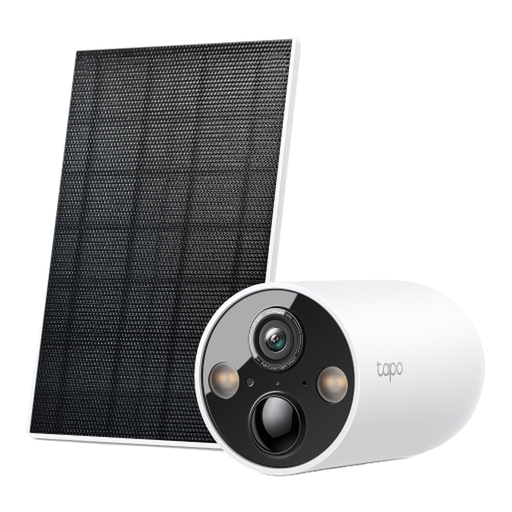
TP-Link Tapo Solar-Powered Security Camera Kit C425

TP-Link Tapo Solar-Powered Security Camera Kit C425

Why it stands out: This kit excels with its colour night vision. Thanks to the starlight sensor and built-in spotlights, the camera delivers clear and detailed colour images even in low light.

Pros:

  • 2K QHD Resolution: Sharp and clear images, day and night.
  • Colour Night Vision: The starlight sensor ensures clear colour images in the dark.
  • Free AI Detection: Identifies people, pets, and vehicles to reduce unnecessary alerts.
  • Flexible Solar Panel Installation: The panel can be attached directly to the camera or placed up to 4 metres away with a cable for optimal sun exposure.
  • Large Battery: The 10,000 mAh battery ensures long-lasting performance.

Who is this camera for? For homeowners looking for a reliable outdoor wireless security camera with excellent night-time image quality and smart detection features within their existing Wi-Fi network.
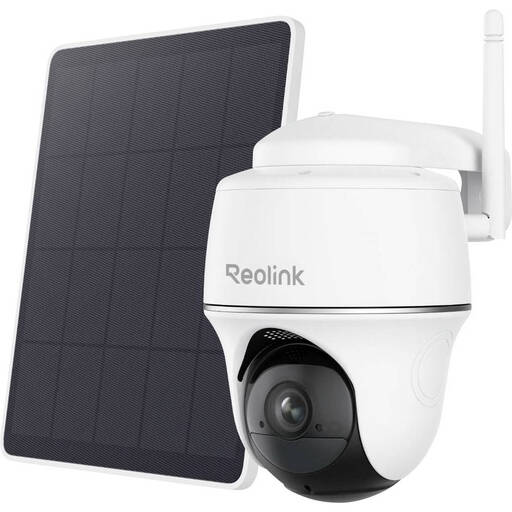
Reolink Argus Series B420 with Solar Panel Lite

Reolink Argus Series B420 with Solar Panel Lite

Why it stands out: The Reolink Argus B420 is a solar-powered PTZ camera. With the ability to pan 355 degrees and tilt 140 degrees, you can monitor a very large area with a single camera.

Pros:

  • Pan & Tilt Functionality: Cover a wide area with the remotely controlled lens.
  • Smart Detection: Distinguishes between people and vehicles, which, according to Reolink, significantly reduces false alarms.
  • Two-Way Audio: Talk and listen through the built-in microphone and speaker.
  • Completely Wire-Free: Operates on a rechargeable battery combined with the included solar panel.

Who is this camera for? Ideal for users seeking a flexible solution to monitor a large, open area like a back garden, car park, or yard without needing to install multiple cameras.
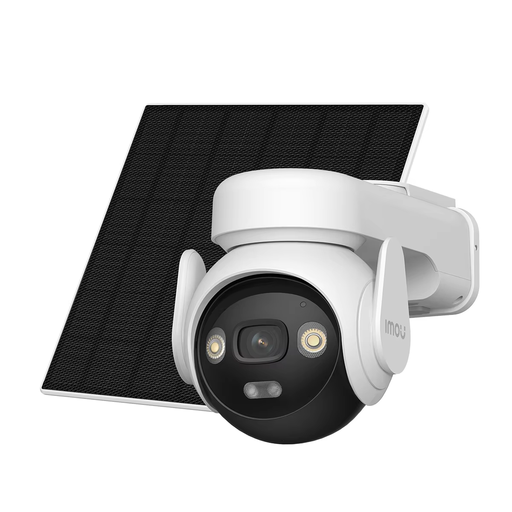
IMOU AOV PT 5MP 4G Solar Camera

IMOU AOV PT 5MP 4G Solar camera

Why it stands out: This is the solution for locations with no power and no Wi-Fi. Thanks to its 4G LTE connectivity and powerful solar panel, this camera operates completely autonomously, wherever you are.

Pros:

  • 4G and Wi-Fi Connectivity: Works independently via a 4G SIM card but can also connect to a 2.4GHz Wi-Fi network.
  • 5MP Ultra-HD Resolution: Highly detailed images for maximum clarity.
  • 360° PTZ Coverage: Complete overview with no blind spots.
  • Low-Temperature Charging: The battery system is designed to charge even in colder conditions, where standard batteries can sometimes struggle.
  • Powerful Energy Supply: A 5W solar panel and a 10,000 mAh battery ensure a reliable power source.

Who is this camera for? Perfect for securing remote properties such as holiday homes, equestrian centres, construction sites, or storage warehouses where no fixed power or Wi-Fi connection is available.

Explore Other Options

These three models offer a good cross-section of what's possible. If your ideal solution isn't among them, or if you're curious about other solar-powered products, you can always explore further.

? Explore more products in our solar panel category here

Frequently Asked Questions

1. How much sunlight does a solar-powered security camera need? Generally, a few hours of direct sunlight per day are enough to keep the battery topped up with normal use. The panels also charge on cloudy days, albeit less efficiently. Power consumption heavily depends on how often the camera is triggered to record.

2. Does a solar-powered camera work in the winter? Yes, these cameras are designed to function year-round. In winter, with fewer hours of sunlight, the charging speed may be lower. Models with a large battery capacity and an efficient solar panel are prepared for this. Features like low-temperature charging, as seen in the IMOU camera, provide extra reliability.

3. Do I have to pay for video storage? Not necessarily. All the cameras mentioned above support local storage via a MicroSD card. This is a one-time purchase and involves no subscription fees. Manufacturers also often offer optional cloud storage subscriptions for those who want to store footage externally and for longer periods.
